‘300 applications, 2-3 callbacks’: Indian students in Australia face high rent, cost and housing crisis
Source Entity
Neeti Nigam
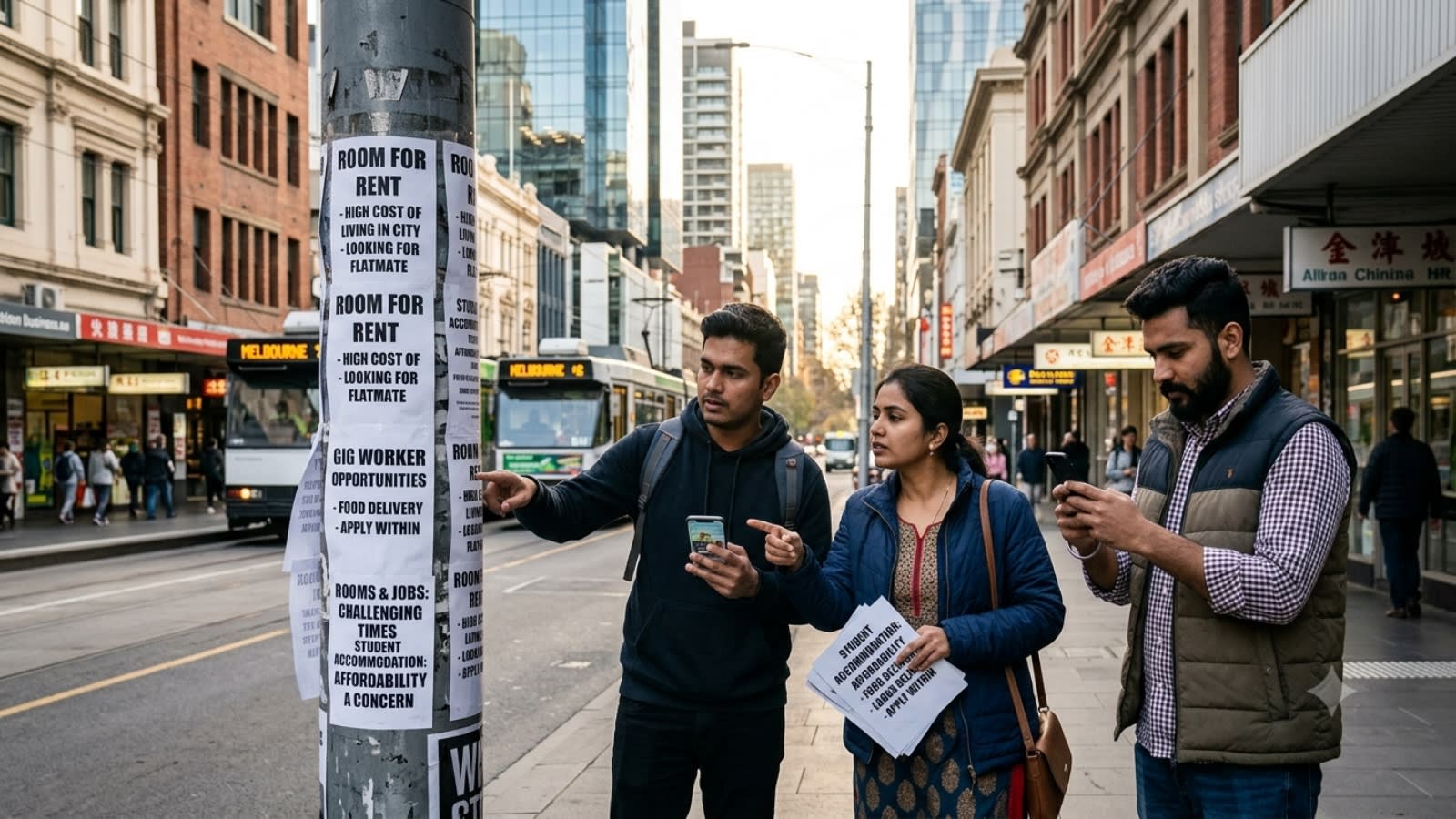
Indian students in Australia are facing a severe housing crisis and dwindling job opportunities as visa regulations tighten. The traditional study-to-work pipeline is becoming increasingly inaccessible for new arrivals.
The Shifting Landscape for Indian Students in Australia
For decades, Australia has served as a premier destination for Indian students, marketed on the promise of academic excellence coupled with a clear, reliable pathway to permanent residency and career growth. The traditional model was built on a predictable cycle: enrolling in a reputable university, balancing part-time employment to offset living costs, and leveraging local work experience to transition into the workforce. However, this established formula is currently undergoing a radical and destabilizing shift, leaving thousands of international students in a state of precarious uncertainty.
The Housing Crisis and Cost of Living
At the heart of the current struggle is a severe housing shortage that has transformed the Australian student experience into a battle for survival. Many students, such as those arriving in major hubs like Melbourne, report sending out hundreds of rental applications only to receive negligible callbacks. This hyper-competitive housing market has driven rents to historic highs, forcing students to exhaust their savings before they even settle into their academic routines. The gap between the promised 'secure future' and the reality of a transient, high-cost existence is widening rapidly.
Policy Overhaul and Visa Restrictions
This crisis is being exacerbated by significant regulatory changes within the Australian immigration framework. Similar to recent trends in the United States, the United Kingdom, and Canada, the Australian government has implemented stricter visa policies aimed at curbing net migration. These new rules are designed to close loopholes that previously allowed students to pivot between courses to extend their stay indefinitely. While the government cites the need for a more sustainable migration system, the immediate impact is a narrowing of the 'study-to-work' pipeline that international students have relied upon for years.
Economic Implications for Students
The tightening of migration pathways means that the financial investment made by Indian families—often representing a significant portion of their life savings—is no longer guaranteed to yield the expected professional returns. The inability to secure stable, part-time work, combined with the rising cost of living, creates a high-pressure environment where students struggle to balance academic performance with basic subsistence. This disconnect between the marketed vision of overseas education and the harsh economic reality on the ground is a growing concern for educational institutions and policymakers alike.
Future Trends and Outlook
Looking ahead, the landscape for international education in Australia is likely to become more exclusive and restricted. As the government prioritizes domestic housing and labor market stability, prospective students from India will need to navigate a more complex and unforgiving landscape. The era of the 'straightforward' study-to-work route is effectively closing, replaced by a system that demands higher financial liquidity and more targeted academic planning. For the current cohort of students, the challenge remains to adapt to these stringent conditions while the Australian government continues to calibrate its migration intake in response to domestic pressures.