India's Nuclear Punch: Atom Bombs Backed By Long-Range Missiles
Source Entity
NDTV News Search Records Found 1000
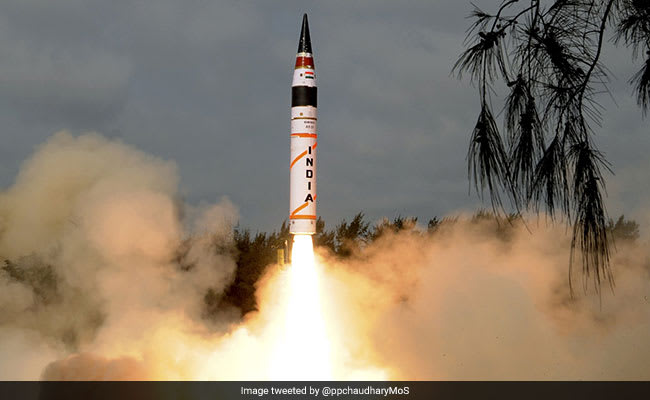
India has successfully bolstered its strategic deterrence capabilities with the Agni V, a long-range, nuclear-capable ballistic missile. This development marks a significant shift in regional power dynamics and underscores India's commitment to maintaining a robust credible minimum deterrent.
India's Strategic Escalation: The Agni V Capability
India has significantly enhanced its strategic posture with the successful development and deployment of the Agni V, a sophisticated, nuclear-capable, long-range ballistic missile. This technological achievement represents a critical milestone in India's pursuit of a credible minimum deterrent, allowing the nation to project power across vast distances with precision and reliability. By mastering solid-fuel technology and multi-stage propulsion, India has moved beyond regional limitations, ensuring that its nuclear triad remains a potent instrument of national security.
The Technological Edge of Agni V
The Agni V distinguishes itself through its impressive reach, which places it firmly in the category of Intercontinental Ballistic Missiles (ICBMs) by many international standards. The missile's ability to carry nuclear warheads over thousands of kilometers provides India with the capability to reach targets far beyond its immediate borders. This technical proficiency is the result of decades of investment in the Integrated Guided Missile Development Program, which has focused on creating a self-reliant defense ecosystem capable of producing high-end strategic assets.
Strategic Implications in South Asia
The introduction of the Agni V into India’s arsenal fundamentally alters the regional calculus. By possessing a long-range delivery system, India enhances its strategic depth, ensuring that its deterrent remains survivable and effective against potential threats. This capability is not merely about raw power; it is about signaling a mature and stable nuclear posture. The ability to hold distant strategic assets at risk serves as a powerful deterrent against any potential aggression, thereby stabilizing the regional security environment through the logic of balance.
Historical Context and Development
Historically, India’s nuclear doctrine has been defined by the 'No First Use' policy, which emphasizes that nuclear weapons are maintained solely for deterrence. The evolution of the Agni series—starting from short-range tactical missiles and progressing to the long-range Agni V—reflects a measured approach to modernization. This progression demonstrates a commitment to technological growth that aligns with India's broader geopolitical ambitions as an emerging global power that prioritizes defensive preparedness.
Future Trends and Global Standing
Looking ahead, the successful deployment of the Agni V is likely to catalyze further advancements in India’s missile defense and aerospace sectors. As the nation continues to refine its guidance systems and payload delivery mechanisms, it strengthens its position on the global stage. Future trends will likely see a focus on MIRV (Multiple Independently targetable Reentry Vehicle) technology, further solidifying India’s status as a formidable nuclear state that is capable of safeguarding its sovereignty against any conventional or strategic challenge.
Verification Required?