Mojtaba warned this would happen? Iran threatens US bases after blasting 7 ships, Hormuz in chaos
Source Entity
Latest News: Todays Latest News Headlines from India & World | Hindustan Times | Hindustan Times
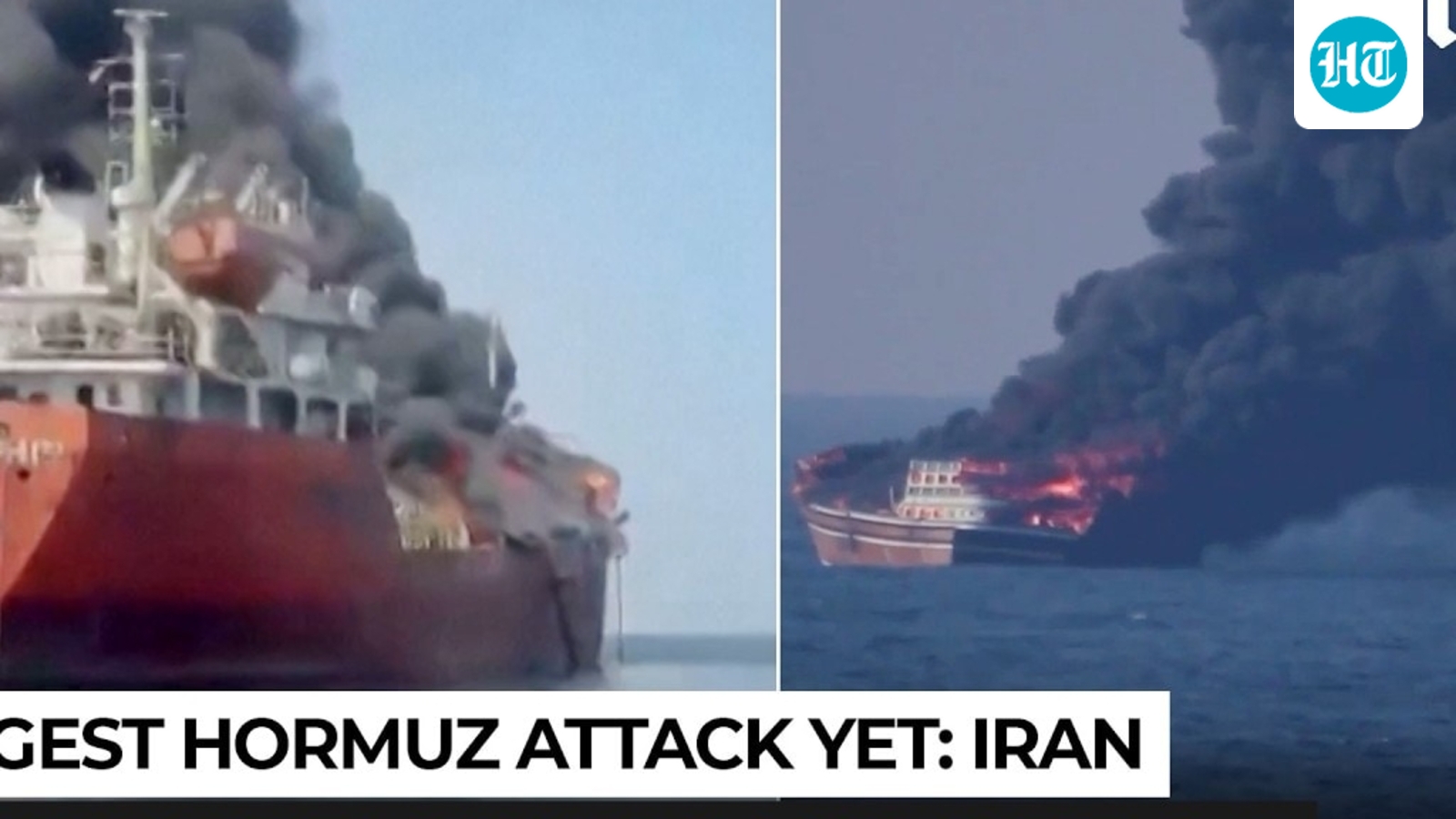
Seven oil tankers were damaged in the Strait of Hormuz due to direct attacks and naval mines, prompting the IRGC to threaten US bases. Tehran blames the US for the escalating maritime instability while asserting control over this critical global oil corridor.
Tensions Surge in the Strait of Hormuz
The security landscape of the Strait of Hormuz has been drastically altered following reports that seven oil tankers sustained damage in a single day. According to statements from the Islamic Revolutionary Guard Corps (IRGC) navy, four of these vessels caught fire while transferring oil, while three others were immobilized after striking naval mines. This incident represents a significant escalation in the region, potentially marking the largest single-day damage toll to commercial shipping in this vital waterway since the Iran-Iraq war era.
Escalation and Strategic Threats
The situation has quickly evolved from a maritime incident into a broader geopolitical standoff. Iranian authorities have issued explicit warnings, stating that any attempt by the United States to intervene or assist in the passage of vessels could result in the targeting of US military bases in the region. This rhetoric underscores a high-stakes power play, with Tehran positioning itself as the primary authority governing the transit of global energy supplies through the strait.
The IRGC's Narrative and US Blame
In its official communications, the IRGC has deflected responsibility for the chaos, instead placing the onus on the United States. Iranian officials accused the U.S. of inciting vessels to navigate through what they describe as an "illegally mined passage." By characterizing the presence of non-Iranian maritime traffic as a form of provocation, the IRGC is attempting to justify its aggressive posture and validate its operational control over the waterway under the guise of national security.
Leadership Dynamics and Diplomatic Deadlock
This aggressive display of naval force arrives amidst speculation regarding Iran’s shifting internal leadership under Mojtaba Khamenei. Analysts are observing these events as a potential demonstration of resolve aimed at challenging the incoming U.S. administration. Reports suggest that Tehran has refused to enter into negotiations until a specific list of seven demands is met, signaling that the current instability is a calculated diplomatic strategy rather than a series of disconnected accidents.
Global Economic Implications
The Strait of Hormuz remains one of the world's most critical "chokepoints" for global energy markets, as a significant share of the world's oil transits through this narrow passage daily. The immobilization of seven tankers and the subsequent fires threaten to disrupt global supply chains and spike energy prices. The uncertainty regarding the safety of these maritime routes forces ship operators to reconsider transit plans, which could lead to long-term logistical bottlenecks.
Future Trends and Regional Stability
Looking forward, the persistence of naval mines and the threat of direct military action against U.S. assets suggest that the region will remain in a state of high alert. If verified, these attacks demonstrate a shift in the IRGC's tactics toward more overt interference with global trade. The international community is now tasked with navigating a volatile environment where the control of the Strait is being used as a primary lever in high-level geopolitical negotiations, with little room for immediate de-escalation.
Multiple Citing Sources
Verification Required?