Arab parties claim kingmaker status in Israel elections
Source Entity
TNN & Agencies
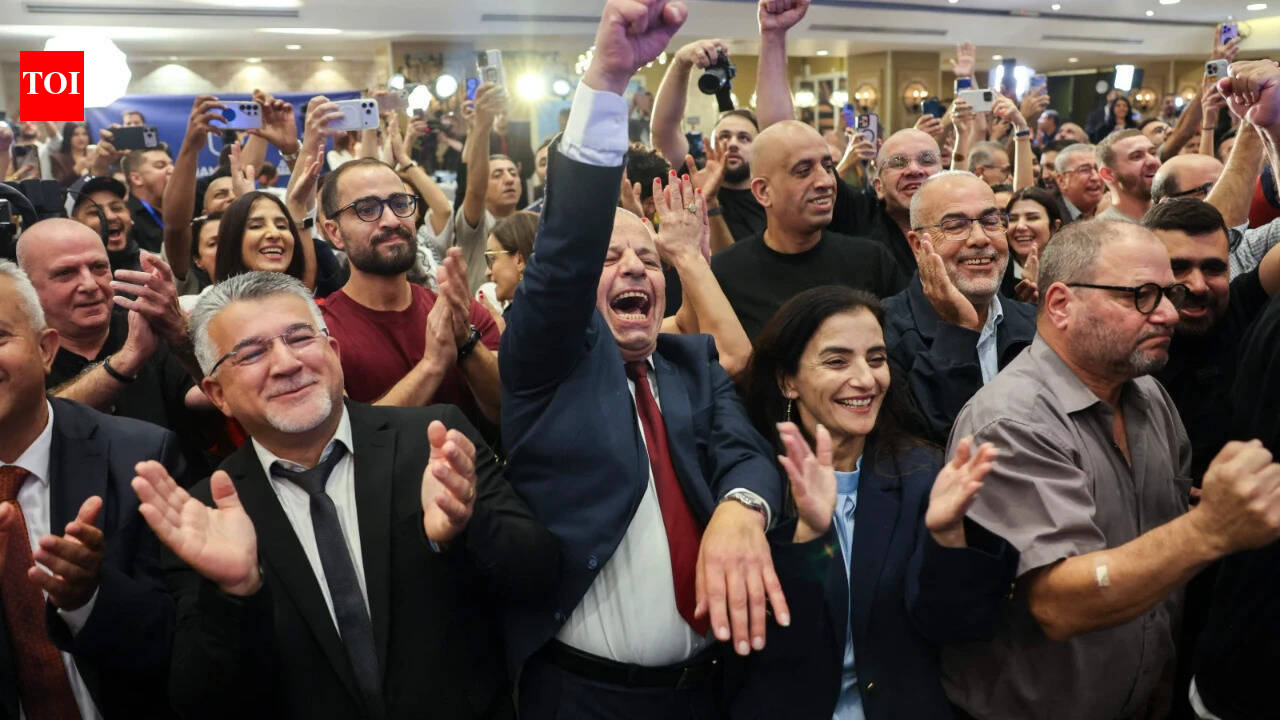
Israel faces a severe political deadlock after recent election results left both Benjamin Netanyahu's and Gadi Eisenkot's blocs short of a Knesset majority. President Isaac Herzog has urged parties to form a unity government to prevent yet another cycle of elections.
The Israeli Political Impasse: A Nation at a Crossroads
Following the latest election results, Israel finds itself mired in a familiar but deepening political paralysis. With Benjamin Netanyahu’s bloc securing 53 seats and the opposition alliance led by Gadi Eisenkot capturing 48, neither faction has reached the 61-seat threshold required to command a majority in the 120-member Knesset. With Arab-led parties holding the remaining 19 seats, the path to a stable governing coalition remains obscured by deep ideological divisions and historical animosities.
The Presidential Plea for Stability
In response to this legislative vacuum, Israeli President Isaac Herzog has issued an urgent appeal to political leaders to prioritize national stability over partisan gains. Herzog’s call to "do everything" to avoid another election highlights the exhaustion of the Israeli electorate, which has endured multiple voting cycles in recent years. By urging parties to approach coalition talks with an "open mind," the President is attempting to leverage his office to force a departure from the rigid posturing that has defined the current electoral landscape.
The Unity Government Dilemma
One of the most discussed pathways out of this impasse is the formation of a national unity government. However, this prospect is fraught with significant political risk, particularly for Gadi Eisenkot. Eisenkot campaigned on a platform explicitly centered on ousting Netanyahu, characterizing the Prime Minister’s tenure as a "culture of lies" and division. For Eisenkot to join a coalition with his primary rival would require a wholesale abandonment of his core campaign promises, a move that could alienate his base and undermine his political credibility.
Strategic Maneuvers and the Role of Minority Parties
Netanyahu, conversely, faces his own set of strategic challenges. To reach the 61-seat majority, he must either court unlikely allies from the opposition or consider alienating his existing partners in far-right and ultra-Orthodox parties. The possibility of ditching these factions to form a more centrist unity government remains a theoretical, albeit difficult, option. The presence of Arab-led parties as a significant voting bloc further complicates these negotiations, as their inclusion or exclusion remains a polarizing factor in Israeli coalition-building.
The Mechanism of Mandates
The process of forming a government now rests in the hands of President Herzog, who holds the authority to grant the first mandate to attempt coalition formation. The path forward remains highly fluid, with scenarios ranging from a successful, albeit tenuous, coalition to a total failure that would trigger a return to the polls. The 90-day window for forming a government looms as a critical deadline, after which the constitutional requirement for new elections becomes increasingly inevitable.
Conclusion: Assessing the Future
As the nation waits for the final tally—including the impact of "double-envelope" votes—the political future of Israel remains precarious. The current deadlock is not merely a numbers game but a reflection of a deeply fractured electorate. Whether the political class can transcend its current state of polarization to form a functioning government, or whether the country is destined for another cycle of voting, will depend on the willingness of leaders like Netanyahu and Eisenkot to compromise on their long-held positions.