Israeli opposition accuses Netanyahu of trying to 'delegitimise' election
Source Entity
BBC News
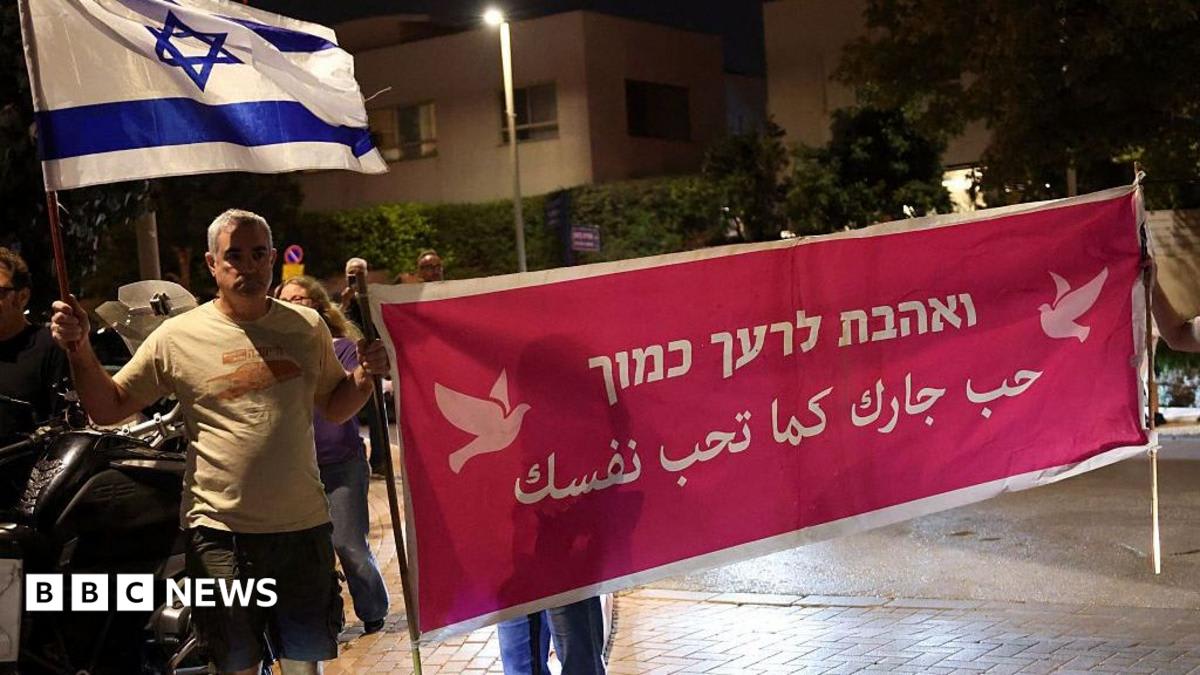
Israel faces a pivotal election on October 27 as former army chief Gadi Eisenkot challenges Prime Minister Benjamin Netanyahu. Amidst a fractured political landscape, Netanyahu has sparked controversy by accusing Arab-led parties of election interference, a claim strongly denied by international partners.
The High-Stakes Battle for Israel's Political Future
Israel is currently navigating one of the most volatile political periods in its modern history. With the general election scheduled for October 27, the nation remains deeply divided, as the electorate prepares to decide between the enduring tenure of Prime Minister Benjamin Netanyahu and the surging challenge of Gadi Eisenkot, a former army chief of staff. The outcome of this vote is expected to redefine the country’s security doctrine and its internal social cohesion.
The Security Paradigm and the October 7 Crisis
For decades, Benjamin Netanyahu has built his political brand around the moniker "Mr. Security." However, this narrative suffered an unprecedented collapse following the October 7, 2023, attack by Hamas. The resulting security failures have forced a national reckoning, shifting public focus toward accountability and the efficacy of the current government. The ongoing regional conflicts, including hostilities with Hezbollah in Lebanon, have further complicated the political calculus, as voters weigh Netanyahu’s experience against the perceived necessity for a fresh strategic approach.
The Rise of Gadi Eisenkot
In a dramatic shift in the political landscape, Gadi Eisenkot has emerged as the primary opposition figure. A veteran who led the Israeli army from 2015 to 2019, Eisenkot’s rise from single-digit polling numbers to becoming a genuine threat to the Likud party signifies a profound desire for change among voters. Representing the Yashar party, Eisenkot brings a military background that challenges Netanyahu’s traditional base, offering a leadership style rooted in his experience as a former chief of staff.
Allegations and the Discourse of Delegitimization
As the election approaches and final results indicate a lack of a clear majority for either the Netanyahu bloc or the opposition, the rhetoric has turned increasingly hostile. Netanyahu’s Likud party has accused Arab-led political factions—specifically the Joint List and Ra'am—of "stealing" the election. These allegations have been accompanied by claims of foreign interference, with the Shin Bet investigating potential illegal funding from Qatar and Turkey. These accusations have been vehemently rejected by both the accused parties and the international entities involved, with Qatar labeling the claims as a dangerous disinformation campaign.
The Fragility of the Knesset
The current electoral arithmetic suggests a prolonged period of instability. With neither the Netanyahu-led coalition nor the anti-Netanyahu bloc projected to reach the necessary 61-seat threshold in the 120-seat Knesset, the political future of Israel remains in flux. The record-breaking performance of the Arab-led parties, which secured 19 seats, highlights their growing influence as potential kingmakers in a fractured parliamentary system.
Conclusion: A Nation at a Crossroads
Ultimately, the October 27 election serves as a referendum on the direction of the state. Whether the electorate chooses to maintain the status quo under Netanyahu or embrace the potential for a historic shift with Eisenkot—who would be the first Mizrahi prime minister—remains to be seen. The discourse surrounding the election, marked by accusations of delegitimization and foreign interference, underscores the intense pressure and polarization currently defining Israeli democracy.
Multiple Citing Sources