Israel polls: Neither Netanyahu nor oppn wins majority; what happens next?
Source Entity
ABHISHEK MISHRA
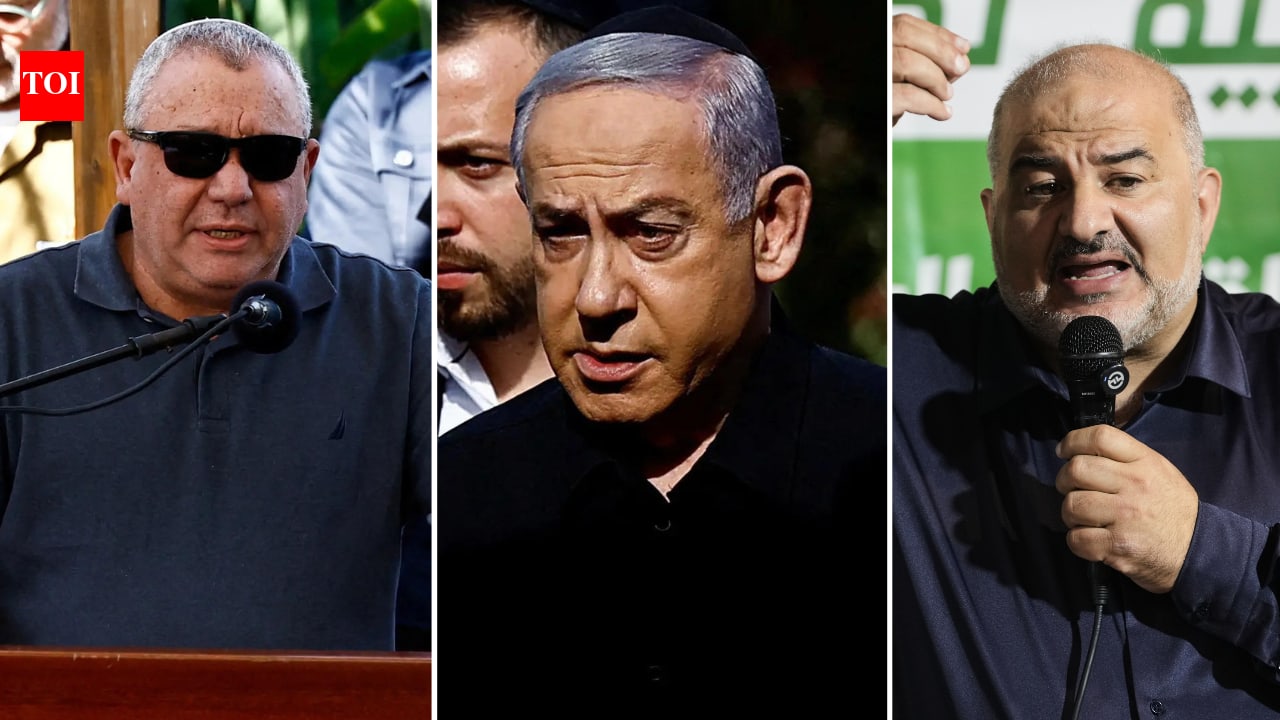
Israel faces a pivotal election on October 27 as Benjamin Netanyahu battles former army chief Gadi Eisenkot. The contest centers on security accountability following the October 7 attacks and shifting voter sentiment.
The Defining Moment for Israeli Leadership
Israel stands at a political crossroads as the nation approaches the October 27 elections, a date that will determine the future of Prime Minister Benjamin Netanyahu’s long-standing political career. For years, Netanyahu has successfully cultivated his image as "Mr. Security," a leader purportedly uniquely capable of navigating the complex and often hostile regional landscape. However, the unprecedented Hamas attack on October 7, 2023, has fundamentally shattered this perception, leaving the electorate to grapple with profound questions regarding the government's competence and accountability.
The Rise of Gadi Eisenkot
Emerging as the primary challenger to Netanyahu is Gadi Eisenkot, a 66-year-old former chief of the Israeli army. Eisenkot’s journey from a career spanning four decades in the military—including serving as chief of staff under Netanyahu from 2015 to 2019—to the leader of the Yashar party marks a significant shift in the electoral landscape. Once polling in the single digits, Eisenkot has seen a surge in popularity, with recent projections suggesting his party could secure 20 to 23 seats in the 120-seat Knesset, potentially outperforming Netanyahu’s Likud party.
Security as the Central Campaign Theme
Security remains the dominant issue for Israeli voters, especially following the security failures exposed by the October 7 incident. While Netanyahu attempts to utilize his familiar playbook to reassert his necessity for national safety, the public narrative has shifted. The ongoing military confrontations with Hezbollah and other regional threats have forced a public reckoning. Voters are now weighing Netanyahu’s historical dominance against Eisenkot’s military background and his promise of a different strategic approach.
The Historical Significance of the Candidacy
Beyond the tactical electoral battle, Eisenkot’s candidacy carries deep social significance. As the son of Moroccan immigrants, if elected, he would become Israel’s first Mizrahi prime minister. This represents a potential milestone in Israeli political history, reflecting changing demographics and the desire for representation that transcends traditional political boundaries. His visit to the Western Wall in Jerusalem serves as a symbolic appeal to both tradition and the national identity he seeks to lead.
The Mathematical Reality of the Knesset
Despite the polling momentum favoring Eisenkot, the path to forming a government remains fraught with difficulty. The Israeli political system, which requires a 61-seat majority to govern, currently shows that neither the Netanyahu-led bloc nor the opposition bloc is definitively on track to reach this threshold. This suggests that the post-election period may be defined by complex coalition negotiations, where smaller parties will hold significant leverage over the eventual formation of the government.
Conclusion: A Nation in Transition
As the October 27 deadline approaches, Israel faces a binary outcome: the potential revival of Netanyahu’s tenure or a transformative shift toward a new leadership style under Eisenkot. The outcome will not only reflect the public’s judgment on the government's handling of the security crisis but will also dictate the trajectory of Israel’s internal stability and regional foreign policy for years to come.
Multiple Citing Sources