Receiving mandate to form Israel government, Eisenkot says task ‘requires creative and unconventional political moves’
Source Entity
The Indian Express
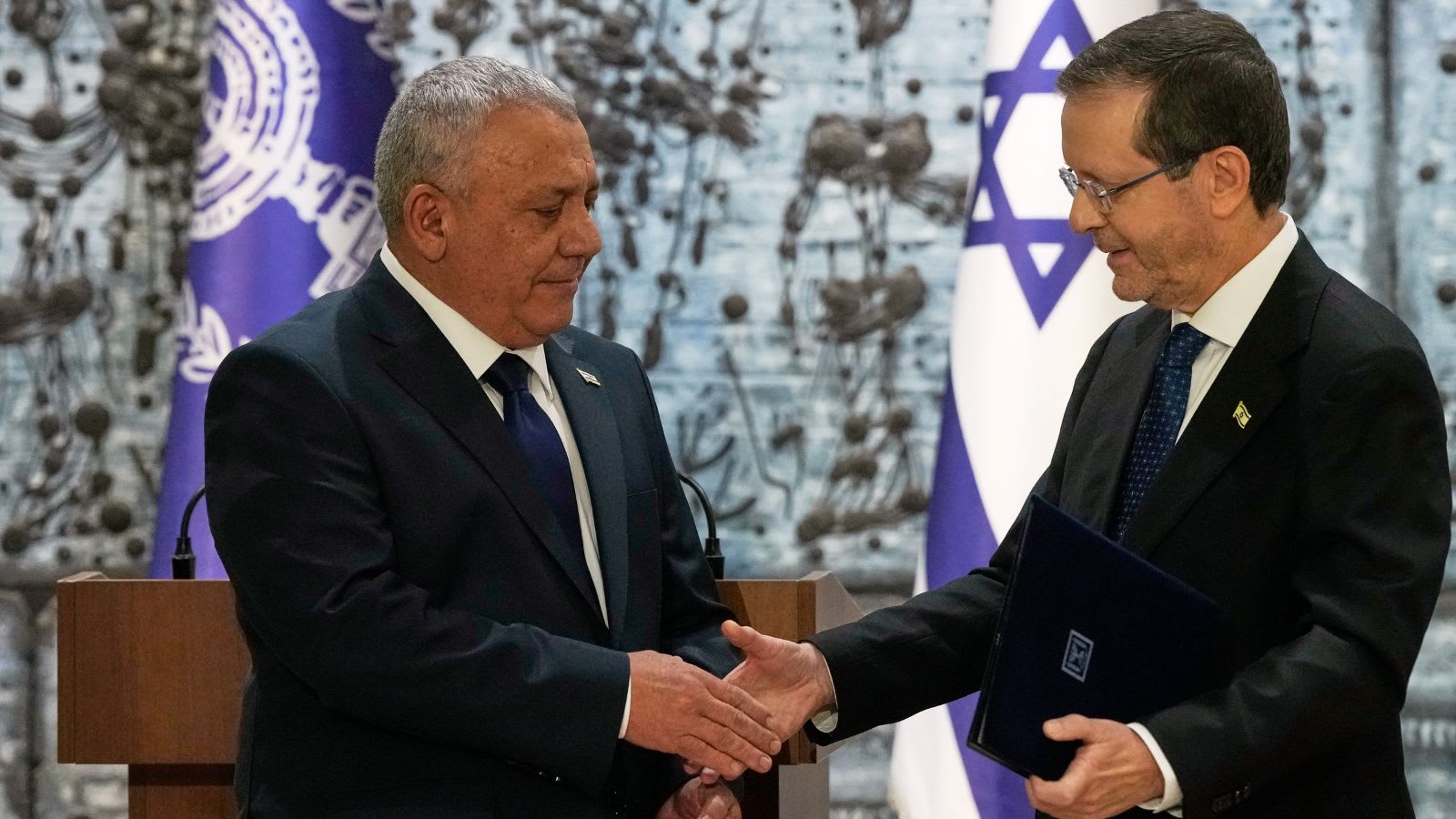
Gadi Eisenkot has been tasked with forming Israel's next government amid a complex coalition landscape. With Netanyahu vying for a return to power, the nation faces potential instability and the risk of further elections.
The Fragile State of Israeli Governance
The political landscape in Israel is currently defined by a high-stakes transition of power, as Gadi Eisenkot, the former army chief, has been officially tasked with forming the next government. Having secured the backing of 67 lawmakers, Eisenkot’s mandate represents a significant hurdle for the incumbent, Benjamin Netanyahu. However, despite the initial support, the path to a functional majority remains fraught with ideological friction, as potential coalition partners hold deeply conflicting views regarding the inclusion of Arab and ultra-Orthodox factions.
The Arithmetic of Coalition Building
At the heart of the current crisis is the mathematical reality of the Knesset. While Eisenkot has the necessary recommendations to begin, his coalition currently lacks the stable majority required to govern effectively. The inclusion of Arab parties remains a polarizing issue, yet it may be the only viable route to securing the necessary numbers. Simultaneously, the ultra-Orthodox factions hold significant leverage, acting as kingmakers whose support could either stabilize or derail the emerging administration. Eisenkot’s proposal for a national emergency government, built upon four key principles, is a strategic attempt to bridge these divides, though its success remains uncertain.
Netanyahu’s Strategic Counter-Move
Benjamin Netanyahu, the longest-serving prime minister in Israeli history, is not conceding his influence despite losing his parliamentary majority. His Likud party remains the largest single entity in the Knesset, providing him with a platform to challenge Eisenkot’s legitimacy. Netanyahu has aggressively framed a potential coalition involving Arab parties as an existential threat that would "dismantle Israel," a narrative designed to sway public opinion and discourage potential defectors from Eisenkot’s camp. By calling for a national unity government, Netanyahu is positioning himself as the necessary stabilizer, hoping to remain relevant even while out of power.
The Role of Presidential Intervention
Israeli President Isaac Herzog has emerged as a central figure, signaling a clear preference for a national unity government to avoid further political paralysis. By assigning the mandate to Eisenkot, Herzog has set the clock on a 42-day window for negotiations. This period of intense maneuvering will determine whether Israel can move past the recent period of electoral instability or if the nation is destined for yet another round of elections. The President’s involvement reflects the urgency of the situation and the desire to prevent the complete fracturing of the political system.
Future Implications and Uncertainty
If Eisenkot fails to finalize a coalition within his six-week mandate, the political machinery will likely shift back toward Netanyahu. This creates a circular dynamic where the failure of one leader provides a lifeline to the other. Should both leaders fail to secure a governing majority, the prospect of an ongoing cycle of elections becomes increasingly likely, threatening to deepen the economic and social fatigue already felt by the Israeli electorate. The coming weeks will be a critical test for Israel’s democratic institutions, as the nation navigates this precarious transition between competing visions of leadership.
Multiple Citing Sources