Property seller takes Rs 5.22 lakh cash, faces tax penalty; why ITAT gave relief
Source Entity
TOI BUSINESS DESK
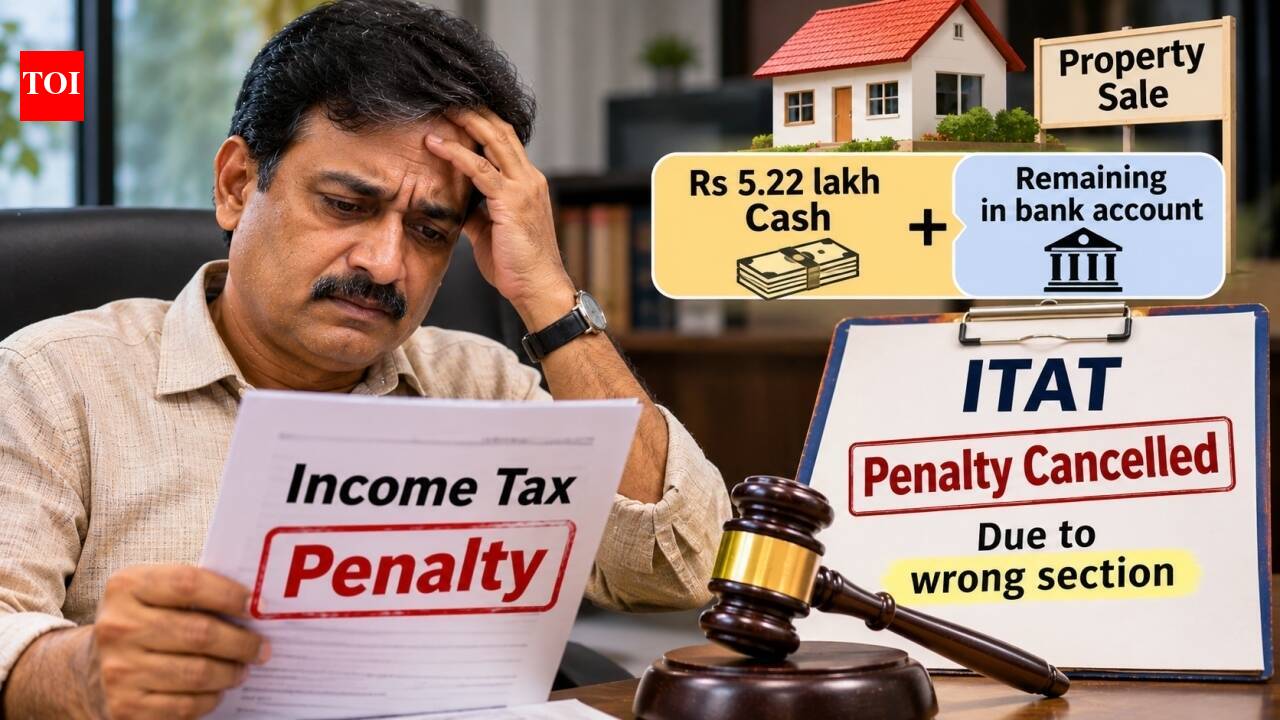
The ITAT granted relief to a property seller penalized for accepting Rs 5.22 lakh in cash. The ruling hinged on a technical misapplication of the Income Tax Act regarding the specific section cited for the penalty.
Legal Nuance in Tax Compliance: The ITAT Property Case
The Incident at Hand
In a recent legal development, a property seller in Jharsuguda, Odisha, found himself embroiled in a dispute with the Income Tax Department after accepting a cash payment of Rs 5.22 lakh for a property transaction. The information was flagged by the local property registrar's office, leading the Income Tax Assessing Officer (AO) in Berhampur to initiate proceedings. The AO issued a notice under Section 269SS of the Income Tax Act, subsequently imposing a penalty under Section 271DA. This case highlights the rigorous scrutiny applied to large cash transactions in real estate, an sector historically prone to tax evasion and the circulation of unaccounted wealth.
The Disputed Sections of Law
At the core of the dispute was a technical conflict regarding the interpretation of the Income Tax Act. While the AO penalized the assessee under Section 271DA—which relates to violations of Section 269ST concerning the receipt of cash exceeding Rs 2 lakh—the defense counsel successfully argued that the application of these sections was legally flawed in this specific context. The legal argument underscored the importance of procedural correctness when the state exercises its power to levy financial penalties, suggesting that an incorrect citation of the law can render an otherwise valid investigation unenforceable.
The Role of ITAT in Tax Jurisprudence
The Income Tax Appellate Tribunal (ITAT) serves as a vital check and balance within the Indian fiscal framework. By ruling in favor of the property seller, the ITAT demonstrated that even when a transaction is documented and acknowledged—as was the case here, with the cash component explicitly mentioned in the registered sale deed—the government must adhere strictly to the statute. The relief granted to the seller serves as a reminder that tax authorities must precisely identify the nature of the violation before imposing punitive measures.
Implications for Real Estate Transactions
This case underscores the government’s ongoing efforts to curb the 'black money' economy in India. By tracking property registrations and cross-referencing them with tax filings, the Income Tax Department is increasingly capable of identifying cash-heavy transactions. However, this ruling also signals to taxpayers that the judiciary remains a safeguard against overzealous or technically imprecise tax enforcement. For individuals involved in property deals, this serves as a cautionary tale: while cash transactions up to certain limits are regulated, the legal consequences for exceeding them are severe.
Future Trends and Compliance
As India moves toward a more digitized and transparent economy, the intersection of real estate and tax law will likely see continued litigation. Future trends suggest that the ITAT will continue to focus on the 'letter of the law,' potentially leading to more cases being decided on technical grounds rather than the substance of the transaction alone. Taxpayers and legal practitioners alike should view this case as a masterclass in the necessity of precise legal drafting and the importance of understanding the specific provisions of the Income Tax Act to avoid unnecessary financial penalties.