At G20 foreign ministers’ meet: Jaishankar raises energy crisis, flags sanctions, attacks
Source Entity
Shubhajit Roy
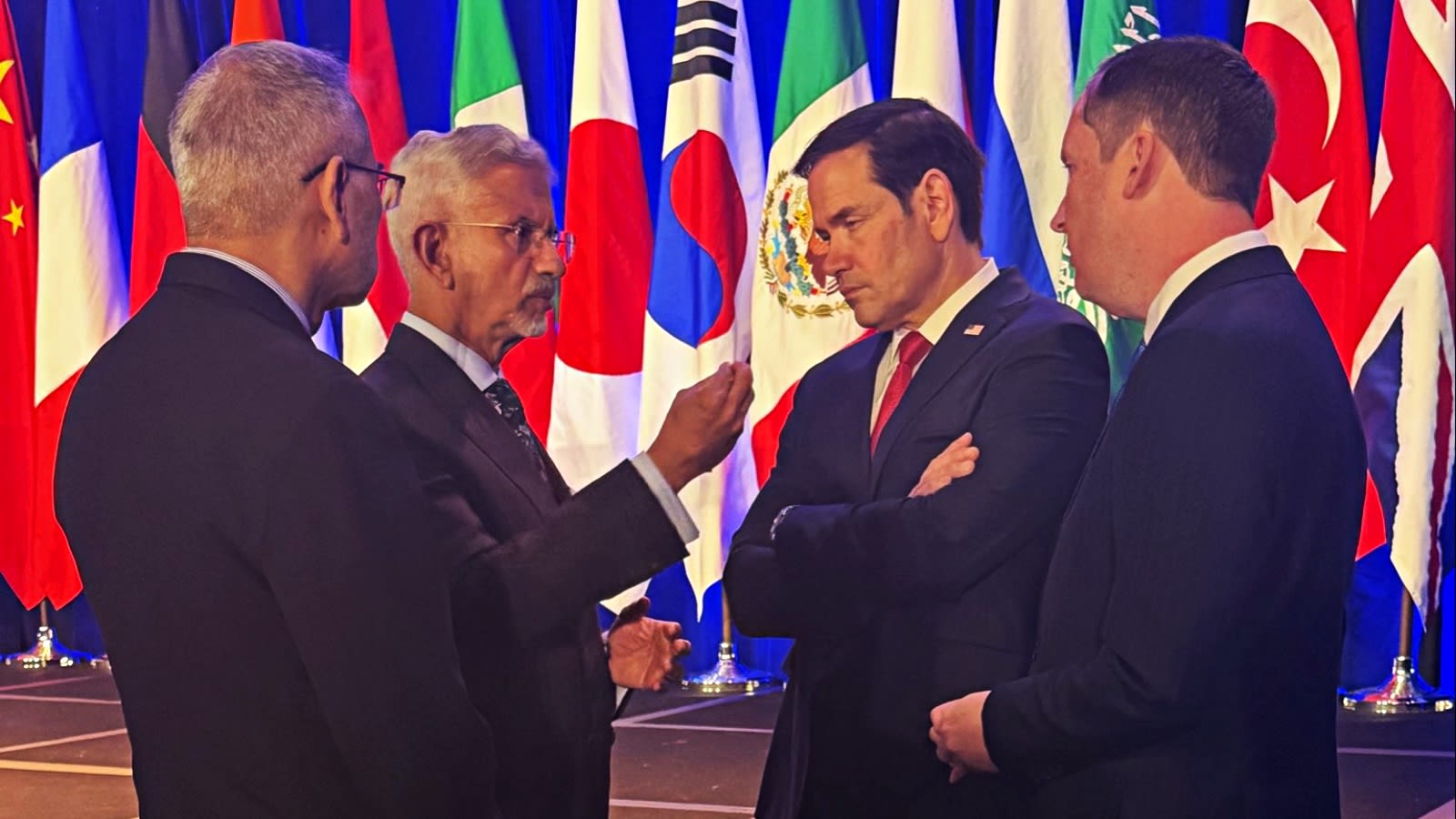
External Affairs Minister S. Jaishankar criticized the politicization of energy markets at the G20 meeting in Atlanta. He highlighted how sanctions and infrastructure attacks are destabilizing global supply chains at the expense of low-income nations.
Global Energy Security Under Siege: An Analysis of India’s G20 Stance
At the recent G20 Foreign Ministers’ meeting in Atlanta, Indian External Affairs Minister S. Jaishankar delivered a pointed critique regarding the current state of global energy markets. By highlighting the "distortions" caused by geopolitical maneuvering, sanctions, and direct attacks on critical infrastructure, Jaishankar underscored a growing concern that the global energy trade is being weaponized, often at the direct expense of the world's most vulnerable populations.
The Weaponization of Energy Flows
Jaishankar’s remarks specifically identified the "deliberate attacks" on energy infrastructure and shipping lanes as a "calculated strategy" intended to manipulate prices. This observation reflects the reality of modern conflict, where energy assets—ranging from oil refineries to maritime transport—have become primary targets in the ongoing wars in West Asia and the Russia-Ukraine theater. When energy flows are disrupted, the resulting volatility does not just impact the belligerents; it creates a ripple effect that destabilizes global markets.
The Impact on Low-Income Nations
One of the most critical aspects of the Minister's address was the assertion that there is "little regard" for the predicament of low-income countries. These nations, which lack the fiscal buffer to absorb sudden spikes in energy costs, are disproportionately affected by the politicization of supply chains. By framing the current sanctions regime—including the complexities surrounding Iranian oil sales and Russian-linked sanctions—as a source of market distortion, India is positioning itself as a voice for the Global South, demanding that energy security be decoupled from partisan geopolitical agendas.
Diversification as a Strategic Necessity
Beyond criticizing the status quo, Jaishankar advocated for the "de-politicisation" of energy markets and the urgent need for diversified supply chains. This strategy is essential for mitigating the risks associated with "chokepoints" that currently allow singular nations or regional conflicts to hold global pricing hostage. Diversification serves as a hedge against the volatility created by unilateral sanctions and regional instability, providing a path toward a more resilient global energy architecture.
Future Trends and Policy Implications
Looking ahead, the tension between energy security and geopolitical sanctions is likely to remain a central theme in international diplomacy. The G20, as a forum, is increasingly becoming the arena where these structural imbalances are debated. Future trends suggest that nations will continue to seek more autonomous energy supply chains, potentially leading to a fragmentation of global trade as countries prioritize reliability over cost. India’s proactive stance signals a shift toward a more multipolar approach to energy governance, where the interests of developing economies are increasingly integrated into the global discourse on security and sustainability.