Jaishankar meets European Council president, values his role in advancing trade, technology cooperation
Source Entity
India Latest News: Top National Headlines Today & Breaking News | The Hindu
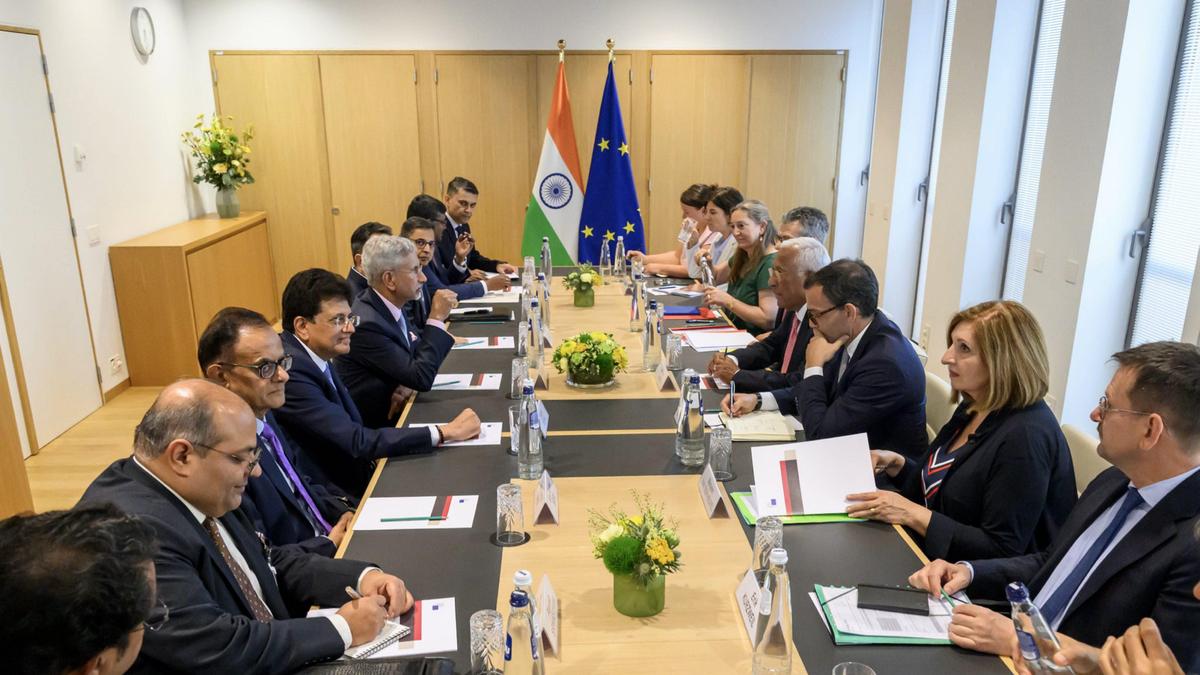
External Affairs Minister S. Jaishankar visited Brussels, Belgium, from July 14 to 15 to attend the 3rd India-EU Trade and Technology Council meeting and engage with European leaders to strengthen trade and technological cooperation.
Strengthening the Strategic Partnership: India and the EU
External Affairs Minister S. Jaishankar's visit to Belgium from July 14 to 15 marks a pivotal moment in the evolving relationship between India and the European Union. By participating in the 3rd India-EU Trade and Technology Council (TTC) meeting in Brussels, India is signaling its intent to move beyond traditional diplomatic ties toward a more integrated, technology-driven economic partnership. This visit is not merely a routine diplomatic engagement but a strategic move to align two of the world's largest democratic economies in an era of rapid digital transformation and geopolitical instability.
The Significance of the Trade and Technology Council (TTC)
The TTC serves as a high-level dialogue mechanism designed to coordinate the approach of India and the EU on critical and emerging technologies. As this is the third such meeting, it demonstrates a commitment to institutionalizing this cooperation. The council's focus on 'trade and technology' recognizes that in the modern global economy, these two domains are inseparable. By streamlining regulations and fostering joint research, both entities aim to create a more resilient framework for innovation. The TTC is essential for addressing challenges such as digital sovereignty, data privacy, and the ethical deployment of artificial intelligence, ensuring that both regions remain competitive while maintaining their core values.
Expanding Trade Horizons and Economic Synergy
Beyond the immediate technical discussions, Jaishankar's interactions with his EU and Belgian counterparts are deeply intertwined with the broader goal of enhancing bilateral trade. For years, India and the EU have been engaged in complex negotiations regarding a comprehensive Free Trade Agreement (FTA). While the TTC focuses on technology, its successes often pave the way for broader trade concessions by building trust in high-value sectors. The focus on Belgium, a key logistics and diplomatic hub in Europe, underscores the importance of utilizing existing European infrastructure to facilitate smoother trade flows and investment between the two regions.
Technological Cooperation and Strategic Autonomy
One of the most critical aspects of this visit is the emphasis on technology cooperation. In a world increasingly characterized by supply chain vulnerabilities, India and the EU are seeking to diversify their dependencies. Discussions likely centered on semiconductors, green hydrogen, and sustainable energy technologies. By collaborating on these fronts, India can leverage European engineering and capital, while the EU can tap into India's massive scale of digital implementation and software expertise. This synergy is a cornerstone of 'strategic autonomy,' allowing both parties to reduce reliance on any single dominant global power for critical tech components.
High-Level Diplomatic Alignment
The meeting between Minister Jaishankar and the President of the European Council elevates the discourse from technical cooperation to high-level political alignment. This interaction suggests that the technical goals of the TTC are backed by the highest levels of European political leadership. Such alignment is crucial for overcoming bureaucratic hurdles and ensuring that agreements reached at the council level are implemented effectively. It also allows for the synchronization of views on global governance, emphasizing a rules-based international order that benefits emerging economies and established powers alike.
Future Outlook and Implications
Looking forward, the outcomes of this visit are expected to catalyze a series of joint ventures and regulatory alignments. We can predict an increase in EU investments in India's green energy sector and a more streamlined process for Indian tech firms to enter the European market. As the TTC continues to evolve, it will likely expand its scope to include more specific frameworks for cybersecurity and space exploration. The trajectory of this relationship suggests that India is increasingly viewed by the EU not just as a market, but as a strategic partner capable of providing stability and innovation in a volatile global landscape.
Conclusion
Minister Jaishankar's visit to Brussels reinforces the trajectory of India-EU relations toward a more mature, technology-centric partnership. By leveraging the Trade and Technology Council, both regions are effectively bridging the gap between political diplomacy and economic reality. The focus on trade, technology, and high-level leadership engagement ensures that the partnership is robust enough to withstand global shocks while fostering mutual growth and innovation.
Verification Required?