Jaishankar to meet Quad counterparts on sidelines of ASEAN meet in Manila
Source Entity
Latest News: Today's Latest News Headlines from India & World | Hindustan Times | Hindustan Times
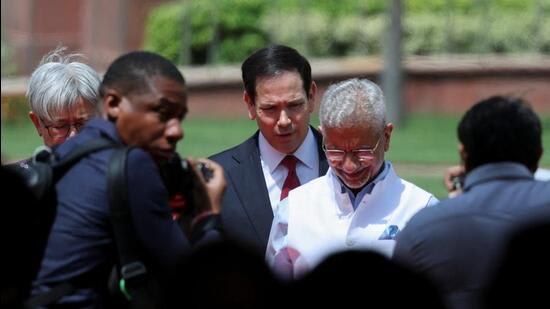
External Affairs Minister S. Jaishankar met with his Quad counterparts in Manila to discuss regional stability and strengthen the ASEAN-India partnership. The meeting highlights a shared commitment to a free and open Indo-Pacific amid rising regional tensions.
Strategic Alignment in the Indo-Pacific
External Affairs Minister S. Jaishankar’s visit to Manila on July 22-23 marks a significant moment in regional diplomacy. By convening with his counterparts from the United States, Japan, and Australia on the sidelines of the ASEAN ministerial meetings, the Quad (Quadrilateral Security Dialogue) has demonstrated a sustained commitment to maintaining a stable and rules-based order in the Indo-Pacific. This gathering, occurring only two months after the previous meeting in New Delhi, underscores the urgency and frequency of high-level consultations among these four nations.
The ASEAN-India Connection
Beyond the Quad-specific agenda, the visit emphasizes India’s deepening integration with Southeast Asia under the 'Act East' policy. By participating in the ASEAN-India, East Asia Summit (EAS), and ASEAN Regional Forum (ARF), India is signaling that its strategic interests are inextricably linked to the prosperity and security of the ASEAN bloc. The designation of 2026 as the 'ASEAN-India Year of Maritime Cooperation' serves as a long-term roadmap for this engagement, highlighting a shared focus on maritime security and connectivity.
Countering Regional Assertiveness
The Quad meeting in Manila, attended by key figures including US Secretary of State Marco Rubio, Australian Foreign Minister Penny Wong, and Japanese Foreign Minister Toshimitsu Motegi, carries clear geopolitical weight. The group’s explicit pledge to keep the Indo-Pacific stable is a direct response to increasing concerns regarding China’s assertive behavior in the region. By reaffirming their support for ASEAN centrality, the Quad members are attempting to provide a counter-narrative to regional hegemony, ensuring that the maritime domain remains free and open.
Diplomatic Hurdles and Future Trends
Despite the robust ministerial-level cooperation, challenges remain in institutionalizing the partnership. Notably, the Quad Leaders’ Summit, originally scheduled to be hosted by India last year, has yet to be finalized. This delay suggests that while functional cooperation at the foreign minister level is accelerating, aligning the schedules and priorities of the respective heads of state remains a complex diplomatic exercise. Future trends indicate that the Quad will likely continue to prioritize maritime domain awareness and supply chain resilience as core pillars of their cooperation.
Conclusion: A Multi-Layered Strategy
Ultimately, the Manila meetings represent a multi-layered diplomatic strategy for India. By balancing its engagement within the Quad—a security-focused grouping—and its active participation in broader ASEAN frameworks, New Delhi is successfully diversifying its regional influence. As the Indo-Pacific continues to be the epicenter of global economic and strategic competition, the ability of these four nations to maintain a unified front in Manila will be critical to shaping the regional security architecture for the coming decade.
Verification Required?