Ram Madhav writes: The youth have right to protest — with discipline
Source Entity
Ram Madhav
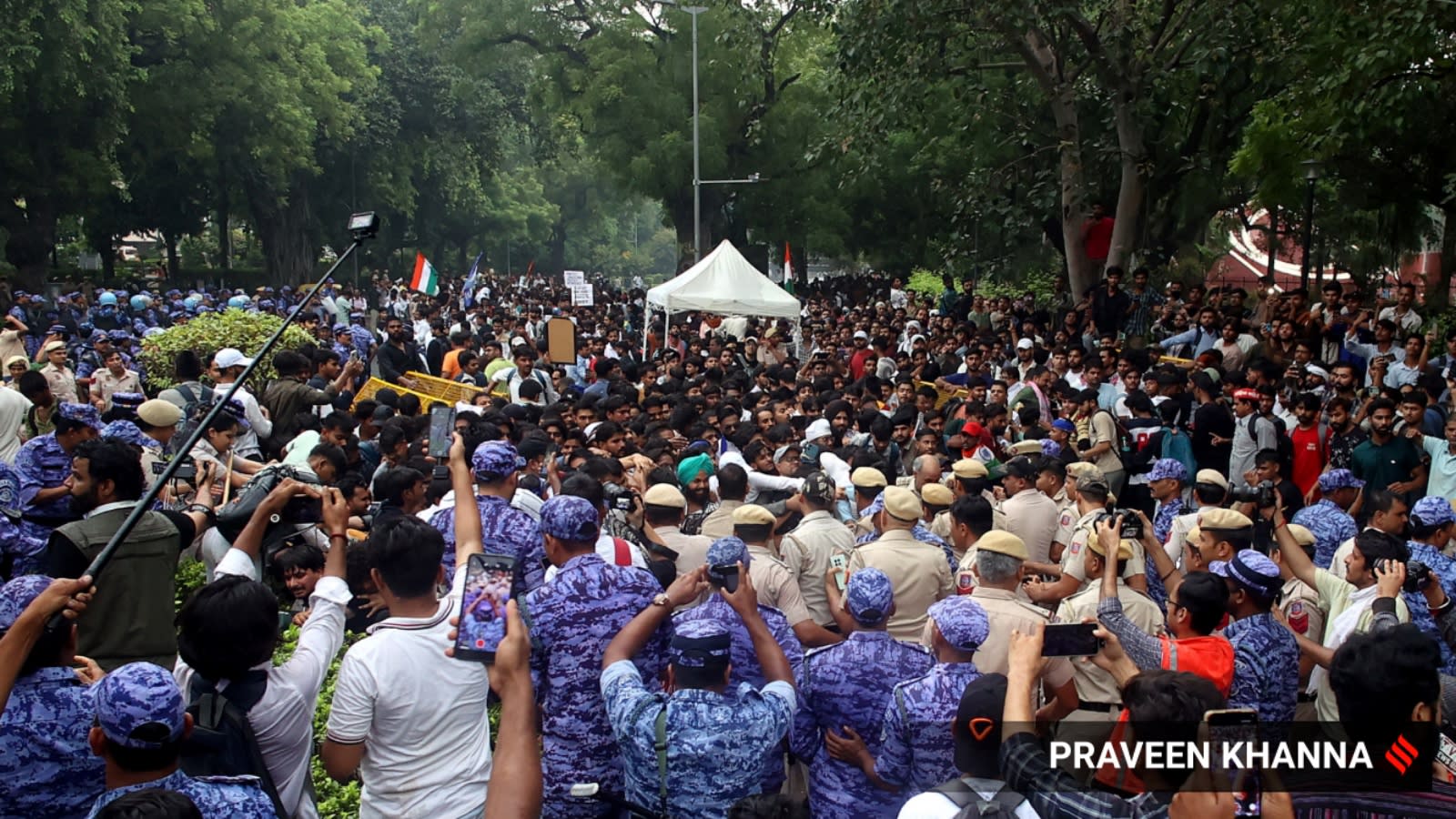
Protests at Jantar Mantar have gained significant momentum, drawing diverse groups demanding the resignation of Union Education Minister Dharmendra Pradhan. While the movement remains defiant, discussions surrounding the constitutional right to dissent and the necessity of disciplined protest have emerged.
The Evolving Landscape of Protest at Jantar Mantar
The ongoing agitation at Jantar Mantar, New Delhi, has reached a critical juncture as of July 2026. What began as a focused demonstration has transformed into a broad-based movement, characterized by swelling crowds that stretch from the protest site toward the Janpath metro station. The convergence of various interest groups—ranging from lawyers and NGO workers to farmer unions—underscores the depth of public dissatisfaction currently directed at the Union Education Ministry.
The Demand for Accountability
At the heart of the current unrest is a specific demand: the resignation of Union Education Minister Dharmendra Pradhan. The presence of the Cockroach Janta Party (CJP) as a primary interlocutor in talks with the central government highlights the political stakes involved. Despite activist Sonam Wangchuk concluding his hunger strike, the atmosphere remains highly charged, suggesting that the core grievances of the demonstrators have yet to be addressed to the satisfaction of the protesting coalition.
Constitutional Framework of Dissent
Expert commentary, such as that provided by Ram Madhav, emphasizes that the right to protest is an essential pillar of Indian democracy, rooted in Article 19(1)(a) of the Constitution. This article guarantees freedom of speech and expression, which inherently includes the right to critique government policy. However, the discourse also highlights a crucial distinction: while democratic systems provide a legal avenue for dissent, there is an expectation that such protests remain disciplined and grounded in reasonable conduct to preserve the stability of the public sphere.
The Mechanics of Mass Mobilization
Logistical indicators, such as the 50 to 100-minute wait times for participants to reach the protest site, illustrate the sheer scale of the mobilization. The participation of citizens traveling from states like Madhya Pradesh demonstrates that the movement has transcended local Delhi politics to become a national focal point. This broad-based support base provides the movement with the 'critical mass' necessary to sustain pressure on the central government over an extended period.
Future Implications and Trends
The persistence of the 'defiant mood' at Jantar Mantar suggests that the government faces a protracted challenge in managing public sentiment. As negotiations between the CJP and the central government continue, the outcome will likely serve as a litmus test for how the administration handles large-scale, multi-sectoral protests. If the demands remain unfulfilled, the trend of increasing intersectional solidarity—where diverse labor, professional, and political groups unite—could fundamentally alter the trajectory of the current political discourse leading into the latter half of 2026.