‘Hire and train Americans’: JD Vance defends proposed six-figure H-1B fee
Source Entity
YASHASVI VASISTHA
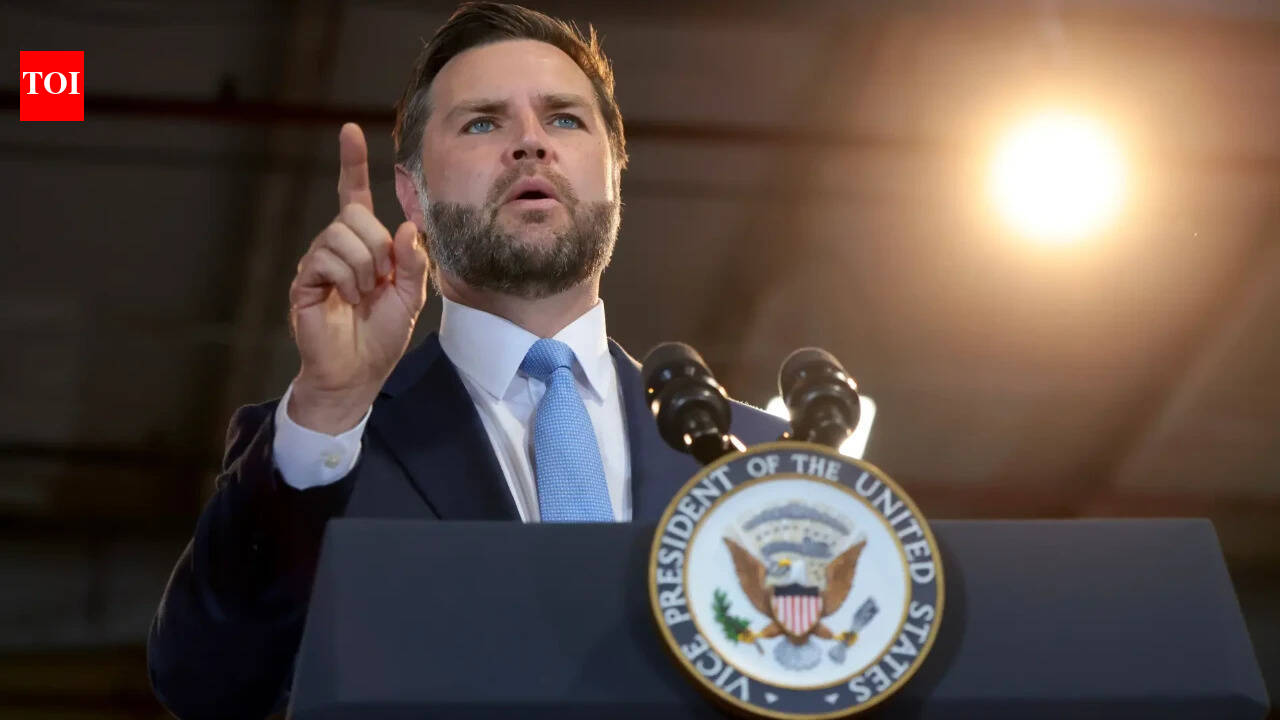
The US Department of Homeland Security has proposed a new $103,265 fee for cap-subject H-1B visa petitions to recover administrative costs. Vice President JD Vance supports the move, emphasizing the prioritization of American workers over foreign labor. This proposal poses significant financial challenges for companies and Indian professionals who heavily rely on the H-1B program.
The Shift in US Immigration Policy: Analyzing the $103,265 H-1B Fee
The U.S. Department of Homeland Security (DHS) has unveiled a significant proposal that could fundamentally alter the landscape of high-skilled immigration: a new $103,265 fee for cap-subject H-1B visa petitions. This initiative, framed as a mechanism to recover the administrative costs of the immigration system, represents a dramatic escalation in the financial barriers facing employers seeking to sponsor foreign talent. While DHS frames this as an operational necessity, the move carries profound political and economic implications.
The Political Stance: Prioritizing Domestic Labor
Vice President JD Vance has emerged as a vocal defender of this policy, framing the exorbitant fee as a strategic tool to incentivize firms to "hire and train Americans." By making the cost of sponsoring foreign workers prohibitive, the administration aims to shift the corporate incentive structure. This mirrors a broader protectionist trend in American labor policy, where the focus is increasingly placed on insulating the domestic workforce from international competition, particularly in specialized technical fields.
Impact on Indian Professionals and Global Talent
Indian professionals represent the largest beneficiary group of the H-1B program, making this proposal particularly consequential for the Indian diaspora and IT sectors. The H-1B program, which provides 65,000 standard visas and 20,000 advanced degree visas annually, has long been the primary gateway for foreign experts to work in the U.S. for three to six-year terms. If enacted, this fee could effectively price out smaller firms and startups from accessing this global talent pool, potentially leading to a "brain drain" or causing companies to relocate operations to countries with more favorable immigration environments.
Distinguishing the New Proposal
It is critical to note that this $103,265 fee is distinct from previous, legally challenged proclamations involving $100,000 payments. By categorizing this as a fee for cost recovery rather than a proclamation-based surcharge, the administration is attempting to navigate the legal pitfalls that saw previous similar measures invalidated by the courts. The proposal specifically targets cap-subject applications, notably granting an exemption to universities and research institutions, thereby attempting to mitigate the impact on academic innovation while focusing the financial burden on the private sector.
Future Trends and Corporate Implications
Employers are currently facing a period of intense uncertainty. Having already spent the past year anticipating a $100,000 payment, companies must now adjust their long-term hiring strategies to account for an even higher, stackable cost structure. The introduction of a "wage-weighted lottery" alongside these fees suggests a multifaceted approach to restricting H-1B access. Moving forward, businesses will likely accelerate their efforts to automate roles, outsource to lower-cost regions, or lobby heavily during the current thirty-day public comment period to challenge the economic viability of these new requirements.
Conclusion: The Road Ahead
The proposed fee is more than a administrative adjustment; it is a clear signal of a changing philosophy toward high-skilled immigration. As the public comment period proceeds, the tension between the administration’s "America First" labor agenda and the demands of a globalized, tech-driven economy will intensify. Whether this fee will survive legal scrutiny and public pushback remains to be seen, but the proposal undoubtedly marks a precarious moment for the future of the H-1B program.