After Row Over Vande Mataram At J&K Waqf Board Event, Muslim Clerics Pray In Remorse
Source Entity
NDTV News Search Records Found 1000
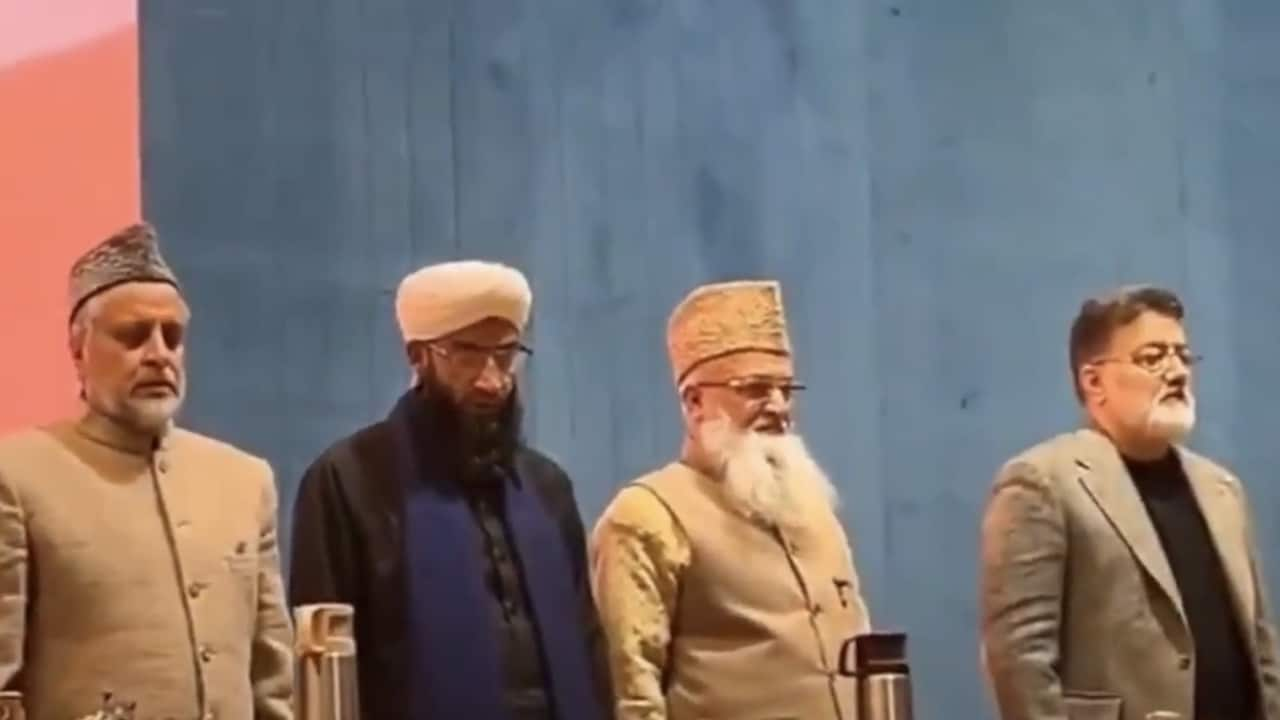
Prominent J&K Muslim clerics have offered public repentance after standing during the playing of Vande Mataram at a Waqf Board event. The incident sparked backlash from religious groups, including the Muttahida Majlis-e-Ulama, who view the act as contrary to Islamic beliefs.
The Controversy Surrounding Vande Mataram in J&K
A significant cultural and religious friction point has emerged in Jammu and Kashmir following the inaugural ‘Waqf Day’ function held on November 23, 2026. The event, hosted by the J&K Waqf Board at the Sher-e-Kashmir University of Agricultural Sciences and Technology in Srinagar, featured Union Minority Affairs Minister Kiren Rijiju as the chief guest. While the gathering was intended to commemorate the institution's role in managing Waqf properties, the proceedings took a controversial turn when the national song, Vande Mataram, was played in its entirety.
Religious Objections and Public Repentance
The presence of prominent Muslim clerics on the dais and in the audience, many of whom stood during the playing of the song, triggered immediate backlash from various religious organizations within the region. Critics, including the Muttahida Majlis-e-Ulama (MMU) led by Mirwaiz Umar Farooq, argued that standing for or participating in the song is fundamentally contrary to their interpretation of Islamic beliefs. In a swift response to the growing public outcry, the clerics who were present issued a formal apology and engaged in ‘repentance prayers,’ reciting the ‘kalima’ to seek forgiveness from Allah for their participation in the act.
The Role of the Waqf Board and Political Context
The event was spearheaded by Darakhshan Andrabi, the chairperson of the J&K Waqf Board and a prominent BJP leader. The inclusion of Vande Mataram in a state-sponsored Waqf function highlights the ongoing tension between secular government protocols and traditional religious sensitivities in the Union Territory. By inviting a Union Minister to preside over the first-ever Waqf Day, the board aimed to align its operations with national directives, yet the choice of ceremonial music inadvertently alienated local religious leadership.
Legal and Social Implications
The Muttahida Majlis-e-Ulama has indicated that it may seek formal legal opinion regarding the incident, suggesting that the fallout may extend beyond mere public apologies. This development reflects a deeper struggle over the cultural symbolism used in public spaces within J&K. The incident underscores how symbols of national identity, when introduced into religious or community-specific forums, can become lightning rods for political and theological debate.
Broader Trends in Identity Politics
This episode is indicative of the evolving landscape of identity politics in Jammu and Kashmir. As state institutions seek to integrate nationalistic symbols more firmly into the administrative fabric of the region, they are frequently met with resistance from established religious authorities who view such moves as an encroachment on their autonomy and belief systems. Future interactions between the Waqf Board and local religious leaders will likely be defined by a heightened sense of caution, as both sides navigate the delicate balance between administrative compliance and community sentiments. The reliance on public repentance highlights the power that religious institutions still hold in shaping the social discourse of the region.
Multiple Citing Sources
Verification Required?