40 years ago, July 25, 1986: Summary trials to curb riots
Source Entity
The Indian Express
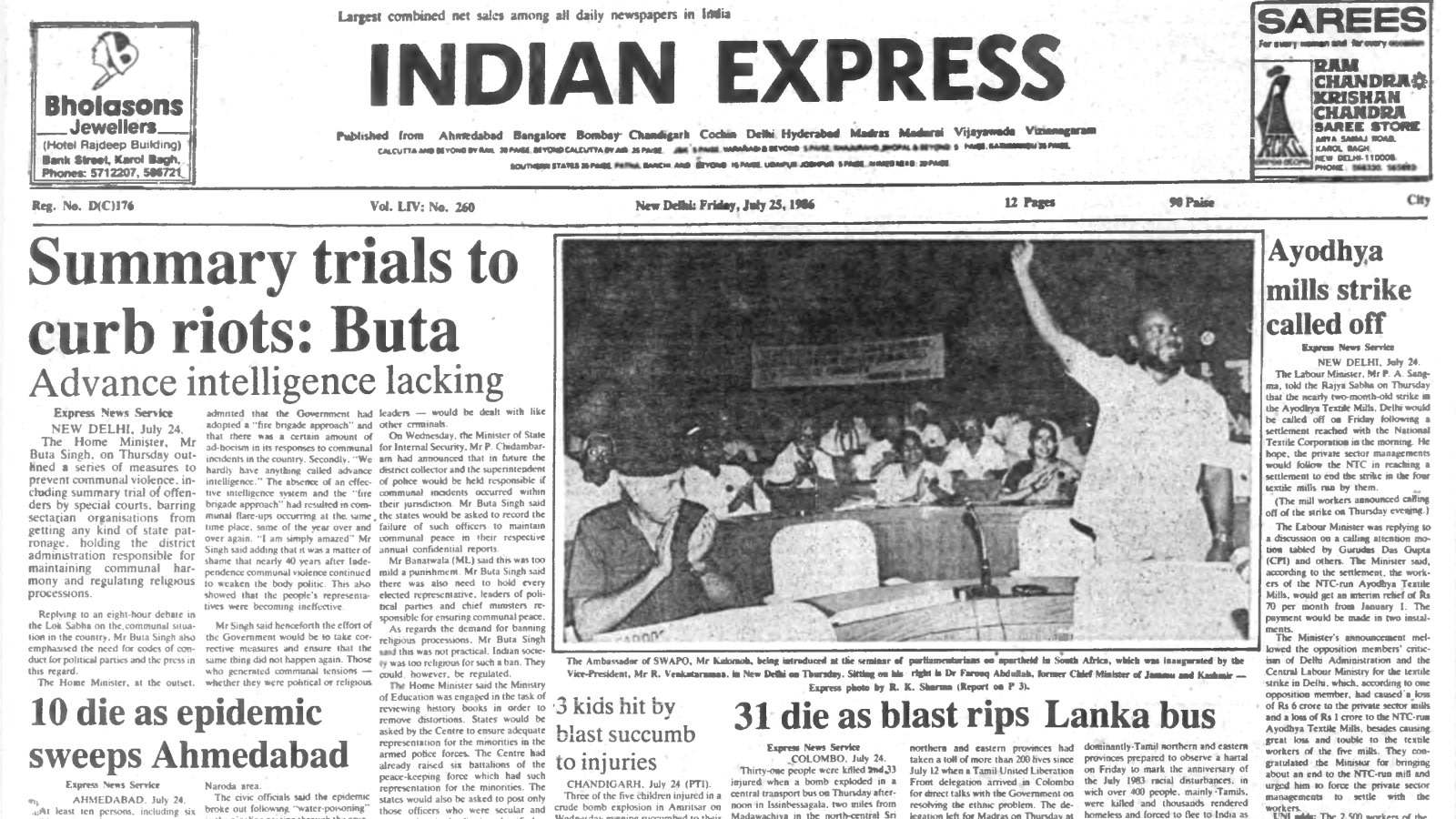
On July 25, 1986, India moved to curb communal violence through summary trials and stricter administrative accountability. Concurrently, Sri Lanka faced a surge in violence as a bus bombing in Issinbessagala claimed 31 lives, marking a period of intense regional instability.
The Dual Crisis of July 1986: Communal Tension and Regional Conflict
India's Legislative Response to Communalism
On July 25, 1986, the Indian government, represented by Home Minister Buta Singh, introduced a robust framework designed to address the persistent threat of communal violence. Recognizing that existing legal mechanisms were often insufficient to deter sectarian unrest, the government proposed the implementation of summary trials through special courts. By expediting the judicial process for offenders, the state aimed to create an immediate deterrent against rioting. This move was part of a broader strategy to restore order and ensure that those who incited violence faced swift consequences.
Accountability and State Patronage
Beyond judicial reform, the 1986 initiative sought to address the systemic roots of communal tension. A significant component of this policy involved barring sectarian organizations from receiving state patronage, effectively severing the financial and political lifelines that often emboldened divisive groups. Furthermore, the government shifted the burden of responsibility onto district administrations, mandating that local officials be held directly accountable for maintaining communal harmony. This policy reflected a shift toward bureaucratic oversight, emphasizing that the failure to prevent violence was not merely a social issue but an administrative one.
Regulating Public Expression and Political Conduct
Home Minister Buta Singh’s strategy also addressed the role of political and media entities in inflaming communal passions. By advocating for codes of conduct for political parties and the press, the government acknowledged that public discourse played a critical role in either de-escalating or intensifying sectarian conflicts. The regulation of religious processions was also highlighted as a necessary measure, given that such events frequently served as flashpoints for violence, requiring a delicate balance between religious freedom and the preservation of public order.
The Escalation of Violence in Sri Lanka
While India grappled with internal communal stability, Sri Lanka faced a devastating humanitarian crisis. In July 1986, a bomb blast in a transport bus near Issinbessagala resulted in 31 deaths and 13 injuries. This incident was not isolated; it was the second such attack in three days, bringing the total death toll from bus bombings to 68. The targeted nature of these attacks, which largely affected the majority Sinhalese population, highlighted the severe escalation of ethnic violence that characterized the region during this era.
Broader Implications and Historical Context
Both the Indian policy shifts and the Sri Lankan bombings illustrate the volatile geopolitical climate of the mid-1980s. In India, the focus was on institutionalizing peace through legal reform to prevent the fracturing of the secular fabric. Conversely, the situation in Sri Lanka demonstrated the tragic consequences of unchecked ethnic conflict. These events collectively underscore the challenges faced by South Asian nations in the 20th century as they struggled to manage internal diversity, political extremism, and the maintenance of security in the face of rising sectarianism.