‘Regressive’: Justice Ujjal Bhuyan flags judicial intervention, finance ministry policy as setback to arbitration
Source Entity
Latest News: Today's Latest News Headlines from India & World | Hindustan Times | Hindustan Times
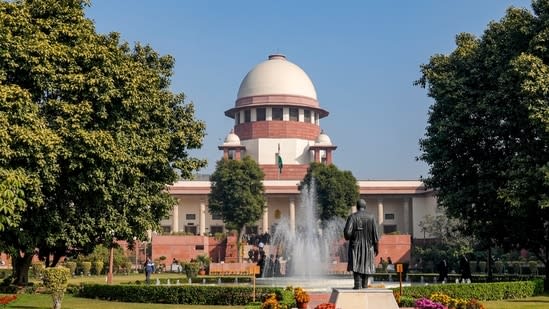
Supreme Court Justice Ujjal Bhuyan has criticized erratic judicial verdicts and regressive Finance Ministry policies for undermining India's goal to become a global arbitration hub. He highlighted a contradiction between current actions and Prime Minister Modi's vision for institutional arbitration.
Judicial Critique: The Struggle for India's Arbitration Ambitions
In a strikingly candid assessment of the Indian legal landscape, Supreme Court Justice Ujjal Bhuyan has raised alarms regarding the systemic hurdles preventing India from establishing itself as a premier global hub for arbitration. Speaking at the "Arbitration in India: Reform, Relevance and the Road Ahead" event organized by The Law Forum, Justice Bhuyan pointed to a troubling disconnect between the government's stated aspirations and the practical realities of judicial and administrative conduct. His critique centers on the notion that the path toward institutional arbitration is being obstructed by inconsistent legal interpretations and counterproductive policy shifts.
The Impact of Judicial Inconsistency
Justice Bhuyan specifically highlighted the danger of "erratic court verdicts," suggesting that unpredictability in the judiciary creates a climate of uncertainty for litigants and investors. A primary example cited was a 2024 Supreme Court judgment concerning a Delhi Metro arbitration dispute. According to Justice Bhuyan, the ramifications of such judgments extend far beyond the immediate parties involved, potentially signaling to the international community that judicial intervention in arbitration remains high. For a country seeking to attract global disputes, the principle of "minimal judicial interference" is paramount; when courts frequently revisit or overturn arbitration awards, it undermines the very essence of the arbitration process.
Policy Friction and the Finance Ministry
Beyond the courtroom, Justice Bhuyan directed sharp criticism toward the Union Finance Ministry, describing certain recent decisions as "regressive." The essence of this critique lies in the friction between executive policy and the strategic goal of promoting arbitration. By labeling these policies as regressive, the Justice suggests that the Finance Ministry may be implementing measures that create financial or procedural barriers, thereby contradicting the broader national objective. This internal policy conflict creates a paradoxical environment where one arm of the government promotes a vision of modernization while another implements rules that may stifle growth.
Contrasting the Vision with Reality
One of the most poignant aspects of Justice Bhuyan's address was the contrast he drew between current developments and Prime Minister Narendra Modi's vision. The Prime Minister has consistently advocated for the promotion of institutional arbitration to improve the "Ease of Doing Business" in India. Institutional arbitration—where a professional body manages the process—is generally seen as more efficient and transparent than ad hoc arbitration. However, Justice Bhuyan questioned how the current "erratic" rulings and "regressive" policies can be reconciled with this high-level vision, suggesting a significant gap between political rhetoric and administrative execution.
Broader Implications for Global Investment
The drive to become a global arbitration hub is not merely a legal ambition but an economic imperative. International corporations are more likely to invest in a jurisdiction where dispute resolution is fast, predictable, and shielded from excessive state or judicial interference. If India is perceived as a venue where arbitration awards are routinely challenged or where government policy is volatile, it risks losing potential cases to established hubs like Singapore or London. Justice Bhuyan's warnings underscore the risk that India may fail to capture this market if it cannot harmonize its judicial approach with its policy goals.
Conclusion: The Road to Reform
To realize the ambition of becoming a global arbitration hub, India must move toward a state of systemic coherence. Justice Bhuyan's analysis suggests that the solution lies in two areas: the judiciary must commit to a more predictable and non-interventionist approach to arbitration awards, and the Finance Ministry must align its policies with the goal of institutional growth. Only by bridging the gap between the Prime Minister's vision and the actual conduct of the courts and ministries can India provide the legal certainty required to attract and sustain global arbitration activity.
Verification Required?