I want to become an awakened Hindu: Kangana Ranaut
Source Entity
India Latest News: Top National Headlines Today & Breaking News | The Hindu
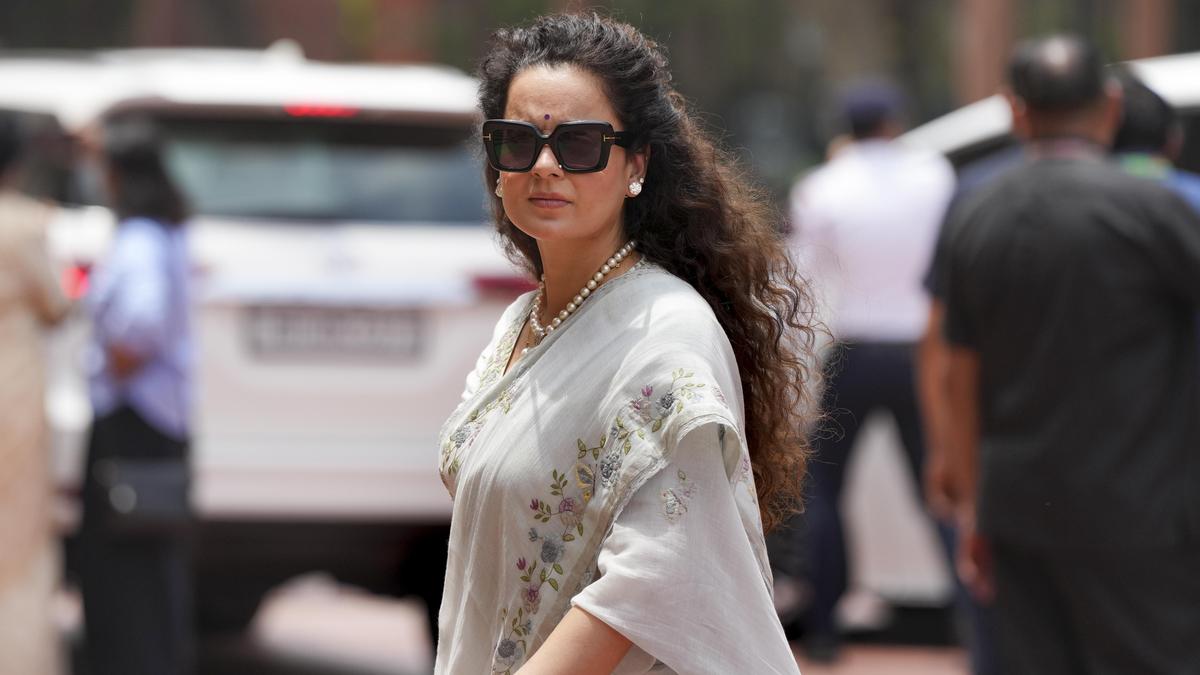
BJP MP Kangana Ranaut has publicly declared her transition to an 'awakened Hindu' ideology, defending her shift in political alignment. She explicitly challenged critics who use her past career as an actor to discredit her current ideological stance.
The Ideological Pivot of Kangana Ranaut
Defining the 'Awakened Hindu'
Actor-turned-politician and BJP Member of Parliament Kangana Ranaut has recently articulated a significant shift in her personal and political identity. By identifying as an 'awakened Hindu,' Ranaut is framing her political evolution not as a static condition, but as a deliberate, transformative process. This terminology signals a deep alignment with the ideological frameworks of the BJP and the RSS, which she explicitly cites as the foundations of her current worldview. Her rhetoric suggests a move away from what she characterizes as a 'moderate' past toward a more assertive, ideologically driven stance.
Addressing the 'Leftist-Islamist' Nexus
Ranaut’s commentary includes provocative assertions regarding the influence of 'Islamists' on political leanings, suggesting that exposure to certain ideologies drives individuals toward the Left. This narrative is a hallmark of the current cultural discourse in India, where political polarization is increasingly defined by intense debates over religious identity and national ideology. By drawing a direct line between the influence of Islamist groups and the adoption of Leftist political values, Ranaut is positioning her own 'awakened' status as a reactionary defense against these perceived ideological pressures.
Confronting the 'Generation Gutter' Controversy
This declaration follows her recent, highly contentious labeling of Gen Z protesters at Jantar Mantar as 'generation gutter' and 'filth.' By using such aggressive descriptors, Ranaut has intensified her role as a firebrand within the political sphere. This rhetoric serves to alienate her critics while simultaneously galvanizing her base, who view her confrontational style as a necessary rejection of modern, liberal protest culture that she deems 'ugly' and symptomatic of societal decay.
The Politics of Personal History
A central theme in Ranaut's recent statements is the rejection of the 'custodians of society' who attempt to use her past as an actor—characterized by the parties and lifestyles typical of the film industry—to invalidate her current political convictions. She poses a rhetorical challenge to the public: why is the path to ideological change considered closed to those who once led a different life? This argument seeks to decouple her professional past from her political present, asserting that individuals have the agency to 'convert' to new ideologies regardless of their previous public image.
Broader Implications for Political Discourse
Ranaut’s trajectory reflects a broader trend in Indian politics where cultural figures are increasingly transitioning into the core of partisan political machinery. Her embrace of the 'Sanghi' label—a term historically used by opponents as a pejorative—demonstrates a strategic reclamation of language. By openly declaring her desire to 'convert' to the BJP/RSS ideology, she is signaling to her supporters that her political commitment is total and intentional, setting the stage for more polarized debates regarding the intersection of celebrity, religion, and national identity in the coming political cycle.
Multiple Citing Sources
Verification Required?