'Even her own party doesn't take her seriously, why should we?' CJP hits back at Kangana
Source Entity
TOI NEWS DESK
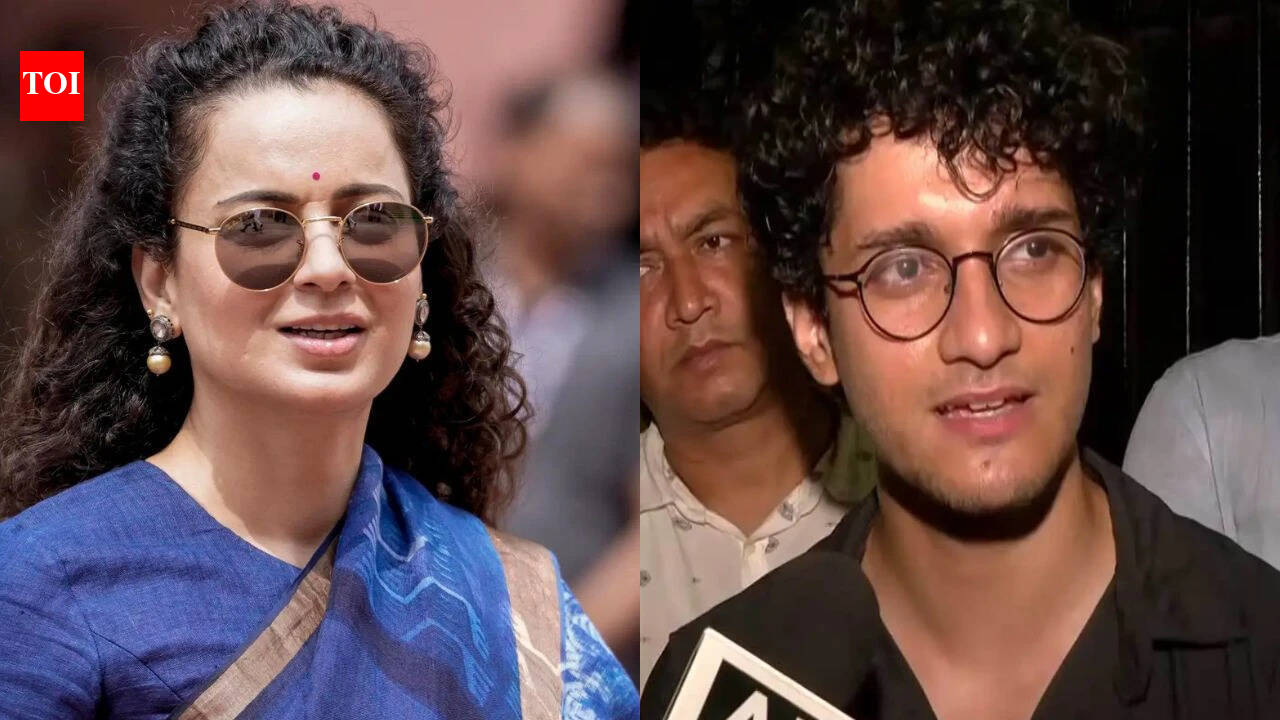
BJP MP Kangana Ranaut has condemned alleged abusive language used by CJP protesters against the Prime Minister and his late mother. Meanwhile, columnist Shobhaa De has criticized Bollywood's engagement with the protests, and the CJP has dismissed Ranaut's remarks.
The Intersection of Political Protest and Public Discourse
The recent demonstrations organized by the Cockroach Janta Party (CJP) at Jantar Mantar have ignited a firestorm of controversy, highlighting the deepening divide between political rhetoric and civil protest. At the heart of this tension is the reaction of BJP MP Kangana Ranaut, who has publicly denounced the protesters for allegedly hurling "filthy abuse" at Prime Minister Narendra Modi and his late mother. This incident has prompted the Delhi Police to intervene, directing social media platforms to purge content deemed offensive, underscoring the legal and ethical boundaries of political expression in the digital age.
The Role of Political Figures and Language
Kangana Ranaut’s critique centers on the decorum expected within a democratic framework. By questioning the identity and conduct of the protesters, Ranaut is positioning herself as a defender of institutional respect. Her statement, "We, too, have participated in student protests," serves to contrast her past experiences with the current manifestations of dissent. However, this stance has not gone unchallenged. The CJP has hit back, questioning the political weight of Ranaut’s own influence, suggesting that her remarks are met with skepticism even within her own party circles.
Bollywood’s Struggling Narrative
Beyond the political accusations, the discourse has expanded to include the role of the Indian film industry. Columnist Shobhaa De has provided a scathing critique of Bollywood’s response to these youth-led movements. By labeling actors like Salman Khan, Kangana Ranaut, Hema Malini, and Anupam Kher as "irrelevant" or "out of touch," De highlights a perceived disconnect between the industry's elite and the current concerns of Gen Z. The criticism of Salman Khan’s "Sonam, it’s done bro" post suggests that traditional celebrity engagement is increasingly viewed as performative rather than substantive.
The NEET-UG Context and Youth Unrest
It is essential to recognize that these protests are not isolated incidents but are rooted in broader national concerns, specifically the NEET-UG paper leak controversy. The CJP’s movement gained momentum by tapping into the frustrations of students seeking accountability and systemic education reform. When political discourse shifts from policy debate to personal attacks, the core issues—such as the integrity of national examinations—often become obscured by the vitriol exchanged between political actors and protesters.
Implications for Future Public Protests
As the Delhi Police continues to monitor digital content for abuse, the future of protest in India faces a dual challenge: maintaining the right to dissent while adhering to evolving standards of online conduct. The polarized nature of this exchange suggests that future demonstrations may face increased scrutiny, not only from law enforcement but from a public that is increasingly wary of the tone of political engagement. Whether this discourse leads to meaningful reform or further fragmentation remains the central question for the nation's political landscape.
Conclusion
The ongoing conflict between CJP protesters and political leaders like Ranaut, combined with the critical scrutiny from figures like Shobhaa De, illustrates a complex moment in Indian public life. As the nation grapples with the fallout of the NEET-UG controversy, the need for a constructive dialogue that avoids the pitfalls of personal abuse and celebrity posturing becomes paramount for the health of the democratic process.
Multiple Citing Sources