Kanwariyas vandalise pickup after 'contact' with kanwar in Uttar Pradesh’s Muzaffarnagar
Source Entity
India Latest News: Top National Headlines Today & Breaking News | The Hindu
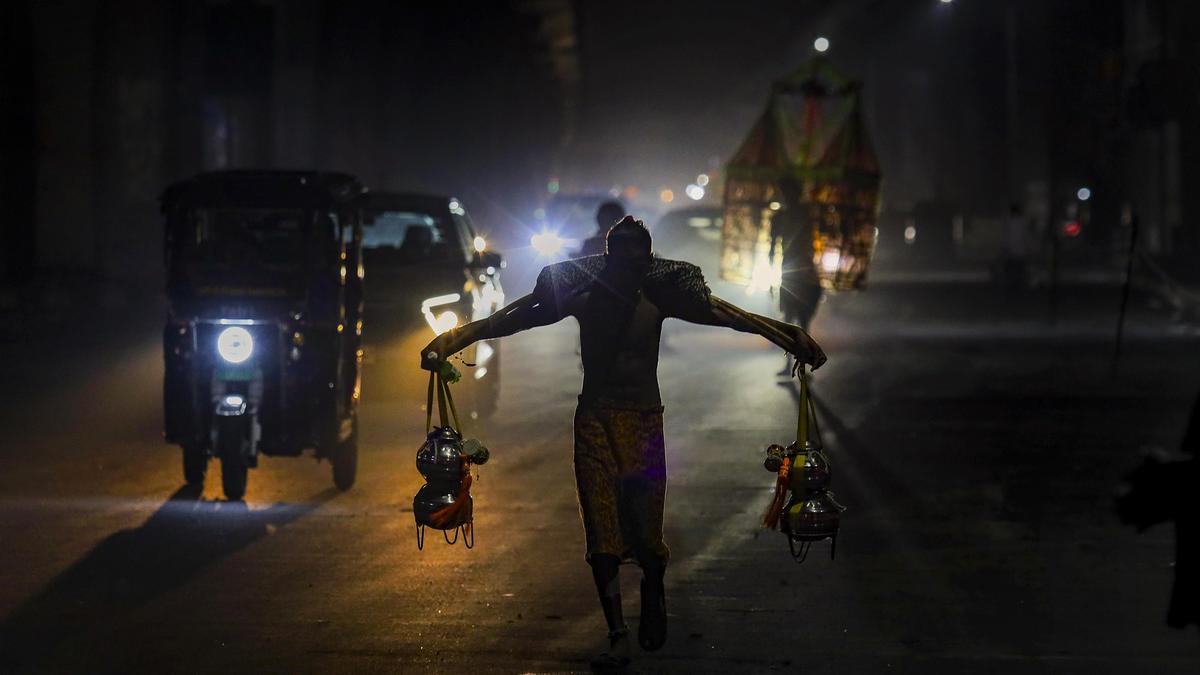
In Muzaffarnagar, Uttar Pradesh, a group of Kanwar pilgrims vandalized a pickup vehicle after it allegedly brushed against a kanwar, sparking an immediate confrontation and police intervention.
Incident Overview: Vandalism in Muzaffarnagar
In a recent incident in Muzaffarnagar, Uttar Pradesh, a pickup vehicle became the target of vandalism by a group of Kanwar pilgrims. According to Station House Officer (SHO) Manvendra Singh Bhati, the confrontation was triggered when the vehicle allegedly brushed against a 'kanwar'—the sacred pole carried by pilgrims during the annual Kanwar Yatra. This physical contact, perceived as a violation of religious sanctity, led to an immediate and violent reaction from the pilgrims, resulting in the damage of the vehicle.
The Religious Significance of the Kanwar
To understand the intensity of the reaction, it is essential to analyze the cultural and religious context of the Kanwar Yatra. Pilgrims, known as Kanwariyas, travel to the Ganges to fetch holy water, which they then carry back to their local Shiva temples. A core tenet of this pilgrimage is the maintenance of the purity of the kanwar; it is traditionally forbidden for the kanwar to touch the ground or be defiled by external contact. In the eyes of the pilgrims, the pickup vehicle 'brushing' against the kanwar was not merely a traffic accident but a desecration of a sacred object, which explains the sudden transition from a commute to a violent outburst.
Regional Volatility and Law Enforcement
Muzaffarnagar has historically been a region marked by social and communal sensitivities. In such an environment, small-scale incidents can escalate rapidly if not managed with precision. The statement provided by SHO Manvendra Singh Bhati indicates that the police were quick to identify the cause of the unrest, but the fact that vandalism occurred suggests a momentary lapse in crowd control or the sheer speed at which the pilgrims reacted. The challenge for the Uttar Pradesh police during the Yatra is the massive influx of people on highways, where the coexistence of slow-moving pilgrims and fast-moving commercial vehicles creates a high-risk environment for accidental collisions.
Analysis of the Conflict: Traffic vs. Tradition
This event highlights a recurring tension between the logistical requirements of modern transport and the traditional practices of large-scale religious processions. As the Kanwar Yatra grows in size, the pressure on the road infrastructure of Western Uttar Pradesh increases. When a vehicle 'brushes' against a pilgrim's gear, it is often an accidental result of overcrowded roads and narrow passages. However, the reaction—vandalizing a vehicle—demonstrates a trend where emotional responses to perceived religious slights outweigh the legal consequences of public property destruction.
Future Implications and Preventative Measures
Looking forward, this incident underscores the need for more stringent traffic diversion and the creation of dedicated corridors for pilgrims to avoid interaction with commercial traffic. If the state administration continues to allow mixed-use of highways during the peak of the Yatra, similar incidents of 'accidental contact' leading to violence are likely to persist. Predictive analysis suggests that enhancing the presence of rapid-response police teams at known bottlenecks in Muzaffarnagar could mitigate such flashpoints before they escalate into vandalism.
Conclusion
The vandalism of the pickup vehicle in Muzaffarnagar serves as a stark reminder of the volatility that can accompany large-scale religious events. While the incident began as a simple traffic mishap, the deep-seated beliefs regarding the sanctity of the kanwar transformed it into a violent confrontation. The resolution of such conflicts depends heavily on the ability of local law enforcement to balance religious sentiment with the maintenance of public order and the protection of private property.
Verification Required?