Lamp not lit atop deepathoon, Supreme Court to hear contempt case
Source Entity
AMIT ANAND CHOUDHARY
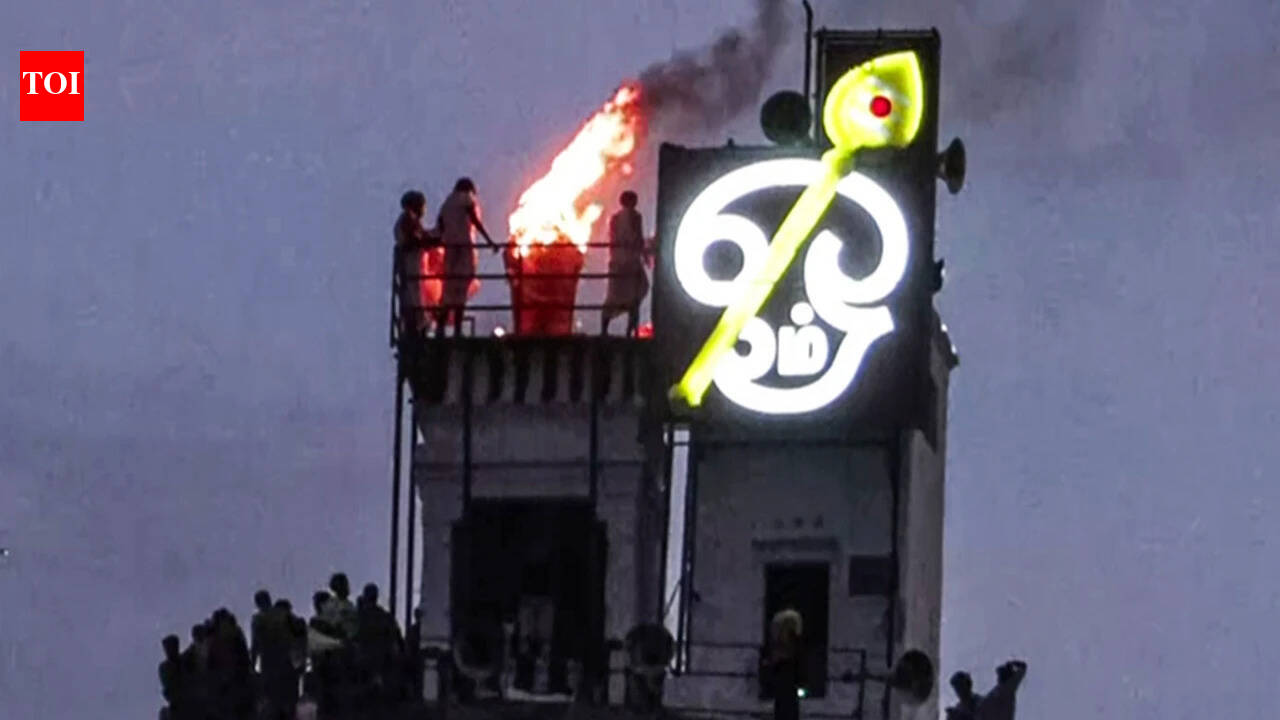
The Karthigai Deepam festival saw massive celebrations at the Arunachaleswarar Temple in Tiruvannamalai. Simultaneously, a legal and traditional dispute emerged in Thirupparankundram over the location of the ritual lamp, leading to protests and judicial scrutiny.
The Significance and Controversy of Karthigai Deepam
The Karthigai Deepam festival serves as a cornerstone of spiritual life in Tamil Nadu, manifesting as a profound display of devotion and cultural heritage. This year, the Arunachaleswarar Temple in Tiruvannamalai became the epicenter of this fervor, as thousands of devotees gathered to witness the lighting of the 'Maha Deepam' atop the sacred Arunachala Hill. The event, which began on November 15 with the traditional flag hoisting, reached its spiritual zenith on Tuesday at 6 p.m., following a rigorous day of prayers that commenced with the 'Bharani Deepam' at 4 a.m.
Tradition vs. Legal Mandates in Thirupparankundram
While Tiruvannamalai experienced a largely harmonious celebration, the festival simultaneously sparked significant controversy in Thirupparankundram. The conflict centered on the location for lighting the ceremonial lamp. Despite a Supreme Court order intended as a 'limited one-time arrangement' to allow the lighting of the lamp at a newly identified 'deepathoon' on the hillock, authorities opted to light the lamp only at the traditional spot. This decision prioritized established religious customs over the court-sanctioned modification.
Legal and Political Repercussions
The situation in Madurai escalated quickly as the Madurai Bench of the Madras High Court had previously recorded an undertaking by the District Collector, Nishant Krishna, to comply with the Supreme Court’s directives. The subsequent failure to adhere to this undertaking created a volatile political environment. Protests erupted at the foothills of the Thirupparankundram hill, involving leaders and cadres from the BJP and various Hindu outfits who viewed the deviation from the Supreme Court order as a failure of administration.
The Role of 'Agama' Rules
Central to the defense offered by the temple administration in Thirupparankundram was the assertion that all ritualistic procedures are strictly governed by 'Agama' rules. These ancient scriptures provide the framework for temple worship and architectural sanctity, which temple authorities argue supersede modern judicial interventions in matters of religious practice. This defense highlights the ongoing tension between secular legal frameworks and traditional religious mandates in the governance of ancient Indian shrines.
Broader Implications and Future Trends
This year’s festivities underscore a growing trend where the intersection of judicial oversight and religious tradition becomes increasingly litigious. The support from political allies of the ruling government, including the Left parties, the VCK, and the MDMK, for the decision to stick to tradition suggests that the state government is navigating a delicate balance between respecting the judiciary and maintaining the support of religious constituents. Looking ahead, these events signal that the management of major temple festivals will likely continue to face scrutiny, requiring more robust communication between the judiciary, government administrators, and temple authorities to prevent future social unrest.
Multiple Citing Sources