Ice sheet expansion may have started 2,000 years ago, but we canceled that
Source Entity
Jacek Krywko
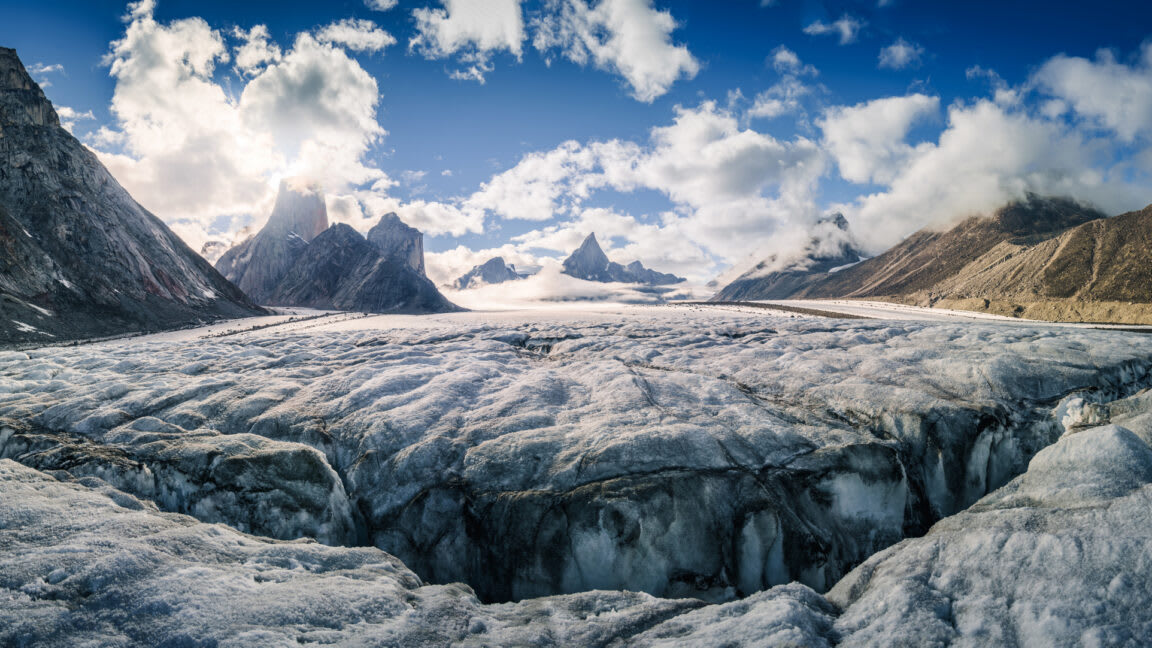
Researchers have discovered that the Laurentide Ice Sheet began re-expanding 2,000 years ago, signaling the onset of a new glaciation. This natural cooling trend was abruptly halted around 1960 due to human-induced climate change.
The Laurentide Legacy: An Interrupted Ice Age
The Barnes Ice Cap, located on the central plateau of Baffin Island in the Canadian Arctic, serves as a vital geological archive. As the final surviving fragment of the massive Laurentide Ice Sheet—which once blanketed most of Canada under two miles of ice—this remnant provides an unprecedented window into the Earth's climatic history. Recent findings published in Science indicate that this ice sheet reached its nadir approximately 3,600 years ago, marking a pivotal turning point in North American paleoclimatology.
Evidence of a Reversing Retreat
For decades, scientists have studied the cyclical nature of glacial retreat and expansion. The new evidence derived from the Barnes Ice Cap suggests that the Laurentide Ice Sheet did not simply vanish into history. Instead, the data indicates that the ice began a significant re-expansion roughly 2,000 years ago. This growth phase is interpreted by researchers as the early stage of a potential new glaciation period, a natural planetary rhythm that has historically dictated the expansion and contraction of polar ice.
The Human-Climate Collision
Perhaps the most striking revelation from this study is the timing of this reversal. The evidence suggests that this nascent ice age was actively developing for two millennia, effectively trending toward a colder global climate. However, this trajectory was fundamentally altered around 1960. The onset of industrial-era human-caused climate warming effectively "canceled" this natural cooling cycle, causing the ice sheet to resume its retreat.
Implications for Global Sea Levels
To understand the magnitude of this event, one must consider the historical capacity of the Laurentide. At its Pleistocene peak, the sheet locked away enough water to account for approximately 80 meters of global sea level. The fact that the Earth was naturally moving toward a state that would sequester more water into ice, only to be overridden by anthropogenic warming, highlights the profound impact humanity now exerts on the planetary climate system.
Future Trends and Scientific Consensus
Looking forward, this study serves as a stark reminder of the sensitivity of the cryosphere. While the natural cycle of glaciation is a slow, multi-millennial process, the rapid reversal triggered in the mid-20th century demonstrates how human influence can override geological timescales. This discovery does not suggest we are heading toward an imminent ice age; rather, it underscores that the current warming trend is powerful enough to reverse processes that have been in motion for thousands of years, potentially accelerating sea-level rise and environmental instability.