Ashoke Sen becomes first Indian physicist to receive Oskar Klein Medal
Source Entity
India Latest News: Top National Headlines Today & Breaking News | The Hindu
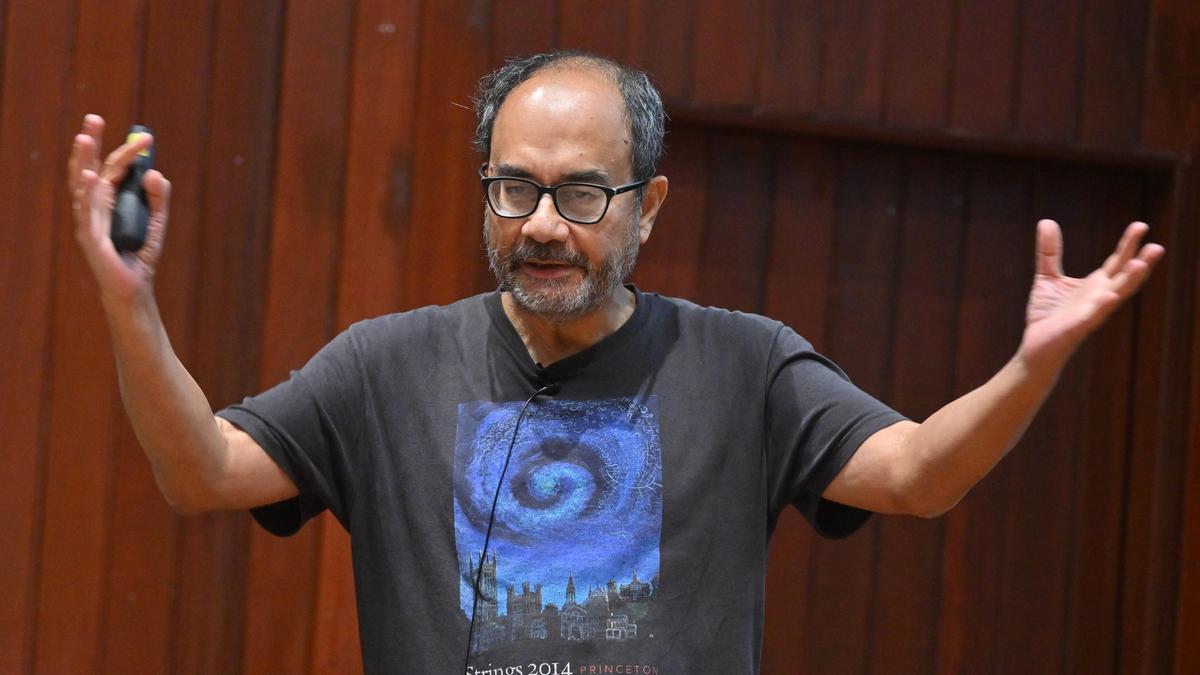
Professor Ashoke Sen has become the first Indian physicist to be awarded the prestigious 2026 Oskar Klein Medal. His pioneering research in string theory, specifically S-duality and black hole entropy, continues to advance fundamental physics.
A Milestone for Indian Physics: Ashoke Sen and the Oskar Klein Medal
On October 24, 2026, the International Centre for Theoretical Sciences (ICTS) announced that Professor Ashoke Sen has been awarded the prestigious Oskar Klein Medal for 2026. This historic recognition marks the first time an Indian physicist has received this honor, solidifying Professor Sen’s stature as a preeminent figure in the global scientific community. The award, which commemorates the legacy of the Swedish theoretical physicist Oskar Klein, highlights individuals who have made transformative contributions to the field of theoretical physics.
Pioneering Contributions to String Theory
Professor Sen’s selection for this medal is rooted in his decades of groundbreaking research that has fundamentally altered our understanding of the universe. He is internationally recognized for his seminal work on S-duality, a concept that describes a symmetry between different theories of physics, and his precise counting of black hole entropy. These contributions are not merely theoretical abstractions; they are critical pillars in the development of modern string theory, providing the mathematical framework necessary to reconcile quantum mechanics with the theory of gravity.
The 2026 Memorial Lecture
As part of the honors associated with the medal, Professor Sen delivered the 2026 Oskar Klein Memorial Lecture at Stockholm University’s AlbaNova Centre on October 22. Titled ‘Gravity from Strings and Strings from Gravity,’ the lecture addressed the complex interplay between string theory and gravitational forces. By bridging these two domains, Sen’s work continues to offer insights into the fundamental nature of spacetime, a topic that remains at the very edge of human knowledge.
A Legacy of Excellence
This latest recognition follows a long history of academic distinction for Professor Sen, who currently serves as an ICTS-Infosys Madhava Chair Professor. His previous achievements include receiving the inaugural Breakthrough Prize in Fundamental Physics in 2012. That award was granted for his contributions to the field of string theory, specifically for his work on the strong-weak coupling duality, which remains a cornerstone of the discipline today.
Broader Implications for Global Science
The awarding of the Oskar Klein Medal to an Indian physicist signifies the increasing role of Indian institutions, such as the ICTS, in the global research landscape. By fostering an environment conducive to high-level theoretical inquiry, these institutions have enabled scholars like Sen to push the boundaries of fundamental physics. This recognition serves as an inspiration for the next generation of Indian physicists, highlighting that world-class research is a truly global endeavor that transcends geographical borders.
Looking Toward the Future
As we look to the future of string theory, the work of Professor Sen remains indispensable. The continued investigation into black hole entropy and the unification of fundamental forces is essential for solving the mysteries of the early universe. The Oskar Klein Medal serves as both a celebration of past achievements and a catalyst for future breakthroughs, ensuring that Professor Sen’s influence on the scientific community will persist for years to come.
Verification Required?