HeLa to a new world where progress in science matches dignity for patient
Source Entity
India Latest News: Top National Headlines Today & Breaking News | The Hindu
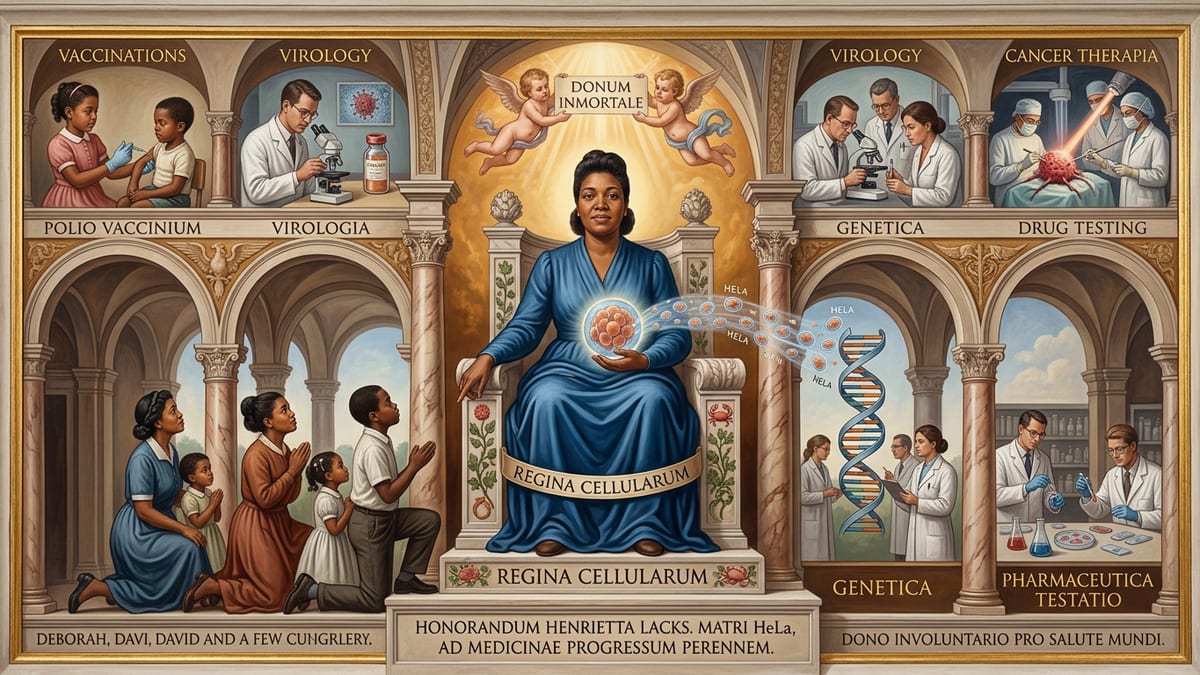
The legacy of Henrietta Lacks, whose cells revolutionized medicine, is finally receiving long-overdue recognition. Her family's advocacy has spurred critical reforms in bioethics and patient consent.
The Legacy of Henrietta Lacks: A Scientific Reckoning
The story of Henrietta Lacks represents a profound intersection between scientific triumph and systemic injustice. In 1951, Lacks, an African American tobacco farmer, sought treatment for cervical cancer at the Johns Hopkins Centre. During her care, cells were extracted from her body without her knowledge or consent. These cells, later dubbed the 'HeLa' line, proved to be immortal, possessing an unprecedented ability to divide indefinitely. This discovery became the bedrock for modern biomedical research, facilitating breakthroughs in virology, vaccine development, genetics, and cancer treatment that have saved countless lives across the globe.
The Erasure of a Human Subject
Despite the monumental contributions of her cells to global health, Lacks herself was systematically erased from the narrative of scientific progress. For decades, the institutions and researchers who benefited from her biological material operated with an 'epistemic dominance' that prioritized data over the humanity of the donor. Her identity remained obscured, and her family was left in the dark, highlighting a period where marginalized individuals were treated as mere resources for institutional gain rather than as patients with fundamental rights.
The Battle for Recognition and Dignity
The recent shift in the scientific community's stance on Henrietta Lacks is the direct result of a persistent, multi-generational battle fought by her descendants. By demanding that the medical establishment acknowledge the source of the HeLa line, the Lacks family successfully challenged the historical erasure of their matriarch. This movement has forced a long-overdue public reckoning, transforming Lacks from a nameless laboratory tool into a recognized figure of dignity whose story now anchors conversations about historical exploitation in healthcare.
Institutional Reform and Bioethics
Beyond mere acknowledgement, the legacy of this struggle has fundamentally altered the regulatory landscape of medical research. The case of Henrietta Lacks has served as a catalyst for more stringent regulations regarding informed consent, tissue donation, and the ethical treatment of research subjects. Today, institutional review boards and research protocols are far more sensitive to the power dynamics that once allowed for the non-consensual harvesting of human biological material, ensuring that 'donor dignity' is no longer an afterthought but a prerequisite for scientific inquiry.
Future Trends in Ethical Research
As we look toward the future, the integration of ethical standards into the core of biomedical progress remains paramount. The Lacks case serves as a permanent, cautionary reminder of the dangers of separating scientific advancement from human rights. Moving forward, the scientific community must continue to balance the pursuit of medical discovery with an unwavering commitment to transparency and equity. The shift toward recognizing the agency of patients and their families is not just a moral correction; it is a necessary evolution for the credibility and integrity of the global scientific enterprise.
Verification Required?