Furniture thrown, proceedings disrupted as lawyers’ protest against HC judge turns chaotic
Source Entity
India Latest News: Top National Headlines Today & Breaking News | The Hindu
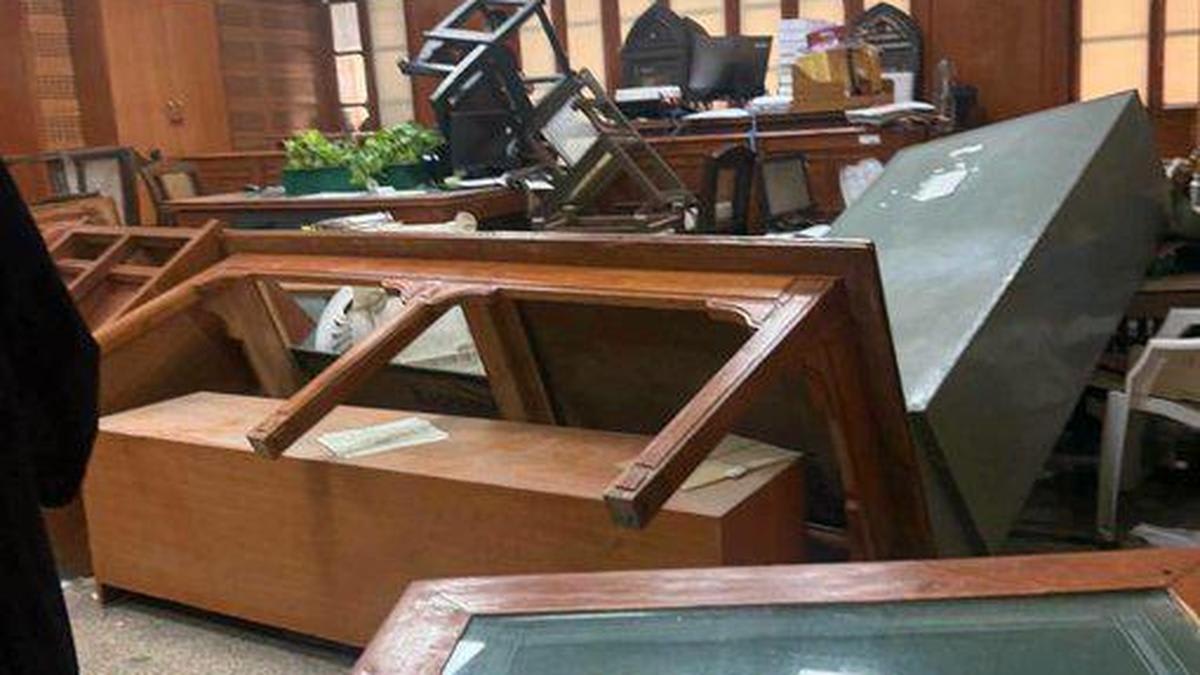
Legal protests in Delhi and Allahabad resulted in contrasting outcomes this week. While Delhi lawyers ended their strike following police disciplinary transfers, a protest at the Allahabad High Court turned violent, leading to contempt proceedings.
Tensions in the Indian Legal System: A Comparative Analysis
Recent events within the Indian legal landscape have highlighted the volatile relationship between the bench, the bar, and law enforcement. Two distinct incidents—one in Delhi involving police-advocate friction and another in Allahabad involving courtroom decorum—underscore the growing challenges in maintaining judicial order and professional conduct.
De-escalation in Delhi: A Negotiated Resolution
In Delhi, the indefinite strike by district court lawyers has been successfully called off following institutional intervention. The protest, sparked by allegations that ACP Manasvi Vashisht displayed a revolver to advocates during a dispute regarding an assault on a colleague, represents a significant flashpoint in police-lawyer relations. The resolution, marked by the transfer of both ACP Vashisht and Inspector Arun Kumar, reflects the power of collective bargaining by the Coordination Committee of All District Courts Bar Associations. This move serves as a temporary cooling mechanism, though it highlights the underlying friction that often exists between legal practitioners and law enforcement officers.
Contempt and Chaos: The Allahabad Incident
Conversely, the situation at the Allahabad High Court took a dark turn as a protest against Justice Ajay Bhanot escalated into physical destruction. Reports of furniture being hurled inside the courtroom and the disruption of active proceedings represent a severe breach of judicial decorum. Unlike the Delhi incident, which focused on accountability for alleged police misconduct, the Allahabad protest was directed at a member of the judiciary, leading to immediate calls for contempt proceedings against the agitators.
The Impact on Judicial Proceedings
Both incidents share a common denominator: the disruption of justice delivery. In Allahabad, the protest led to the interruption of a bail application, directly impacting litigants waiting for their day in court. Justice Arun Kumar Singh Deshwal’s directive to secure CCTV footage and identify those responsible for the vandalism signals a firm stance by the judiciary against the weaponization of protest within court premises. This reflects a broader trend where courts are increasingly prioritizing the sanctity of the courtroom over the grievances of protesting factions.
Broader Implications for the Legal Profession
These events raise critical questions regarding the professional responsibility of advocates. While the right to protest is a fundamental pillar of democratic expression, the transition from peaceful demonstration to vandalism—as seen in the Allahabad High Court—risks undermining the credibility of the legal fraternity. The incident has drawn sharp criticism from within the legal community, as evidenced by advocate Paras Nath Singh’s condemnation of the violence as intolerable.
Future Trends and Judicial Stability
Looking forward, the judiciary is likely to adopt a more stringent approach toward courtroom conduct. The dual focus on internal accountability—transferring police officers in Delhi versus initiating contempt proceedings in Allahabad—demonstrates that the system is attempting to balance the need for grievance redressal with the necessity of maintaining order. Future trends will likely see an increase in the use of surveillance technology to monitor court premises, ensuring that protests do not cross the line into obstruction of justice.
Multiple Citing Sources
Verification Required?