Protecting Engineers' Skills in the AI Era
Source Entity
Hacker News
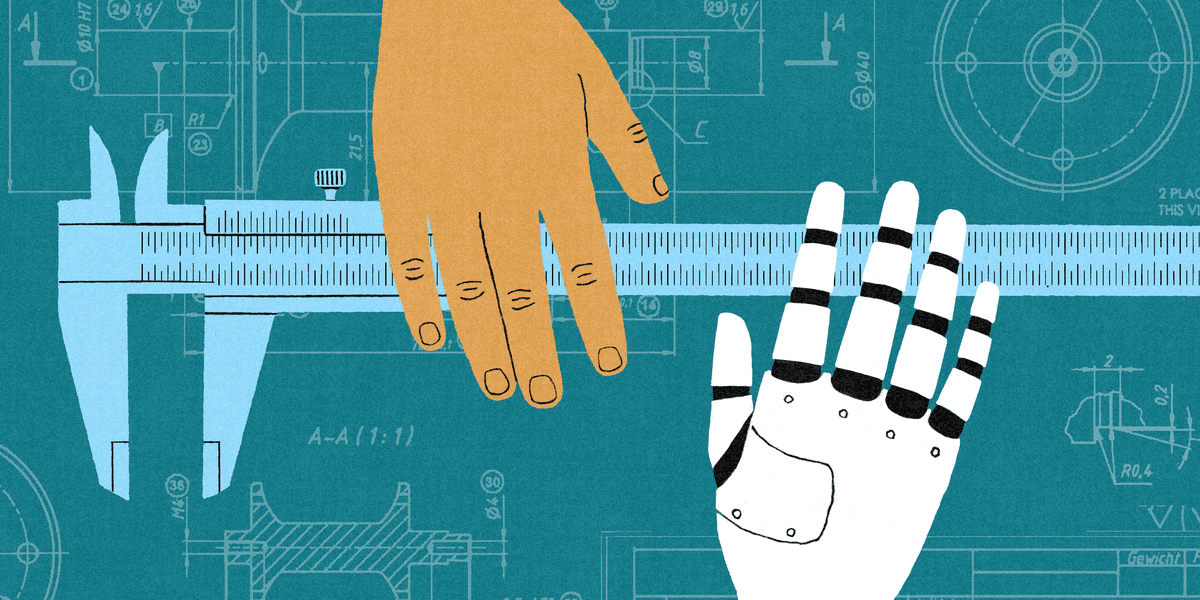
The intersection of Large Language Models (LLMs) and linguistic diversity raises concerns regarding the homogenization of human expression. Academic research highlights the potential for these models to mirror and influence personality traits through computational linguistic analysis.
The Homogenization of Language in the Age of LLMs
Recent discourse surrounding Large Language Models (LLMs) has shifted toward the systemic impact these technologies have on linguistic diversity. As we integrate generative AI into daily communication, there is a mounting concern that the statistical nature of these models may inadvertently constrain the breadth of human expression, leading to a 'shrinking landscape' of nuance and dialectical variety. This phenomenon suggests that the output of LLMs acts as a feedback loop, reinforcing dominant linguistic patterns at the expense of regional or idiosyncratic variations.
Computational Personality Assessment
To understand the gravity of this shift, one must consider the historical precedent of computational personality assessment. Research, such as the meta-analytic studies by Moreno et al. (2021) and the foundational work by Mairesse et al. (2007), demonstrates that written language serves as a reliable proxy for personality traits. By analyzing linguistic cues, researchers have successfully mapped individual differences in communication—a field further explored in the stratified corpus comparison by Oberlander and Gill (2006). When LLMs are trained on vast datasets, they effectively internalize these personality markers, potentially creating a standardized 'AI persona' that permeates digital discourse.
The Feedback Loop of Digital Expression
Park et al. (2015) established that social media language provides a fertile ground for automatic personality assessment. However, the current trend involves LLMs not just analyzing this data, but generating the very content that future models will be trained upon. This self-referential cycle—where AI-generated text becomes the primary input for subsequent iterations—risks calcifying language into a narrow, 'average' form. As LLMs become the primary interface for content creation, the diversity of human individual differences observed in earlier studies may be smoothed over by the models' inherent preference for high-probability, statistically standard phrases.
Orwellian Implications and Structural Control
Reflecting on the themes presented in George Orwell’s Nineteen Eighty-Four, the control of language is inextricably linked to the control of thought. While LLMs are not a government mandate, the technical architecture of these models exerts a form of soft control over the linguistic choices available to users. By favoring certain syntactic structures and vocabulary choices, LLMs subtly nudge users toward a more uniform style of communication, echoing the reductionist tendencies of 'Newspeak' where the limitation of vocabulary serves to narrow the range of expression.
Technical Fragility and Future Trends
Recent outages, such as the reported downtime for ChatGPT and Codex, highlight our increasing dependency on these centralized linguistic engines. This fragility underscores a broader systemic risk: if our primary tools for communication are prone to centralized failure and homogenization, we risk losing the decentralized, organic evolution of language. Future trends suggest a need for 'linguistic resilience'—the intentional development of models that preserve, rather than suppress, the diverse and often messy reality of human expression. Ensuring that AI serves to expand, rather than contract, our linguistic landscape remains a critical challenge for developers and sociologists alike.