Macron calls for 'calm and order' after riots across France
Source Entity
BBC News
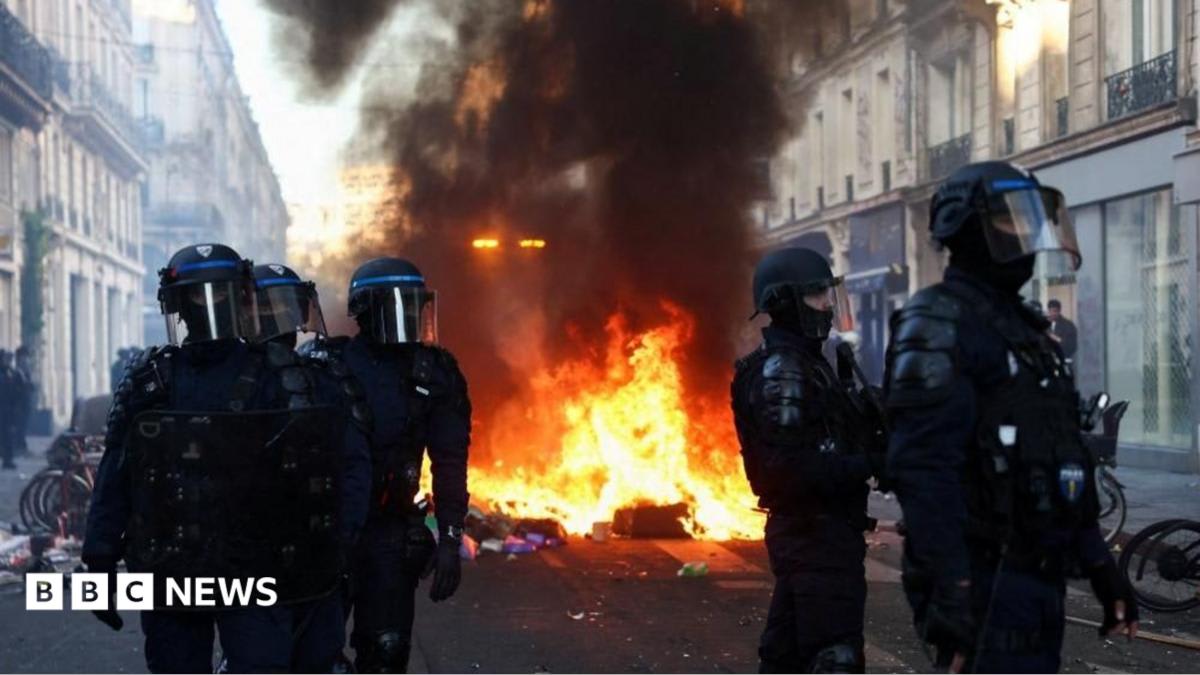
President Emmanuel Macron has called for calm following widespread rioting across France sparked by protests over fuel prices and public services. With over 2,400 arrests and significant property damage reported, the government is struggling to balance public grievances with the need for order.
The Crisis of Order: Macron’s Address Amidst National Unrest
French President Emmanuel Macron recently delivered a televised national address from the Élysée Palace, seeking to restore stability after a wave of violent protests swept across France. The unrest, which saw thousands take to the streets, originated from widespread dissatisfaction regarding rising fuel prices, the escalating cost of living, and the perceived deterioration of public services, including the national school system. While approximately 550,000 citizens initially participated in largely peaceful demonstrations, the situation rapidly devolved into riots, arson, and looting in major urban centers such as Paris and Marseille.
Distinguishing Dissent from Destruction
During his address, President Macron emphasized a critical distinction between the legitimate grievances of the French populace and the criminal actions of those he characterized as perpetrators of "unbridled" violence. By labeling the actions of rioters as acts that incite "anger and shame," the President attempted to delegitimize the destruction of public and private property, which included the torching of a town hall and the ransacking of numerous businesses. The government has pointedly blamed "ultra-left" groups for orchestrating the escalation, aiming to decouple the genuine economic concerns of the protesters from the chaos that ensued.
The Scale of the Security Response
The security implications of the riots are significant, with the French interior ministry reporting approximately 2,400 arrests. Riot police were deployed extensively in cities like Paris and Marseille to prevent further looting and to protect commercial infrastructure. The scale of this intervention underscores the severity of the unrest, which represents one of the most intense periods of civil disorder in France in recent years. The government’s focus remains on maintaining "calm and order" while managing the immediate aftermath of the violence.
Economic and Social Drivers
At the heart of the protests lie deeper systemic issues regarding economic inequality and the quality of state infrastructure. The protests against fuel prices are not merely about energy costs; they symbolize a broader frustration with the perceived lack of support for working-class citizens in an increasingly expensive economy. When public services such as education are perceived to be failing, the threshold for civil unrest lowers significantly, providing fertile ground for the type of widespread mobilization seen on Saturday.
Political Implications and Future Trends
Occurring just six months before national elections, these events place the Macron administration in a precarious position. The government must navigate the delicate balance of addressing the "legitimate demands" of the protesters—which involve complex fiscal and social policy changes—while simultaneously asserting the authority of the state. If the administration fails to address the underlying economic anxieties, the specter of future unrest remains a distinct possibility. Moving forward, the government's ability to implement policy shifts that alleviate the cost-of-living burden will likely dictate the political landscape leading up to the upcoming elections.