Western Maharashtra drenched while north, Vidarbha battle rainfall deficit
Source Entity
Latest News: Todays Latest News Headlines from India & World | Hindustan Times | Hindustan Times
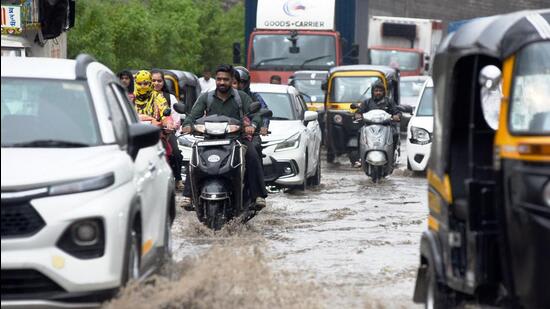
Maharashtra is experiencing a sharp meteorological divide, with heavy monsoon rains flooding Western Maharashtra and the Konkan coast. Conversely, North Maharashtra and Vidarbha are enduring severe rainfall deficits, with regions like Nandurbar facing a 60% shortfall.
The Monsoon Paradox: Maharashtra’s Uneven Rainfall Distribution
The current monsoon season in Maharashtra has presented a striking meteorological paradox, characterized by a sharp divide between the water-rich coastal regions and the parched interior districts. While the Konkan coast and Western Ghats are experiencing significant precipitation, large swaths of North Maharashtra and Vidarbha are grappling with a persistent rainfall deficit, creating a complex challenge for regional water management and agricultural planning.
Analyzing the Regional Disparity
Data provided by the India Meteorological Department (IMD) underscores the severity of this imbalance. Palghar, situated in the Konkan region, has emerged as a focal point of excess, recording 1,977.2 mm of rainfall—a 79% surplus over its normal 1,105 mm. In stark contrast, Nandurbar stands as the state’s driest district, having received only 144.6 mm of rain against a normal of 359.8 mm, marking a staggering 60% deficit. This dichotomy highlights how successive monsoon systems have been effectively trapped along the Western Ghats, failing to penetrate the interior plains.
Meteorological Drivers of the Deficit
Meteorologists attribute this uneven distribution to the specific positioning of monsoon currents. The sustained rainfall activity has been largely confined to the Konkan coast and adjoining districts, effectively shielding these areas from drought while leaving interior zones—particularly Vidarbha—outside the primary path of moisture-laden winds. This phenomenon illustrates the volatility of the monsoon, where localized pressure systems dictate the success or failure of the agricultural season across diverse agro-climatic zones.
Agricultural and Economic Implications
For a state like Maharashtra, where a significant portion of the population relies on rain-fed agriculture, this rainfall deficit in 15 districts poses a tangible threat to crop yields and rural livelihoods. While Western Maharashtra, including Pune with its recorded 682.6 mm of rainfall, benefits from replenished reservoirs, the shortfall in North Maharashtra and Vidarbha may necessitate government intervention, including fodder support or delayed planting schedules, to mitigate the potential economic fallout.
Broader Context and Future Outlook
Historically, Maharashtra has frequently dealt with erratic monsoon patterns; however, the current intensity of the surplus-deficit gap is particularly noteworthy. As climate patterns become increasingly unpredictable, the state faces the dual challenge of managing flood-like conditions in the west and mitigating drought-like stress in the east. Future trends suggest that if these synoptic weather systems continue to favor the coast, the state will need to invest more heavily in inter-district water transfer projects and moisture-retention agricultural techniques to buffer against such stark geographic imbalances.
Verification Required?