Why are women not receiving money under Annapurna scheme?’: Mamata targets BJP
Source Entity
Sweety Kumari
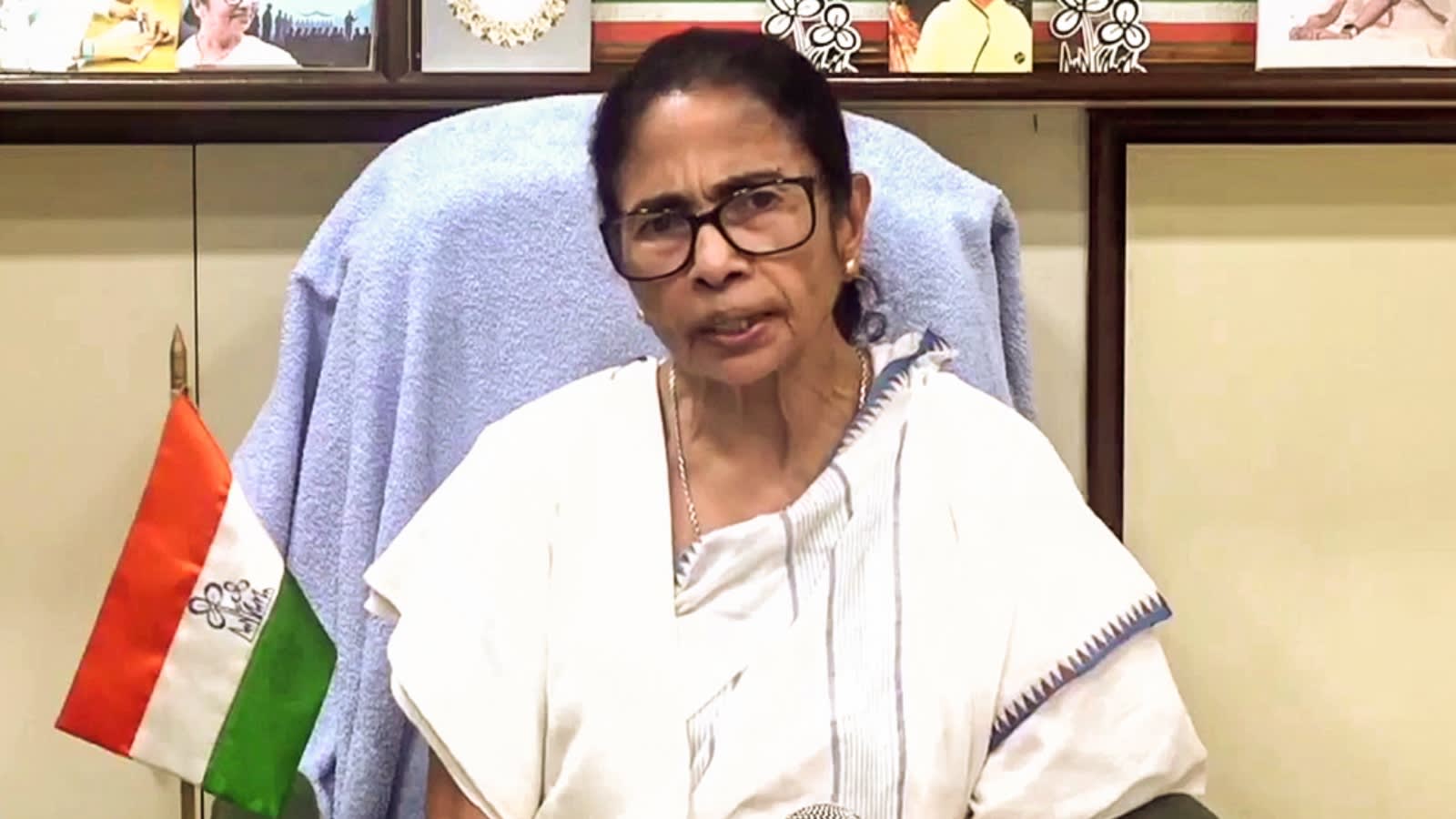
Mamata Banerjee has accused the BJP-led government of politicizing the Annapurna Bhandar scheme by excluding previous beneficiaries. The controversy centers on allegations of discriminatory distribution based on caste and religion, sparking widespread protests across West Bengal.
The Politicization of Welfare: West Bengal's Annapurna Bhandar Dispute
Recent developments in West Bengal have brought the state's welfare landscape into sharp focus, as Trinamool Congress (TMC) supremo Mamata Banerjee has launched a scathing critique of the current BJP-led government. At the heart of the contention is the 'Annapurna Bhandar' scheme, a social welfare initiative that has become a flashpoint for political maneuvering. Banerjee alleges that the government is systematically denying benefits to women who were previously enrolled under her administration's 'Lakshmir Bhandar' program, suggesting a shift in policy that prioritizes political alignment over genuine need.
Eligibility Criteria and Allegations of Bias
The core of the dispute lies in the transition from the previous administration's welfare framework to the new Annapurna Bhandar model. Mamata Banerjee contends that the BJP government is imposing exclusionary criteria that were never discussed prior to the recent Assembly elections. By questioning the government's authority to unilaterally decide eligibility, the TMC is framing the issue as an act of administrative overreach. Furthermore, the allegation that benefits are now being distributed based on caste and religion suggests a fundamental shift in the state's social welfare philosophy, moving away from universal or need-based support toward identity-based patronage.
The Human Impact: Protests and Economic Hardship
The financial implications for the affected women are significant, with reports indicating that many were expecting a monthly assistance of ₹3000. The sudden removal of beneficiaries from the welfare rolls has triggered a wave of protests across various parts of the state. These public demonstrations underscore the deep reliance of vulnerable populations on state-provided financial aid. When welfare schemes become battlegrounds for political parties, the primary victims are the citizens who depend on these funds for their basic sustenance and economic stability.
Institutional Tensions and Governance Concerns
Beyond the immediate welfare concerns, Mamata Banerjee’s address to TMC workers highlighted a broader narrative of institutional decay. By accusing the current administration of utilizing police and government machinery to suppress the Opposition, Banerjee is raising alarms about the state of democratic processes in West Bengal. The intersection of alleged welfare exclusion and the suppression of political dissent creates a volatile environment that threatens to deepen the polarization within the state's political landscape.
Future Outlook and Political Implications
As the political sparring between Mamata Banerjee and the BJP continues, the Annapurna Bhandar scheme is likely to remain a central theme in West Bengal's political discourse. The ability of the current government to address these grievances—or the failure to do so—will likely influence voter sentiment in the coming cycles. If the allegations of bias persist, the administration may face increased pressure to standardize eligibility, potentially leading to a revision of the scheme's criteria to mitigate public outrage and restore institutional trust.
Conclusion
The controversy surrounding the Annapurna Bhandar scheme serves as a stark reminder of the fragile nature of welfare programs when they become entangled with electoral politics. The transition of power in West Bengal has clearly necessitated a critical look at how social benefits are managed and distributed. For the sake of the beneficiaries, it is imperative that the government addresses the transparency of its selection process and ensures that welfare remains a right based on need, rather than a tool for political exclusion.