E20 fuel damages Maruti car; company ordered to give customer a new vehicle
Source Entity
TOI LEGAL DESK
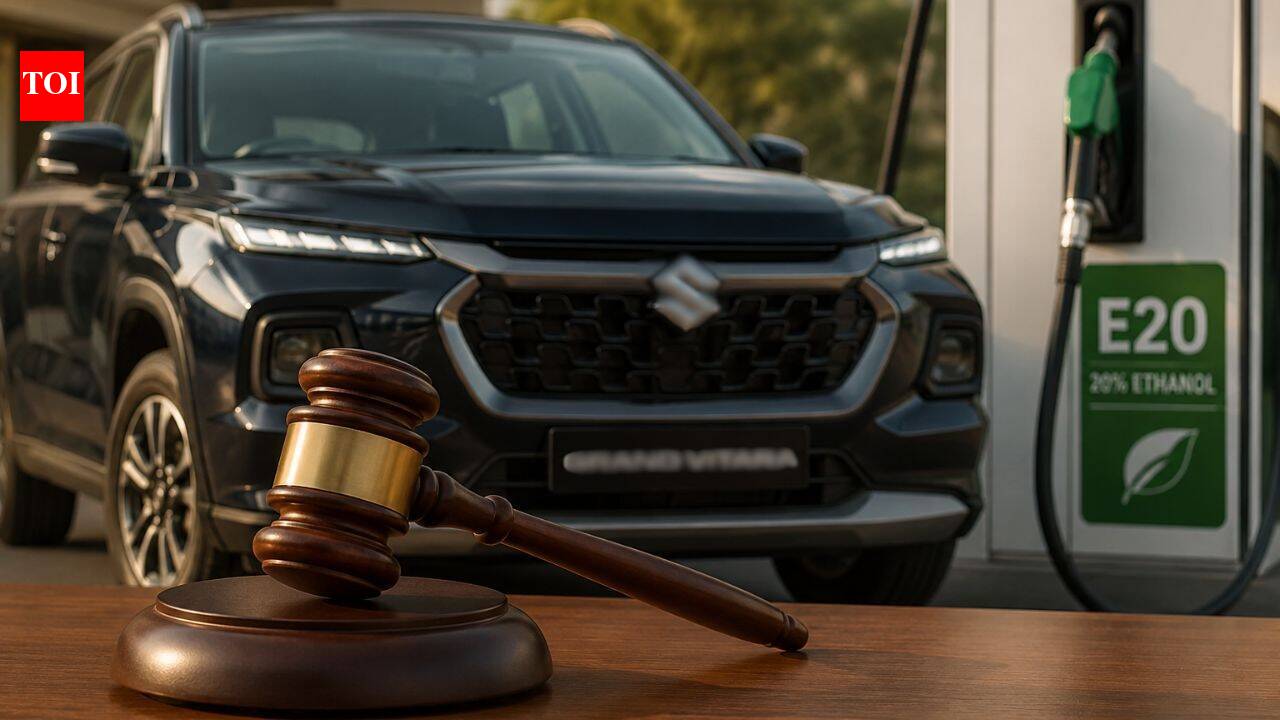
A consumer court has ordered Maruti Suzuki to replace a customer's Grand Vitara with an E20-compatible model or refund its full value after the vehicle suffered technical damages caused by E20 fuel, citing a deficiency in service.
Legal Accountability in the Green Fuel Transition
In a significant ruling for consumer rights and automotive standards, a consumer court has ordered Maruti Suzuki to replace a customer's Grand Vitara with a model compatible with E20 fuel, or alternatively, pay the full value of the vehicle. This verdict stems from a complaint where the vehicle owner experienced severe technical issues following the introduction and use of E20 petrol. The court's decision to hold both the manufacturer and the dealer accountable for a "deficiency in service" underscores a growing judicial intolerance for corporate negligence during the transition to sustainable fuel alternatives.
The Technical Conflict: E20 Fuel and Engine Compatibility
To understand the gravity of this case, one must look at the nature of E20 fuel—a blend of 20% ethanol and 80% gasoline. While the Indian government has aggressively pushed the Ethanol Blended Petrol (EBP) program to reduce crude oil imports and lower carbon emissions, ethanol is chemically more corrosive than pure gasoline. It can degrade rubber seals, gaskets, and certain plastic components in engines that are not specifically designed to handle higher alcohol concentrations. In this instance, the Grand Vitara in question suffered technical failures because it lacked the necessary material specifications to withstand the corrosive properties of E20 fuel, leading to a breakdown in vehicle performance and reliability.
Legal Implications of "Deficiency in Service"
The court's finding of a "deficiency in service" is a critical legal pivot. It suggests that the manufacturer and dealer failed in their duty of disclosure and quality assurance. When a vehicle is sold, there is an implicit and explicit warranty that the vehicle is fit for the environment in which it is sold. As E20 fuel becomes the standard at filling stations across India, selling a vehicle that cannot operate on the available fuel—or failing to clearly warn the consumer about such limitations—constitutes a failure in the service chain. This ruling emphasizes that the burden of compatibility lies with the OEM (Original Equipment Manufacturer), not the end consumer.
Broader Impact on the Automotive Industry
This verdict serves as a wake-up call for all automotive players in the Indian market. Maruti Suzuki, as the market leader, often sets the tone for industry standards. This case will likely force other manufacturers to be more transparent about the fuel compatibility of their fleets. We can expect a surge in the prominent labeling of "E20 Ready" or "E10 Compatible" on fuel tank caps and owner's manuals to avoid similar litigation. Furthermore, it may prompt companies to offer retrofitting kits or extended warranties for older models that are suddenly exposed to higher ethanol blends in the national fuel supply.
Consumer Protection and the "Mental Agony" Clause
Beyond the financial replacement of the vehicle, the court's order for compensation regarding "mental agony" highlights a shift in Indian consumer jurisprudence. The court recognized that the frustration of owning a malfunctioning new vehicle, coupled with the struggle to get a resolution from a corporate giant, constitutes a psychological burden. This sets a precedent where consumers are not just compensated for the tangible loss of an asset, but for the stress and time lost due to corporate apathy, potentially leading to more aggressive consumer filings in the future.
Future Trends and the Path to E100
As India moves toward even higher blends, including E85 and eventually E100, the friction between government policy and automotive engineering will intensify. This case predicts a future where "fuel-readiness" becomes a primary selling point and a critical legal benchmark. We will likely see a transition where the second-hand car market begins to price vehicles based on their ethanol compatibility, with non-E20 compatible cars depreciating faster. The automotive industry must now accelerate the adoption of ethanol-resistant materials across all entry-level and premium segments to avoid a wave of similar consumer court battles.
Conclusion
The Maruti Suzuki Grand Vitara ruling is more than a simple consumer dispute; it is a landmark case that intersects environmental policy, automotive engineering, and consumer law. By prioritizing the consumer's right to a functional product over the manufacturer's technical oversight, the court has ensured that the transition to green energy does not come at the expense of the individual buyer. This decision will undoubtedly drive higher standards of transparency and engineering rigor across the Indian automotive landscape.