Thousands rally in Manipur against recent killings, ethnic conflict
Source Entity
KANCHAN YADAV
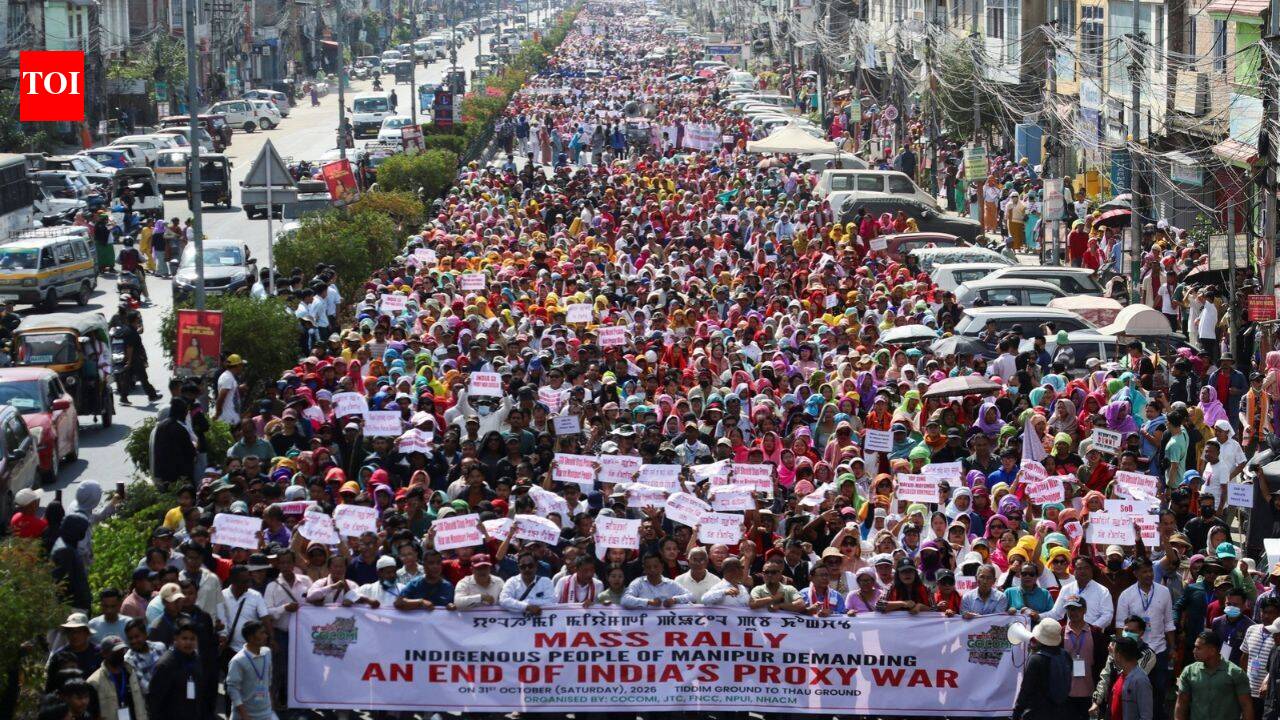
Thousands of Meitei and Naga protesters rallied in Imphal on October 31, 2026, demanding the Chief Minister's resignation and the termination of the SoO agreement with Kuki militant groups. This follows a deadly ambush that killed three Meitei men, further straining the state's volatile ethnic landscape.
Massive Protest in Imphal: Demand for Political Accountability
On October 31, 2026, the capital of Manipur, Imphal, witnessed one of its largest public demonstrations since the onset of ethnic violence in May 2023. Organised by the Coordinating Committee on Manipur Integrity (COCOMI), thousands of citizens gathered at Tiddim Ground and marched toward THAU ground to voice their profound dissatisfaction with the current state of affairs. The primary demands centered on the resignation of Chief Minister Y. Khemchand Singh, the protection of indigenous populations, and the immediate abrogation of the Suspension of Operations (SoO) agreement with Kuki militant groups.
The Trigger: Escalation of Violence
The intensity of this rally was directly fueled by a recent, brutal ambush involving militants, which resulted in the deaths of three Meitei men out of a group of 14 who were targeted. This incident served as a flashpoint, reigniting public anger that has been simmering for years. The atmosphere in Imphal reflects a deep-seated frustration with the ongoing instability, which has displaced thousands and fractured the social fabric of the state.
Strategic Alignment Between Meitei and Naga Groups
One of the most significant developments in this protest was the endorsement by the United Naga Council (UNC), the apex body for Naga organizations in the region. The convergence of Meitei and Naga groups, both calling for the termination of the SoO pact, highlights a rare moment of alignment in a region historically marked by complex inter-ethnic tensions. By accusing Kuki-Zo militants of exacerbating the conflict, these groups are pressuring the state and central government to reconsider the security frameworks currently in place.
Government Response: The Paradox of Unity
Coinciding with the rally, Chief Minister Y. Khemchand Singh attended a 'Rashtriya Ekta Diwas' (National Unity Day) event in Imphal. Commemorating the birth anniversary of Sardar Vallabhbhai Patel—the architect of India's integration—the Chief Minister emphasized that community-centric ideologies are detrimental to peace and economic progress. His call for national unity stands in stark contrast to the demands for his resignation being shouted in the streets, illustrating the widening chasm between the government’s official narrative of integrity and the reality on the ground.
Broader Implications and Future Trends
The demand to abrogate the SoO agreement is a challenge to the existing security architecture of Manipur. The SoO pact, intended to bring militant groups into a ceasefire, is now viewed by many as a liability that fails to protect civilians. As the state grapples with the fallout of the recent ambush, the government faces a critical juncture. Moving forward, the effectiveness of the administration's response will likely be measured by its ability to balance the security needs of diverse ethnic communities while addressing the urgent demand for justice for the victims of the ongoing crisis.
Conclusion
The events of October 31 underscore a state in deep turmoil, where calls for political change are inextricably linked to the survival of indigenous identities. With thousands of citizens demanding a complete overhaul of security policies, the administration is under immense pressure to restore order. The alignment of major ethnic bodies against the status quo suggests that the path to peace in Manipur will require more than symbolic gestures of unity; it will necessitate a fundamental reassessment of the mechanisms used to manage ethnic conflict.
Multiple Citing Sources