‘Attack one, attack all’: Why Saudi, Turkey, Pakistan have set urgent meet under key pact
Source Entity
Latest News: Todays Latest News Headlines from India & World | Hindustan Times | Hindustan Times
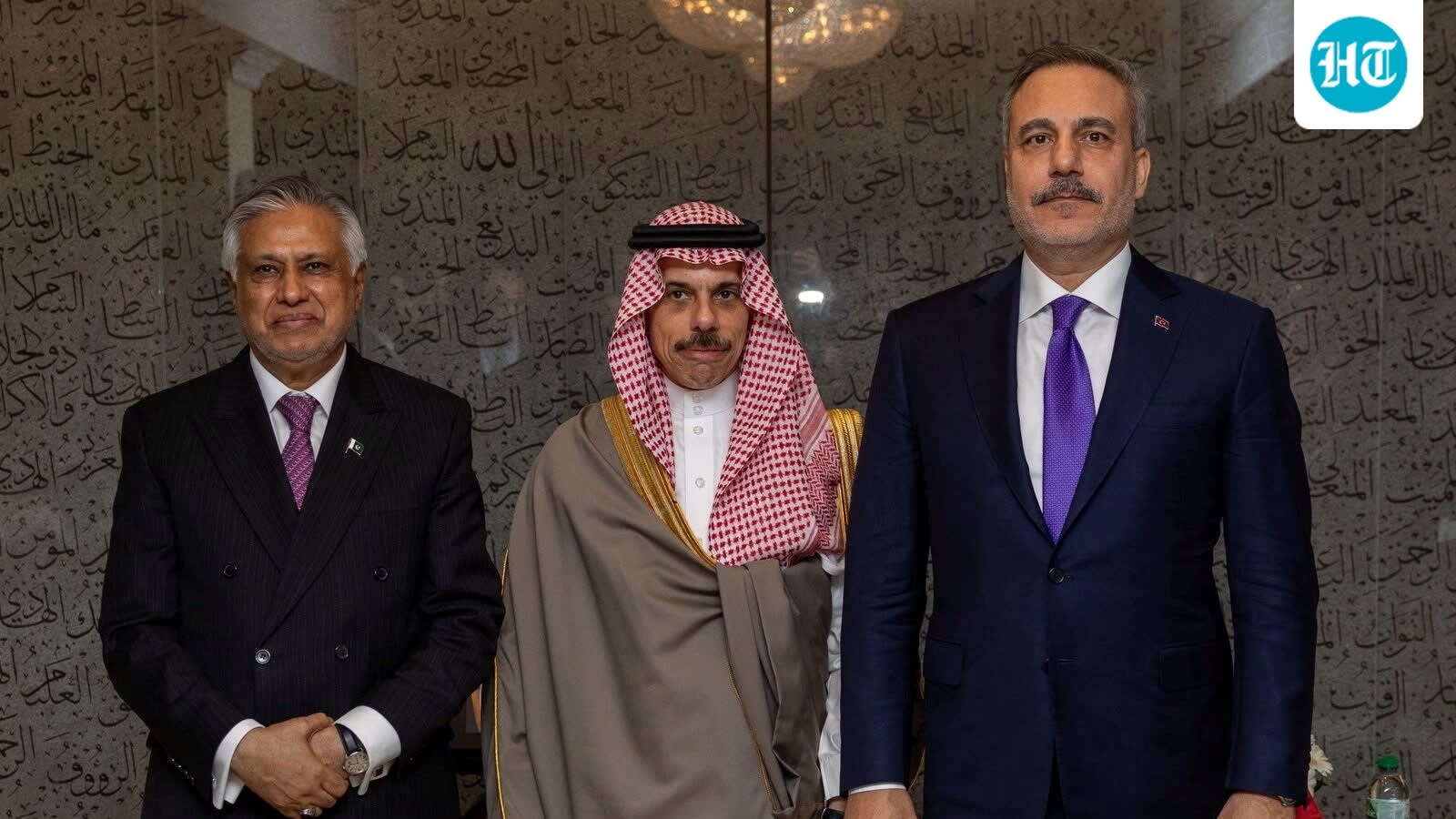
Saudi Arabia, Turkey, and Pakistan are convening an urgent meeting under the newly signed 'Mecca Pact' to address escalating Houthi attacks. The coalition aims to bolster regional security and reinforce collective defense commitments against threats to Saudi sovereignty.
The Mecca Pact: A New Paradigm for Regional Security
In a significant shift for Middle Eastern and South Asian geopolitical alignment, Saudi Arabia, Turkey, and Pakistan have moved to activate their collective defense framework, known as the 'Mecca Pact.' Following a high-level consultation in New York between Saudi Foreign Minister Prince Faisal bin Farhan, Turkish Foreign Minister Hakan Fidan, and Pakistani Deputy Prime Minister Ishaq Dar, the trio has signaled a coordinated response to the persistent security threats posed by Yemen’s Houthi rebels. This development marks a transition from diplomatic rhetoric to tangible military cooperation.
Operationalizing Collective Defense
The urgency of this meeting is underscored by the recent escalation in Houthi-led attacks, which have increasingly threatened Saudi stability. Under the provisions of the Mecca Pact, signed on August 7, the three nations have committed to a 'one for all, all for one' security doctrine. To transition this from policy to practice, Turkey’s Chief of General Staff, General Selcuk Bayraktaroglu, is scheduled to travel to Saudi Arabia to coordinate with his counterparts. This military-to-military engagement is a critical step in operationalizing the pact’s mutual defense clauses.
The Geopolitical Stakes for Riyadh
For Saudi Arabia, the Houthi threat represents a direct challenge to its national security and regional hegemony. The severity of the situation was highlighted by the kingdom’s leadership, which has reportedly instructed its military forces to remain prepared for extreme sacrifices in the face of these incursions. By involving Turkey and Pakistan—two of the most significant military powers in the Islamic world—Saudi Arabia is effectively broadening its security umbrella, signaling to regional adversaries that any aggression against the Kingdom will be met with a multi-national response.
Pakistan's 'Red Line' Diplomacy
Pakistan’s involvement is particularly notable given its historical role in regional security architectures. During the recent United Nations General Assembly, Prime Minister Shehbaz Sharif articulated a firm stance, drawing a 'red line' regarding the sanctity of Mecca and the security of Saudi Arabia. This rhetoric serves as both a warning to the Houthis and a public affirmation of Pakistan’s commitment to the Mecca Pact, reinforcing the idea that threats against Saudi sovereignty are viewed as existential threats to the broader Islamic community.
Future Trends and Regional Stability
The activation of the Mecca Pact suggests a future where Turkey, Pakistan, and Saudi Arabia act as a consolidated bloc to project stability across the Arabian Peninsula. If this trilateral cooperation succeeds in deterring Houthi aggression, it could lead to an expanded security framework that includes other regional allies. However, the success of this initiative will depend on the ability of the three nations to harmonize their military doctrines and maintain a unified front despite their distinct national interests and separate geopolitical priorities.
Verification Required?