Kashmir’s special status looted the same way Ram Temple was by BJP: Mehbooba Mufti
Source Entity
India Latest News: Top National Headlines Today & Breaking News | The Hindu
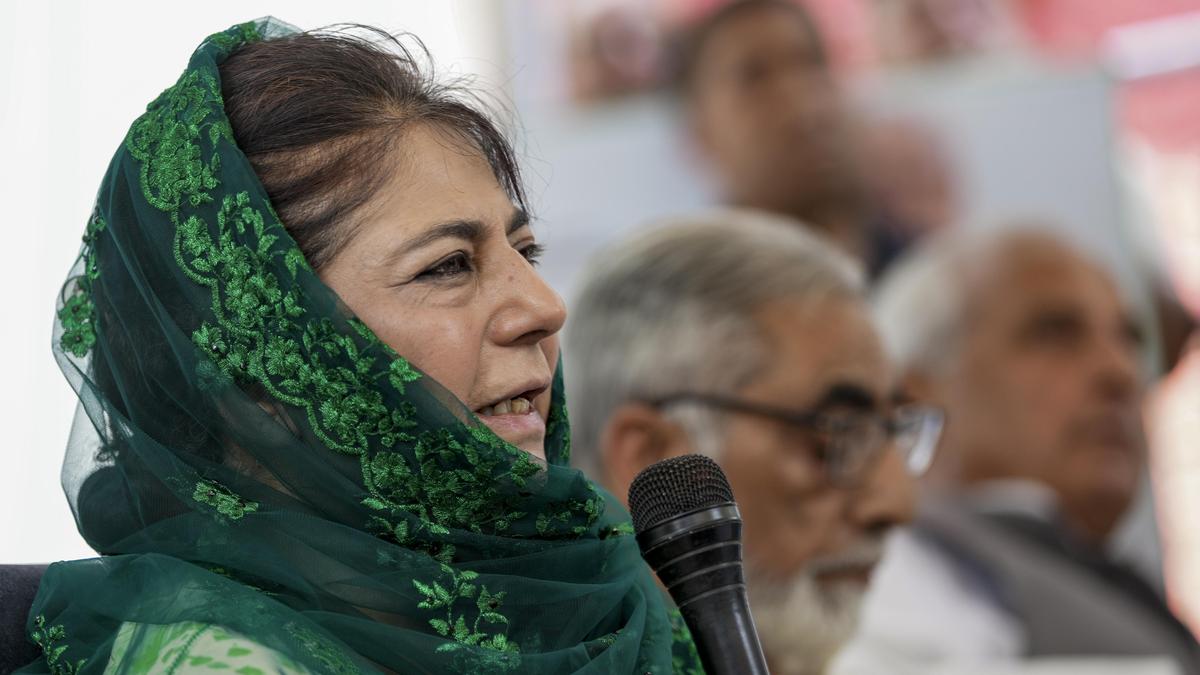
PDP president Mehbooba Mufti held a protest in Srinagar marking the seventh anniversary of the abrogation of Article 370. She condemned the BJP's actions, drawing parallels between the removal of J&K's special status and the handling of the Ram Temple.
The Seventh Anniversary of Article 370 Abrogation
On the eve of the seventh anniversary of the abrogation of Article 370, former Jammu and Kashmir Chief Minister Mehbooba Mufti led a protest in Srinagar, characterizing August 4 as the "darkest night" in the region's history. This public demonstration serves as a poignant reminder of the enduring political friction surrounding the constitutional changes enacted in 2019, which stripped the former state of its special status and reorganized it into two Union Territories.
The Constitutional Argument
Mufti’s critique centers on the legal and historical framework provided by the Indian Constitution. She emphasized that Article 370 and 35A were not concessions granted by neighboring nations like Pakistan or China, but were integral components of the document drafted by B.R. Ambedkar. By framing the abrogation as a "loot" of constitutional rights, Mufti highlights the contention that the BJP utilized its parliamentary majority to bypass regional political consensus, fundamentally altering the relationship between the central government and the people of Jammu and Kashmir.
Parallels with the Ram Temple
In a provocative rhetorical move, Mufti drew a direct comparison between the revocation of J&K's special status and the political management of the Ram Temple. By linking these two highly emotive issues, she suggests a broader pattern of governance where the ruling party allegedly prioritizes ideological agendas over established constitutional norms. This narrative is intended to resonate with those who perceive the current administration’s policies as a top-down imposition that ignores the cultural and regional distinctiveness of the state.
Historical Silence and Current Awareness
Reflecting on the past seven years, Mufti noted that the initial dilution of the constitution for J&K was met with relative silence from the broader Indian public. She argues that this collective apathy provided the political space for the subsequent total abrogation. However, she asserts that the tide is turning, suggesting that the public is becoming increasingly aware of the BJP's methods and the implications of its centralizing authority.
Future Implications and Resistance
As an "alive nation," Mufti declared that the PDP and its supporters will continue to resist the current political status quo. This stance indicates that even seven years post-abrogation, the political landscape in Jammu and Kashmir remains deeply polarized. The ongoing discourse suggests that the debate over Article 370 is far from settled, with regional leaders continuing to utilize the anniversary as a platform to challenge the central government’s legitimacy and mobilize public sentiment.
Conclusion
The protest in Srinagar underscores the persistent volatility in Jammu and Kashmir's political climate. By positioning the abrogation of Article 370 as a violation of the foundational principles of the Indian Constitution, Mehbooba Mufti ensures that the debate remains centered on issues of federalism, democratic process, and the protection of regional identity. As the region moves forward, the influence of these competing narratives will likely continue to shape the electoral and social dynamics of the Union Territory.
Verification Required?