Scientists warn melting glaciers could create 50,000 new lakes
Source Entity
TOI SCIENCE DESK
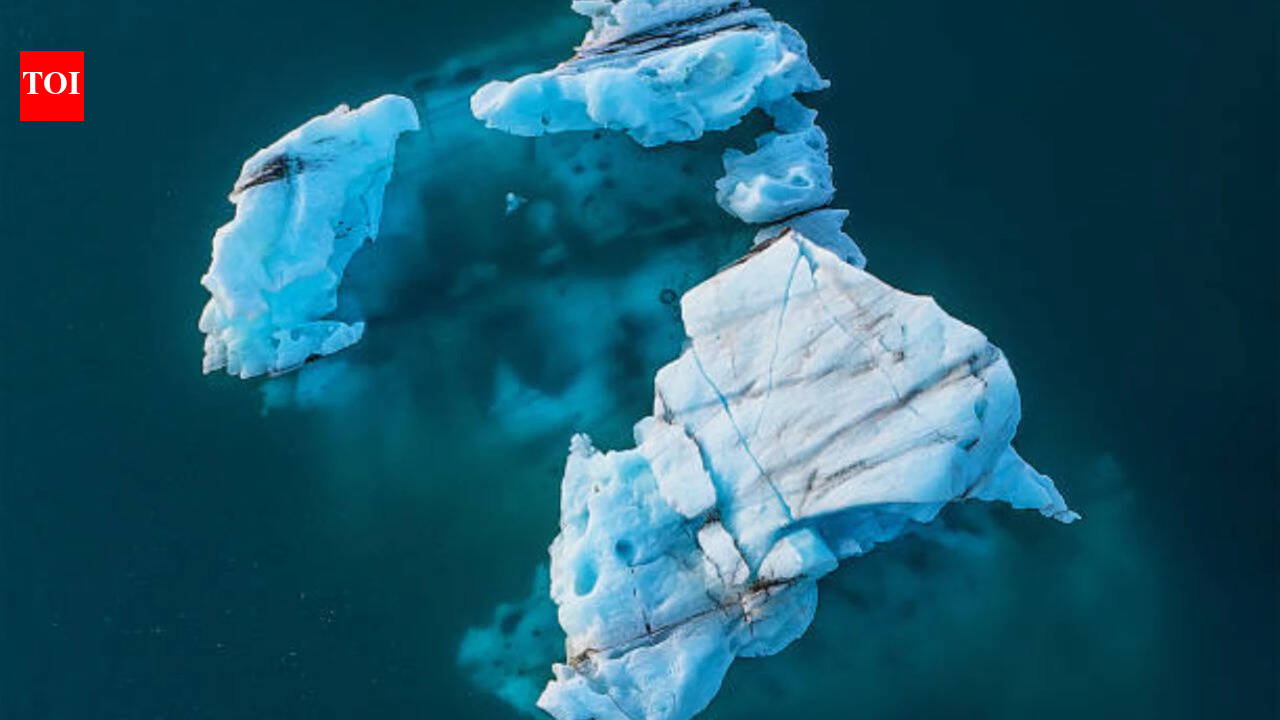
A global study reveals that melting glaciers could form over 56,000 new lakes, significantly increasing flood risks for 15 million people. The most vulnerable populations are located primarily in India, Pakistan, Peru, and China.
The Hidden Landscape: Glacial Retreat and Future Hydrology
Recent research published in Nature Communications has unveiled a sobering projection regarding the Earth's topography in a warming climate. By mapping the sub-glacial terrain, an international team of researchers from Sweden, the US, Switzerland, and Norway has determined that the disappearance of glaciers will not merely result in rising sea levels, but will fundamentally reshape the landscape through the creation of approximately 56,659 new lakes. These bodies of water will emerge in areas that are currently locked under thick ice, marking a permanent alteration of the planet’s surface geography.
The Mechanics of New Lake Formation
As global temperatures climb, the retreat of glaciers exposes depressions and basins previously filled with ice. These basins are prime candidates for the accumulation of meltwater, leading to the creation of thousands of glacial lakes. While the formation of a lake may seem benign, these new water bodies often lack the geological stability of ancient lakes. They are frequently held back by unstable dams of ice and loose rock, known as moraines, which are prone to sudden failure. This instability creates a ticking time bomb for downstream communities.
Heightened Risks in Mountainous Regions
The study specifically highlights the mountainous regions of Asia, the Andes, and Alaska as primary areas of concern. These regions are characterized by steep topography, where the sudden breach of a newly formed glacial lake can trigger devastating Glacial Lake Outburst Floods (GLOFs). Unlike traditional seasonal flooding, these events are often unpredictable and carry massive amounts of debris, causing catastrophic damage to infrastructure and ecosystems alike.
Socio-Economic Impact: The 15 Million at Risk
The human cost of this geographic shift is profound, with the research estimating that 15 million people are currently living in areas threatened by these potential floods. The vulnerability is not evenly distributed; the study emphasizes that more than half of this exposed population is concentrated in just four nations: India, Pakistan, Peru, and China. In these countries, reliance on glacial meltwater for agriculture and power generation makes the management of these new, unstable lakes an urgent policy priority.
Global Context and Environmental Stewardship
Currently, the world’s 200,000 to 275,000 glaciers serve as a critical reservoir, holding 69% of the planet's fresh water. Their widespread presence—from the Arctic and Antarctica to the Himalayas and the Andes—makes them a linchpin of global climate stability. As these "water towers" retreat, the transition from solid ice to liquid lakes represents a radical shift in how the Earth stores and releases water, necessitating a new paradigm in water resource management and disaster preparedness.
Conclusion: Planning for a Transformed Earth
The findings underscore that climate change is not a distant threat but a force currently reshaping the very ground beneath our feet. As we move forward, the identification of these 56,000 future lake sites provides a roadmap for mitigation. By monitoring these potential hazard zones, governments and international bodies can better prepare for the inevitable geological transitions ahead, potentially saving millions of lives in the most vulnerable regions of the world.