Model Routing Is Simple. Until It Isn’t.
Source Entity
Hugging Face - Blog
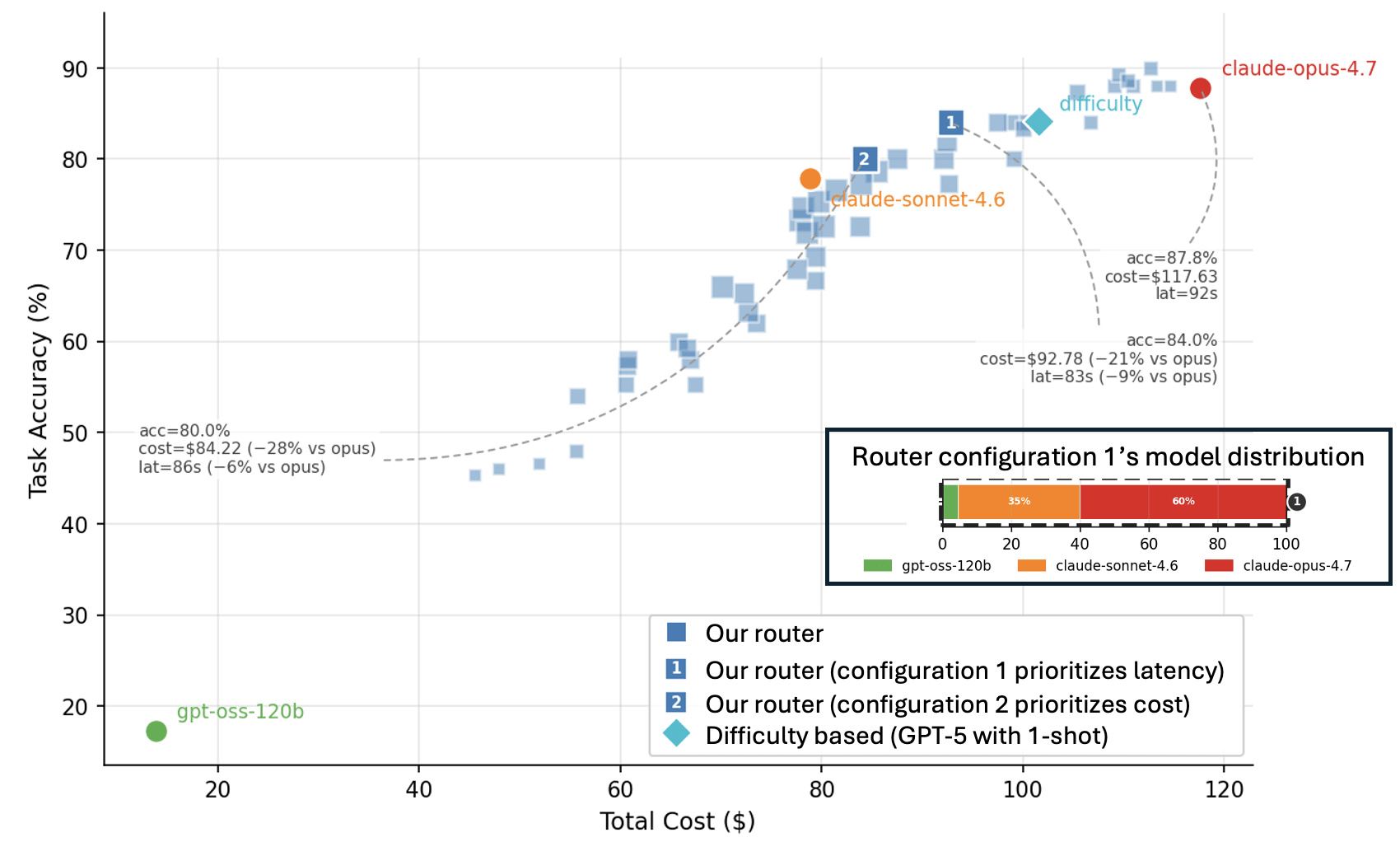
Model routing in agentic systems is often mistaken for a simple classification task but is actually a complex systems optimization problem. Effective routing requires balancing cost, latency, and reliability rather than simply selecting the 'best' model.
The Complexity of Model Routing in Agentic Systems
In the evolving landscape of artificial intelligence, the concept of "model routing" has emerged as a critical architectural component for enterprises deploying agentic systems. On the surface, routing appears to be a straightforward efficiency gain: a system analyzes an incoming request and directs it to the most appropriate Large Language Model (LLM). This typically involves sending low-complexity queries to smaller, cheaper models and reserving high-reasoning capabilities for complex tasks. However, as production environments scale, this perceived simplicity vanishes, revealing a deep-seated tension between theoretical classification and practical systems optimization.
The Classification Fallacy
Most initial implementations of model routers are built on the assumption that model selection is a classification problem. In this framework, the router acts as a gatekeeper using heuristics or a small classifier to categorize a prompt (e.g., "Is this a coding request?" or "Is this a multimodal task?"). While this approach works in controlled demos, it fails in production because it ignores the dynamic nature of LLM performance. The reality is that routing is not about finding the "best" model in a vacuum, but rather optimizing a system where multiple variables are in constant flux. When a router succeeds, it is rarely because it identified the absolute peak performer for a task, but because it managed the trade-offs between competing operational requirements.
The Four Pillars of Systems Optimization
To move beyond simple classification, developers must treat routing as a multi-dimensional optimization problem. According to the analysis, four critical dimensions must be balanced simultaneously:
- Cost: Beyond the base price per token, the total cost of ownership includes prompt overhead and the cost of potential retries.
- Latency: The time taken by the router itself, combined with the inference speed of the target model, determines the user experience.
- Model Specialization: Leveraging specific strengths, such as Claude for sophisticated coding tasks or Gemini for multimodal inputs, to ensure quality.
- Reliability: The consistency of the model's output and its ability to adhere to system constraints without failing.
The Hidden Nuances of Cost
One of the most surprising revelations in production routing is that cost is more than just model pricing. The expectation that a newer or different model (such as GPT-4.1) would inherently be cheaper than a competitor (like Claude Sonnet 4.6) often proves false in real-world applications. This discrepancy occurs because the actual cost is influenced by how the model handles specific prompts, the number of tokens generated, and the success rate of the first attempt. If a cheaper model requires three attempts to get a prompt right while a more expensive model does it in one, the "cheaper" model becomes the more expensive liability.
Strategic Implications and Future Trends
As agentic systems become more autonomous, the role of the router will likely shift from a static decision-maker to a dynamic optimizer. We can predict a trend toward "observability-driven routing," where the system adjusts routing logic in real-time based on current latency spikes or cost fluctuations across different API providers. The shift from classification to optimization suggests that the future of AI orchestration lies not in the models themselves, but in the intelligent middleware that manages them. Companies that master this optimization will achieve a competitive advantage by maintaining high performance while aggressively controlling operational expenditures.
Summary
Ultimately, model routing is an exercise in compromise. The transition from a simple classifier to a complex optimization system marks the maturity of AI engineering. By recognizing that cost, latency, and reliability are interdependent, developers can build more resilient agentic systems that prioritize systemic health over the pursuit of a single "perfect" model.