Protests find echo in both Lok Sabha, Rajya Sabha as Monsoon Session begins
Source Entity
Jatin Anand, Damini Nath, Deeptiman Tiwary
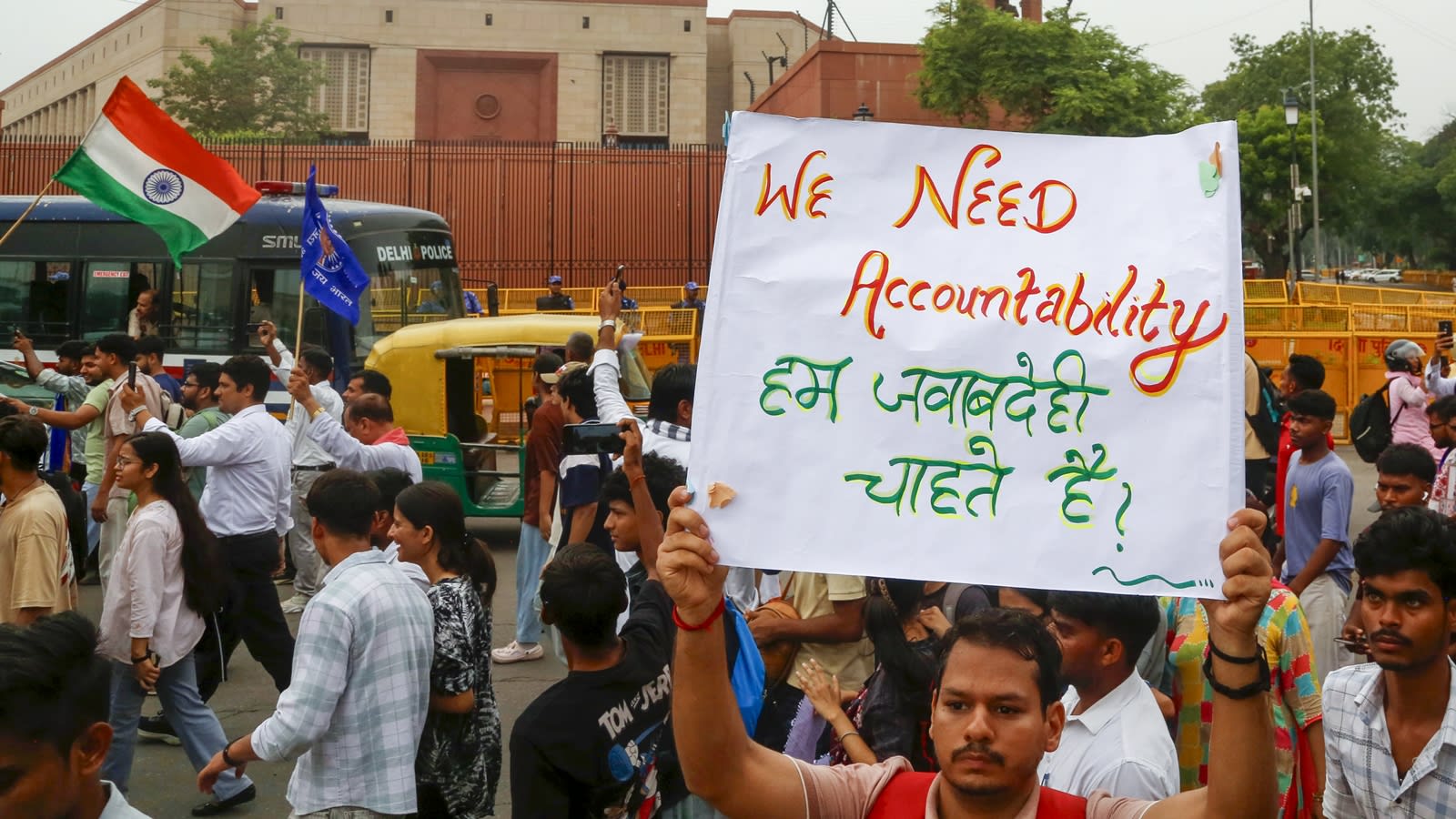
The first day of the 2026 Monsoon Session of Parliament saw major disruptions due to opposition protests over the NEET paper leak and Ram temple donation theft. Simultaneously, massive street protests in Delhi led to police intervention, while the government managed to introduce a bill to increase Supreme Court judge strength.
Parliament Monsoon Session Paralyzed by Widespread Unrest
The Monsoon Session of Parliament commenced on July 20, 2026, under a cloud of intense political friction and civil unrest. The legislative agenda was effectively sidelined as opposition parties, including the Congress, Samajwadi Party, and Trinamool Congress, united to demand accountability over the alleged NEET paper leak and reports of donation theft at the Ram Temple. The atmosphere within the Lok Sabha was volatile, characterized by members trooping into the Well of the House, which necessitated six successive adjournments before the session was ultimately called off for the day.
The NEET Controversy and Public Outcry
Central to the parliamentary logjam is the NEET paper leak, a scandal that has galvanized both the opposition and the youth demographic. The Cockroach Janta Party (CJP) spearheaded massive demonstrations in Lutyens’s Delhi, with estimates suggesting over 50,000 protesters converged on the capital. The demand for the resignation of Union Education Minister Dharmendra Pradhan reflects the gravity of the situation, as the alleged irregularities in CBSE and NEET examinations have deeply shaken public confidence in the national testing infrastructure.
Clashes in the Capital
Beyond the parliamentary walls, the heart of New Delhi witnessed significant civil disorder. Security forces were forced to deploy tear gas, water cannons, and lathi-charges across major thoroughfares, including Ashoka Road and Raisina Road, to prevent protesters from breaching security perimeters surrounding the Parliament complex. This escalation indicates a growing disconnect between the government’s policy stance and the expectations of the student population, a trend that may continue to haunt the remainder of the session.
Legislative Business Amidst Chaos
Despite the pervasive disruptions, the government managed to progress on a key judicial reform. Union Law Minister Arjun Ram Meghwal successfully introduced a bill aimed at replacing an existing ordinance that increases the total strength of Supreme Court judges from 34 to 38, including the Chief Justice of India. This legislative move suggests that the government is prioritizing institutional expansion even as it faces a combative and highly vocal opposition.
Regional Nuances and Political Strategy
Internal dynamics within the opposition bloc also surfaced, particularly with the DMK raising the specific issue of Mekedatu while notably distancing itself from the Congress-led strategy meetings. Additionally, the symbolic tensions within the Trinamool Congress were highlighted by altered seating arrangements for rebel MPs, signaling potential fractures within opposition ranks. These internal variations suggest that while the opposition is united in its protest, their long-term strategic coherence remains fragile.
Future Outlook
As the session progresses, the government faces the dual challenge of navigating intense public scrutiny over educational integrity while attempting to pass critical legislation. If the protests outside Parliament continue to grow, the administration may find it increasingly difficult to maintain the legislative momentum required to push through its broader agenda. The next few days will be a litmus test for both the government’s crisis management and the opposition’s ability to sustain a unified front in the face of persistent parliamentary deadlock.
Multiple Citing Sources