'Maybe education minister doesn't know how to write letter of resignation': Mahua
Source Entity
TOI NEWS DESK
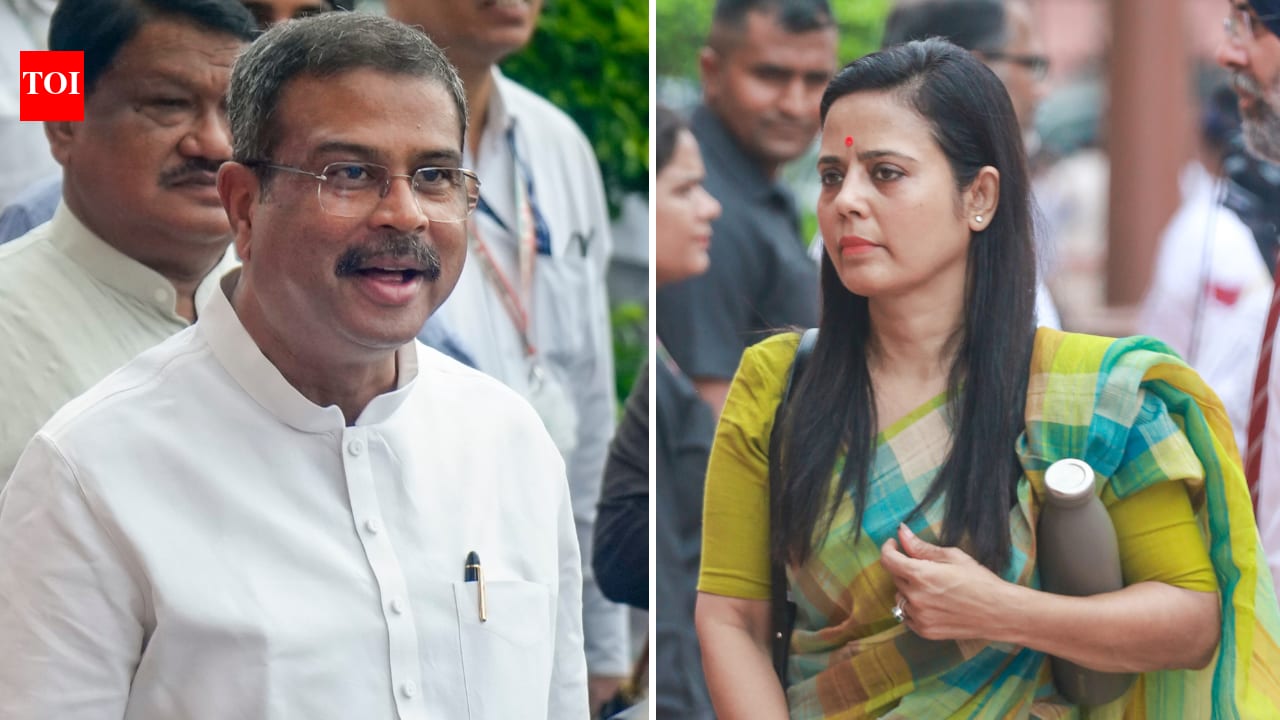
The Monsoon Session of Parliament faced immediate disruption as Opposition parties protested over the NEET paper leak and Ayodhya temple donation theft. Simultaneously, large-scale protests in Delhi led to police intervention, overshadowing the introduction of a bill to increase Supreme Court judge strength.
Parliament Monsoon Session Paralyzed by Protests
The Monsoon Session of the Indian Parliament commenced on July 20, 2026, under a cloud of intense political friction. Within hours of the session's opening, both the Lok Sabha and Rajya Sabha were forced into frequent adjournments, eventually resulting in a complete washout of the day's legislative agenda. The disruption was primarily driven by a unified Opposition front—including the Congress, Samajwadi Party, and Trinamool Congress—that centered their dissent around the alleged NEET examination paper leak and reports of donation theft at the Ram Temple in Ayodhya.
The NEET Crisis and Public Unrest
At the heart of the parliamentary stalemate lies the NEET paper leak controversy, an issue that has translated from the floor of the House to the streets of New Delhi. Tens of thousands of demonstrators, largely mobilized by the Cockroach Janta Party (CJP), converged on the capital, attempting to breach barricades in Lutyens’s Delhi. The protesters are demanding the immediate resignation of Union Education Minister Dharmendra Pradhan, citing systemic irregularities in CBSE exams and the NEET process as a betrayal of the nation's youth.
Escalation in the Capital
As the parliamentary session struggled to maintain order, the streets surrounding the legislature became a theater of conflict. Reports indicate that over 50,000 protesters challenged security forces across vital arteries of the New Delhi district, including Ashoka Road and Raisina Road. Law enforcement responded with standard riot-control measures, including lathicharges, tear gas, and water cannons, to contain the crowds near Jantar Mantar and prevent a direct march on Parliament.
Legislative Business Amid Chaos
Despite the pervasive unrest, the government managed a brief window of legislative activity. Union Law Minister Arjun Ram Meghwal successfully introduced a Bill in the Lok Sabha aimed at replacing an existing Ordinance. This critical piece of legislation seeks to expand the strength of the Supreme Court, increasing the number of judges from 34 to 38, inclusive of the Chief Justice of India. The swift introduction of this bill signals the government's intent to prioritize judicial expansion even amidst severe political volatility.
Internal Opposition Dynamics
The session also highlighted shifting internal dynamics within the Opposition. While the broader coalition maintained a united stance on the NEET and temple issues, distinct fissures were visible. The DMK, for instance, chose to focus its parliamentary efforts on the Mekedatu project issue, conspicuously skipping a meeting convened by the Congress. Furthermore, the seating arrangements for rebel Trinamool Congress (TMC) MPs provided a visual reminder of the internal political realignments currently influencing the legislative landscape.
Future Trends and Outlook
Looking ahead, the intensity of the protests outside Parliament suggests that the government will face significant pressure to provide concrete answers regarding the NEET examination integrity. The reliance on ordinances for major judicial reforms indicates that the executive is currently operating with a sense of urgency, potentially to bypass future legislative gridlock. If the Opposition continues to leverage these high-profile scandals, the remainder of the Monsoon Session is likely to remain characterized by obstructionism rather than consensus-based lawmaking.
Multiple Citing Sources