From Jantar Mantar to near Parliament: A protest march that took on a life on its own
Source Entity
Pragynesh, Devansh Mittal
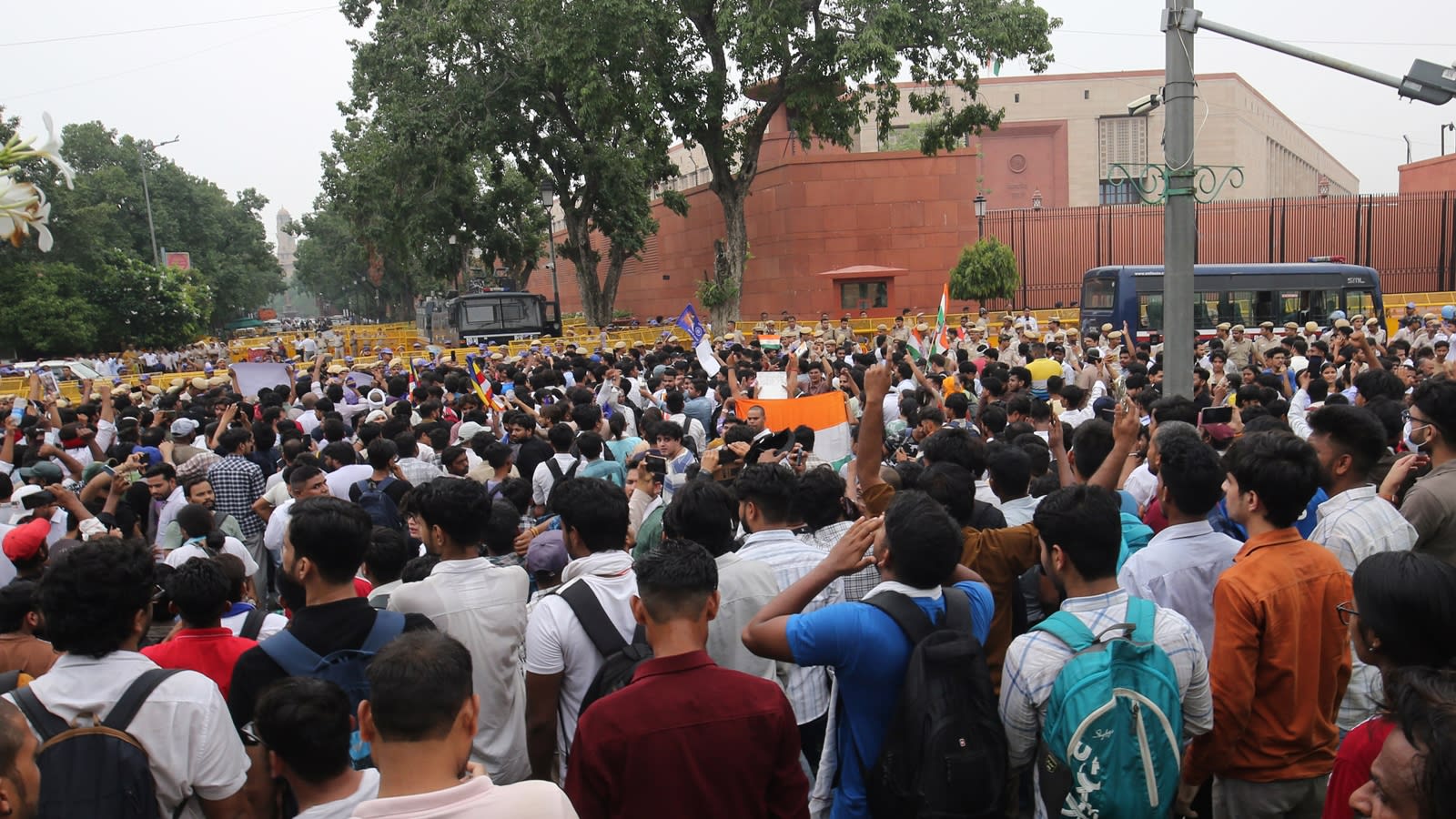
The Monsoon Session of Parliament faced immediate disruption as Opposition MPs protested the NEET paper leak and other issues. Simultaneously, massive student protests in Delhi led to clashes with police, marking a volatile start to the legislative session.
A Stormy Start: Parliament and Streets in Turmoil
The Monsoon Session of the Indian Parliament commenced on July 20, 2026, under a cloud of significant unrest. Both inside the hallowed halls of the Lok Sabha and across the streets of Lutyens’s Delhi, the day was defined by intense friction between the government, the Opposition, and thousands of demonstrators. The legislative agenda was effectively sidelined as the House faced six consecutive adjournments, eventually concluding at 3 p.m. with minimal business transacted, save for a bill concerning Supreme Court judicial appointments.
The NEET Controversy and Opposition Strategy
Inside the Lok Sabha, the Opposition—led by Congress, the Samajwadi Party, and the Trinamool Congress—coordinated a disruptive stance. The primary flashpoint was the alleged NEET paper leak, a scandal that has galvanized student groups and political rivals alike. By trooping into the Well of the House, members signaled a refusal to conduct routine business until the government addressed their demands. Notably, the DMK opted to carve out a distinct path by focusing on the Mekedatu issue, highlighting the fragmented nature of the current Opposition coalition.
Escalation on the Streets of Delhi
Parallel to the parliamentary deadlock, a massive protest erupted in the heart of the national capital. Tens of thousands of young men and women, many of whom are students or young professionals, surged toward Parliament. The scale of the demonstration, estimated at 50,000 participants, overwhelmed traditional protest zones like Jantar Mantar. Security forces, including the Delhi Police and Rapid Action Force, utilized lathicharges, tear gas, and water cannons to contain the crowd as they attempted to breach barricades on major thoroughfares such as Ashoka Road and Janpath.
The Role of the Cockroach Janta Party (CJP)
Central to this unrest was the Cockroach Janta Party (CJP), which spearheaded the call for Education Minister Dharmendra Pradhan’s resignation. However, the movement appeared to exceed the organizational capacity of the CJP. As the protest progressed, the sheer volume of participants transformed a managed demonstration into a chaotic, decentralized movement that moved beyond the party's control. The abandoned footwear left on Sansad Marg by 3 p.m. served as a grim visual testament to the intensity of the confrontation.
Broader Implications and Future Trends
This day of disruption reflects a growing disenchantment among the youth regarding educational integrity and administrative accountability. The demand for the resignation of a Union Minister, coupled with the systemic disruption of the legislative process, suggests that the Monsoon Session will remain highly volatile. As the government attempts to push forward critical legislative reforms, such as the bill to increase Supreme Court judges, they will likely continue to face a dual-front challenge: a combative Opposition within the chambers and an unpredictable, high-energy protest movement on the streets.
Conclusion
The convergence of parliamentary paralysis and widespread civil unrest marks a critical juncture for the current administration. The failure to contain the narrative around the NEET paper leak has created a vacuum of trust that the Opposition is eager to exploit. Unless there is a significant shift in how the government engages with these grievances, the remainder of the Monsoon Session is likely to be defined by further standoffs, both legislative and physical, as the pressure for accountability intensifies.
Multiple Citing Sources