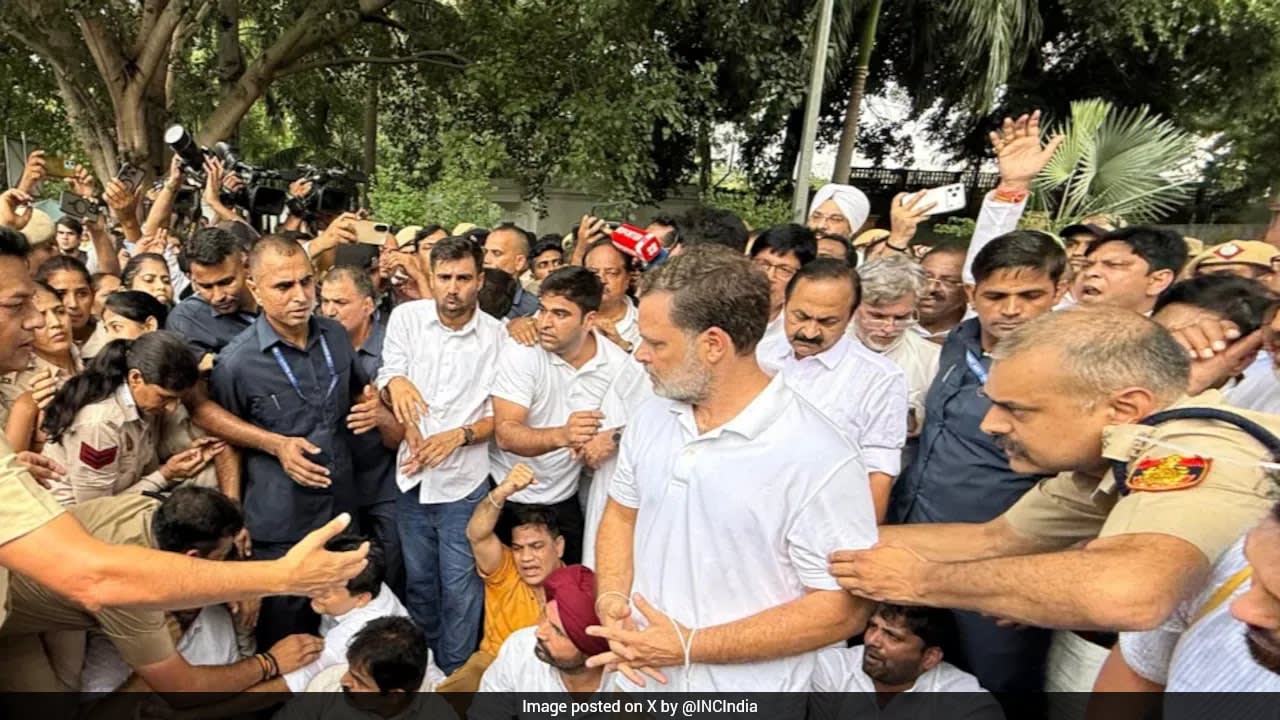
AAP's Swipe As Rahul Gandhi Stages Sit-In Protest Outside PM Modi's Home
Source Entity
NDTV News Search Records Found 1000
The Monsoon Session of Parliament faced immediate disruptions as opposition parties protested against alleged NEET exam irregularities and temple donation theft. Simultaneously, massive street protests led by the Cockroach Janta Party resulted in widespread clashes with security forces in Delhi.
A Turbulent Start to the Monsoon Session
The Monsoon Session of Parliament commenced on July 20, 2026, under a cloud of intense political volatility. The proceedings in the Lok Sabha were marked by immediate and repeated disruptions, forcing the House to adjourn six times throughout the day before finally concluding at 3 p.m. The primary catalysts for this legislative gridlock were the Opposition's demands for accountability regarding the alleged NEET paper leak and reports of theft concerning Ram Temple donations. Members from the Congress, Samajwadi Party, and Trinamool Congress notably entered the Well of the House in protest, while the DMK independently raised the Mekedatu project issue, signaling a fractured approach within the Opposition bloc.
Street Protests and Security Clashes
Beyond the walls of Parliament, the heart of Lutyens’s Delhi transformed into a site of civil unrest. Tens of thousands of protesters, primarily youth, mobilized under the banner of the Cockroach Janta Party (CJP) to demand the resignation of Union Education Minister Dharmendra Pradhan. The scale of the demonstration was significant, with estimates suggesting over 50,000 participants challenging security cordons across critical arteries of the capital, including Ashoka Road and Janpath. The police response was robust, utilizing lathicharges, tear gas, and water cannons to contain the crowds, resulting in numerous injuries and widespread disruption of movement in the city center.
Legislative Stagnation vs. Public Outcry
Despite the chaos, the government managed to transact limited business, specifically the introduction of a Bill by Union Law Minister Arjun Ram Meghwal aimed at replacing an Ordinance that increases the number of Supreme Court judges. This move highlights the government's attempt to focus on judicial infrastructure even as the political environment remains hostile. The contrast between the formal legislative process inside the chamber and the violent agitation outside underscores a deepening divide between the current administration and a vocal segment of the electorate concerned with academic integrity and administrative transparency.
Political Maneuvering and Intra-Opposition Friction
Adding a layer of complexity to the day's events was the reaction from other political entities. The Aam Aadmi Party (AAP) explicitly criticized Rahul Gandhi’s sit-in protest outside the Prime Minister’s residence, characterizing the act as a strategic maneuver intended to undermine the momentum of the CJP-led protests. This internal friction among Opposition parties suggests that while there is a shared desire to challenge the government, there is little consensus on the methods or the leadership of these anti-government movements, which may weaken the long-term impact of these protests.
Future Trends and Implications
Looking ahead, the administration faces a dual challenge: addressing the substantive allegations regarding exam irregularities while maintaining control over an increasingly restive public. The heavy reliance on police force to manage protests in the capital suggests a government prepared for a long standoff. If the Monsoon Session continues to be defined by these disruptions, the legislative agenda—including critical judicial reforms—will likely suffer. The political fallout from these protests will ultimately depend on whether the government can offer a credible resolution to the NEET controversy or if the discontent will continue to manifest in large-scale street mobilizations.
Multiple Citing Sources
Verification Required?