‘Most frightening face of BJP rule’: Aaditya Thackeray on lathi charge on CJP protesters
Source Entity
The Indian Express
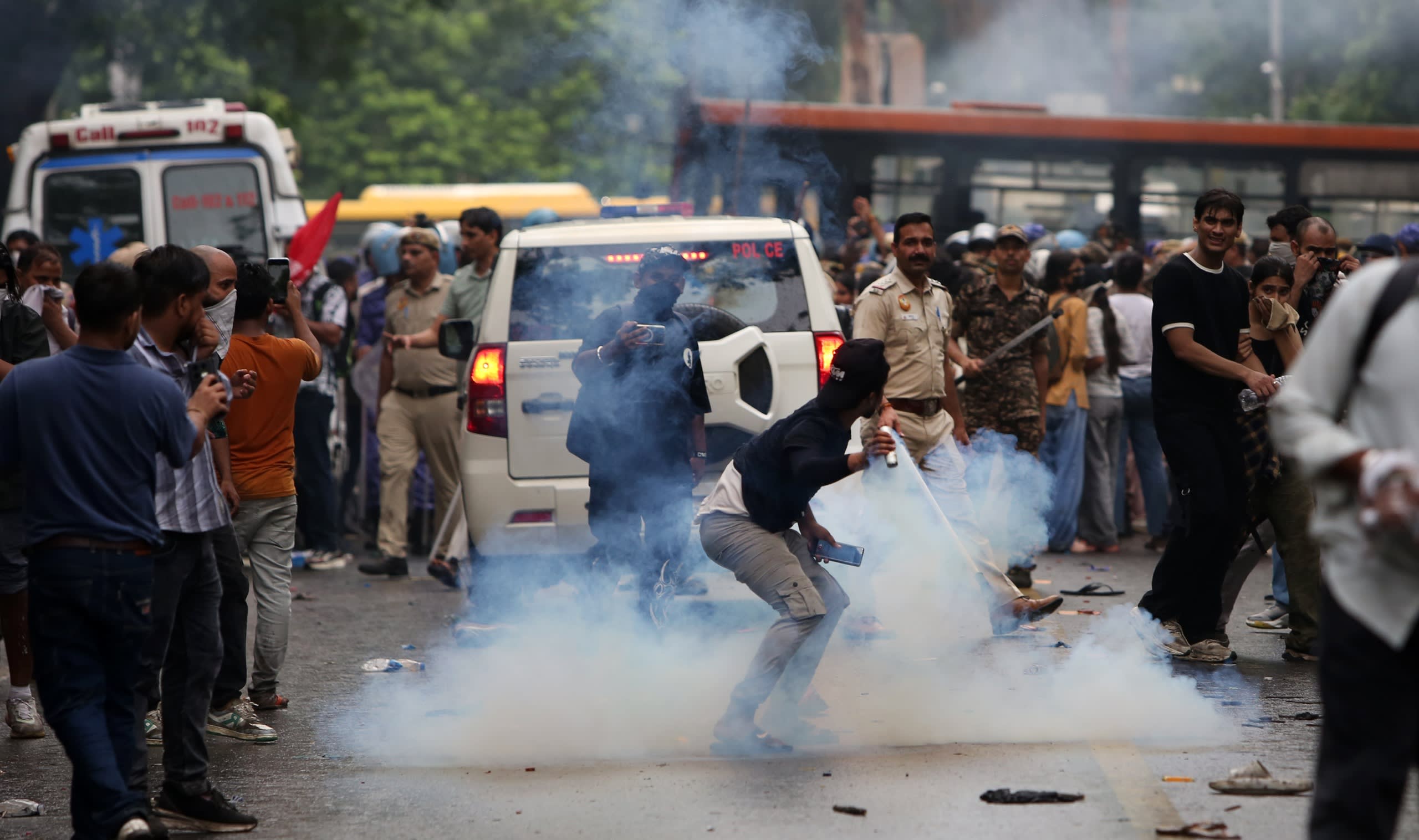
The Monsoon Session of Parliament faced immediate disruptions as Opposition parties protested the NEET paper leak and Ram temple donation theft. Simultaneously, tens of thousands of protesters clashed with police in Delhi, demanding the resignation of Education Minister Dharmendra Pradhan.
Parliament Monsoon Session Paralyzed by Protests
The Monsoon Session of the Indian Parliament commenced on July 20, 2026, under a cloud of intense political volatility. The proceedings, which were expected to facilitate critical legislative agenda, were instead met with immediate and repeated disruptions. Opposition members from the Congress, Samajwadi Party, and Trinamool Congress descended into the Well of the House, effectively halting the legislative process and forcing six consecutive adjournments before the day was called off at 3 p.m.
The Catalysts of Dissent
At the heart of the parliamentary gridlock were two primary grievances: the alleged irregularities surrounding the NEET paper leak and allegations of donation theft at the Ram Temple in Ayodhya. The NEET controversy, in particular, has become a lightning rod for national discourse, with Opposition leaders like Mallikarjun Kharge characterizing the examination process as a systemic scam that jeopardizes the future of millions of students. This legislative protest mirrored the unrest brewing on the streets of New Delhi, where the Cockroach Janta Party (CJP) led thousands in a march toward Parliament demanding the resignation of Union Education Minister Dharmendra Pradhan.
Escalation in the Capital
Outside the legislative chambers, the situation in Lutyens’s Delhi reached a boiling point. An estimated 50,000 protesters challenged security perimeters across key arterial roads, including Ashoka Road and Raisina Road. The confrontation between security forces and demonstrators—comprising mostly young men and women—resulted in the deployment of lathicharges, tear gas, and water cannons. The scale of this mobilization indicates a significant deepening of public dissatisfaction regarding the government's handling of educational integrity and religious administrative accountability.
Legislative Stagnation vs. Judiciary Expansion
Despite the chaotic environment, the government managed a singular, albeit brief, legislative victory. Union Law Minister Arjun Ram Meghwal successfully introduced a Bill in the Lok Sabha intended to replace an Ordinance that increases the strength of the Supreme Court of India from 34 to 38 judges. This move represents a strategic effort to address the mounting backlog of judicial cases, though the parliamentary context suggests that the government faces a daunting challenge in navigating future legislative business amidst such entrenched opposition.
Shifting Alliances and Future Implications
Adding to the complexity of the session, the DMK opted to raise the Mekedatu issue independently, choosing to bypass the Congress-led strategy meetings. Furthermore, the internal dynamics of the Trinamool Congress were highlighted by a notable change in seating arrangements for rebel MPs. These fissures within the Opposition bloc, combined with the government's struggle to maintain order, suggest that the remainder of the Monsoon Session will likely be characterized by persistent friction and a difficult path for any non-urgent legislation.
Conclusion
The first day of the Monsoon Session serves as a grim indicator of the current political climate in India. With the government and Opposition at an impasse over significant national issues, the legislative machinery remains largely stalled. As the session progresses, the ability of the administration to address the NEET crisis and manage the growing public unrest outside the Parliament walls will be the definitive test of this parliamentary term.
Multiple Citing Sources