Farmers stopped at Punjab-Haryana border en route to Delhi rally against India-U.S. trade deal
Source Entity
India Latest News: Top National Headlines Today & Breaking News | The Hindu
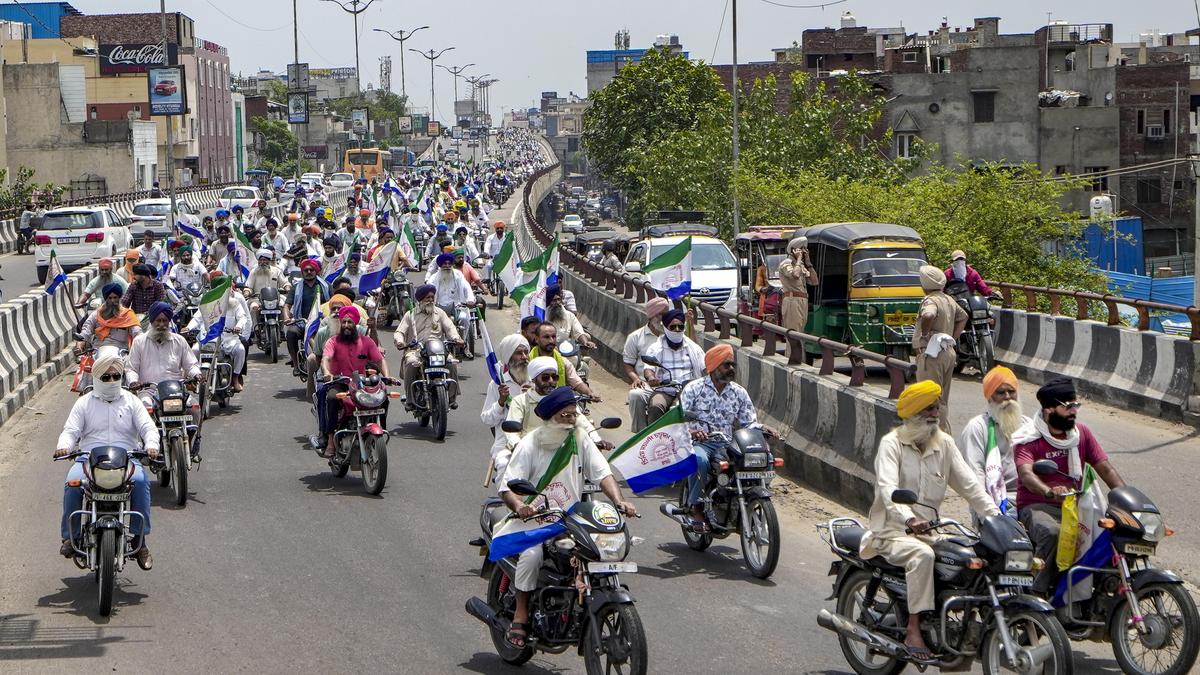
Authorities have sealed the Shambhu border and detained key farmer leaders to prevent a march to Delhi against a proposed India-U.S. trade deal. Protesters under the 'Desh Bachao Morcha' banner were blocked by heavy security, leading to the eventual conclusion of the demonstration.
Tensions Escalate at Shambhu Border Over U.S. Trade Deal
The Anatomy of the Standoff
On July 21, 2026, the administrative landscape between Punjab and Haryana became a focal point of intense political friction as the 'Desh Bachao Morcha' attempted a coordinated march toward New Delhi. The primary catalyst for this mobilization was the proposed India–United States trade deal, which farmer unions fear could jeopardize domestic agricultural interests. In response to the planned mahapanchayat at Kisan Ghat, the Haryana Police executed a strategic lockdown, sealing the Shambhu border in the Ambala district and deploying approximately 15 companies of security forces, including paramilitary units.
Tactical Containment and Democratic Friction
To neutralize the movement of protesters, local authorities employed heavy-duty containment measures. This included the installation of multi-layer barricades and the strategic placement of cement blocks on the bridge spanning the Ghaggar river. These physical impediments were designed to create an impenetrable wall between the mobilizing farmers and the national capital. The deployment reflects a high-stakes approach to law enforcement, prioritizing the maintenance of public order and the prevention of large-scale gatherings in the sensitive central zone of Delhi.
Detentions and Leadership Disruption
Beyond physical barriers at the border, the state also targeted the leadership structure of the protest. High-profile figures such as Raju Shetti, head of the Swabhimani Shetkari Sanghatana, and Mahadev Jankar of the Rashtriya Samaj Paksh were detained by Delhi Police. Shetti’s account of being picked up from Kisan Ghat highlights a significant breakdown in communication between the state and the protesting organizations. The detention of representatives from 154 different organizations signals a broad-based effort by the state to decapitate the organizational capacity of the rally before it could gain momentum.
The 'Desh Bachao Morcha' Perspective
Farmer leader Sarwan Singh Pandher, serving as the coordinator for the 'Desh Bachao Morcha,' characterized the protest as a peaceful democratic exercise. He explicitly criticized the BJP-led Haryana government for its aggressive use of barricades and exclusionary tactics. The fundamental grievance of the demonstrators centers on the perceived lack of transparency and potential negative impacts of the U.S. trade deal on local livelihoods, a narrative that has historically resonated deeply within the agrarian sectors of Punjab and Haryana.
Resolution and Future Implications
Despite the significant show of force, the standoff reached a temporary conclusion as the farmers opted to end their protest following assurances that their concerns would be conveyed to the Central government. This episode underscores the ongoing volatility regarding trade policy and the agricultural sector. The use of inter-state border closures as a standard response to civil unrest suggests that future trade and policy negotiations will likely continue to face similar logistical and political challenges, as the state seeks to balance economic diplomacy with the volatile reality of grassroots activism.
Multiple Citing Sources
Verification Required?