Students protest against SIR at Mumbai University, demand arrest of CEC Gyanesh Kumar
Source Entity
India Latest News: Top National Headlines Today & Breaking News | The Hindu
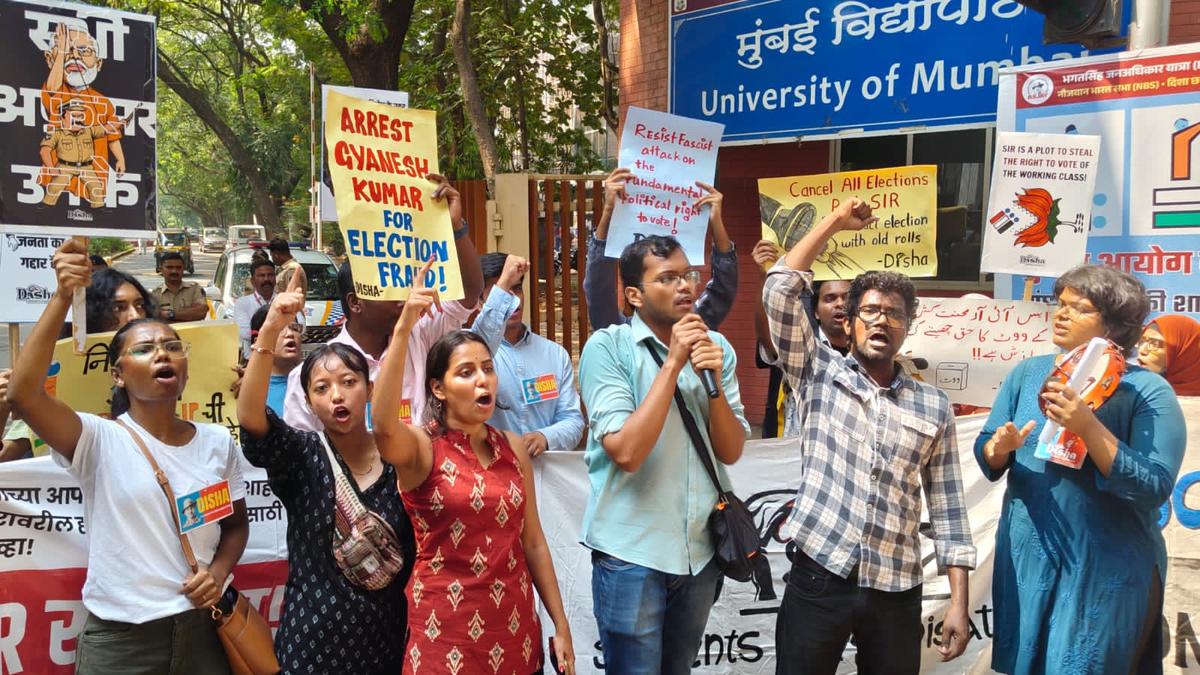
Protesters at Mumbai University are demanding the repeal of the 2023 Election Commissioner appointment law and the withdrawal of the Special Intensive Revision (SIR) of electoral rolls. They allege the revision process threatens voting rights and have called for the arrest of CEC Gyanesh Kumar.
Student-Led Protests Erupt at Mumbai University Over Election Integrity
On October 23, 2026, the Kalina campus of Mumbai University became the site of a significant demonstration as students, activists, and working professionals gathered to voice deep-seated concerns regarding the integrity of the Indian electoral process. Organized by the Disha Students’ Organisation and the Bhagat Singh Jan Adhikar Yatra (BSJAY), the protest highlighted growing public scrutiny over the management of voter rolls and the constitutional mechanisms governing election oversight.
The Core Demands: SIR and Election Laws
The demonstrators centered their agitation on the Special Intensive Revision (SIR) of electoral rolls, a process they claim is fundamentally flawed. By demanding the complete withdrawal of this revision, the participants are signaling a profound lack of confidence in the current administrative approach to voter verification. Furthermore, the demand for the repeal of the 2023 law governing the appointment of Election Commissioners suggests a broader push for legislative reform, aimed at ensuring greater transparency and independence in the selection of officials tasked with overseeing the democratic process.
Allegations of Marginalization and Voter Rights
A critical component of the protest was the explicit accusation that the current electoral roll revision exercise poses a direct threat to the voting rights of marginalized communities. When voter lists are modified—or, as the protesters claim, subjected to irregular revisions—the most vulnerable segments of the electorate are often the first to face disenfranchisement. The protesters’ call for fresh elections based on previous, verified voter lists underscores a desire to return to a status quo they perceive as more inclusive and representative.
Demands for Accountability
The protest took a confrontational turn with the explicit demand for the arrest of Chief Election Commissioner (CEC) Gyanesh Kumar. Such a demand is reflective of the heightened political tension surrounding the Election Commission of India (ECI). By targeting the head of the ECI, the activists are attempting to escalate the discourse from a policy disagreement to a matter of institutional accountability, asserting that the leadership bears direct responsibility for alleged irregularities in the electoral database.
Implications for Democratic Discourse
This demonstration at Mumbai University is emblematic of a larger trend of youth-led political mobilization in India. By challenging the 2023 appointment law, these groups are engaging in a debate about the balance of power between the executive branch and independent constitutional bodies. The protest serves as a reminder that the perceived health of democracy is heavily reliant on the public's trust in the technical processes of voter registration and the impartiality of those who manage them.
Future Outlook
As the debate over the SIR and the 2023 election law continues, it is likely that similar expressions of dissent will emerge across other academic and urban centers. The government and the ECI face a significant challenge in restoring public confidence. Future trends suggest that electoral procedures will be subjected to even more rigorous scrutiny by civil society, and the demand for legislative transparency in how election commissioners are appointed will likely remain a persistent point of contention in the national political narrative.
Verification Required?