In 1962, NASA blew up a water tank 65 miles above Earth to study the atmosphere
Source Entity
TOI SCIENCE DESK
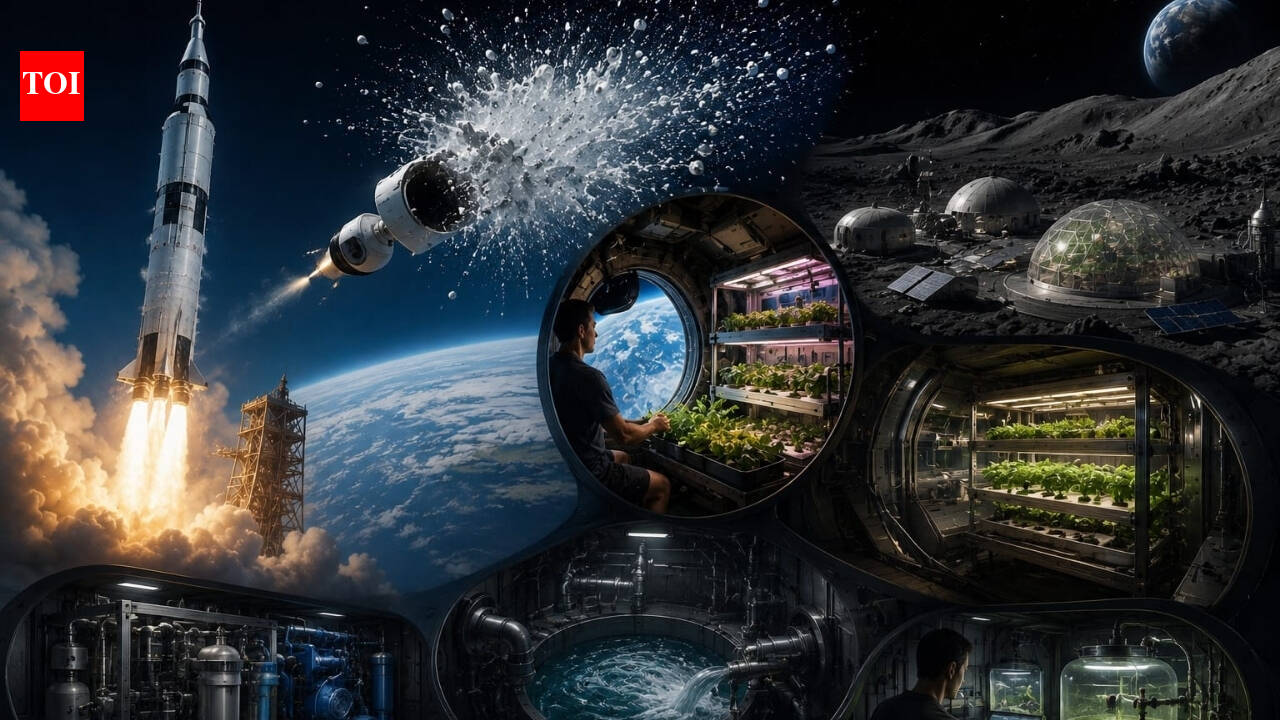
In 1962, NASA conducted a unique experiment by detonating 22,900 gallons of water in the upper atmosphere. This study was part of early research into biological life-support systems to enable long-duration space travel.
The 1962 High-Altitude Water Experiment
In 1962, NASA undertook a highly unconventional scientific experiment, launching 22,900 gallons of water aboard a Saturn I rocket. Once the vessel reached an altitude of 65 miles—well into the upper atmosphere—the container was deliberately detonated. This dramatic test was not merely a spectacle; it was a calculated attempt to observe the behavior of large volumes of water in a near-vacuum environment, providing critical data for the nascent space agency as it sought to understand the complexities of the upper atmosphere.
Foundations of Life-Support Research
Beyond the atmospheric study, this era marked the beginning of NASA’s deep inquiry into biological life-support systems. As the agency looked toward missions that would extend well beyond the duration of a standard orbital flight, the necessity of creating a self-sustaining environment became apparent. The 1962 mission served as a precursor to investigating how resources could be recycled effectively, a fundamental requirement for any crew traveling far from Earth's immediate supply chain.
Integrating Biology into Space Travel
NASA researchers began exploring the use of living organisms—specifically plants and microorganisms—to process waste and generate essential resources like oxygen and potable water. By mimicking Earth's natural biological cycles, scientists hoped to create closed-loop systems that could support astronauts for years. This early research underscored the shift from carrying expendable resources to engineering a regenerative ecosystem within a spacecraft.
Scaling for Future Settlements
While the 1962 experiment was limited in scope, it laid the essential groundwork for current ambitions regarding lunar and Martian settlements. The challenge of sustaining human life beyond Earth is multifaceted, requiring a delicate balance of physics, biology, and advanced engineering. The data gleaned from these early tests provided the first insights into how water, the most critical resource for life, interacts with the extreme conditions of space and high-altitude flight.
The Future of Sustainable Space Exploration
Today, the goal of sustainable living beyond Earth remains a primary driver of aerospace innovation. The principles established in the 1960s—recycling, biological waste management, and resource conservation—are now being refined for the Artemis program and potential Mars missions. By continuing to solve the challenges of resource management, NASA keeps the vision of long-term human presence in space a tangible, albeit difficult, scientific reality.