NASA's $4 Billion 'Roman Telescope' To Probe Exoplanets, Dark Energy
Source Entity
NDTV News Search Records Found 1000
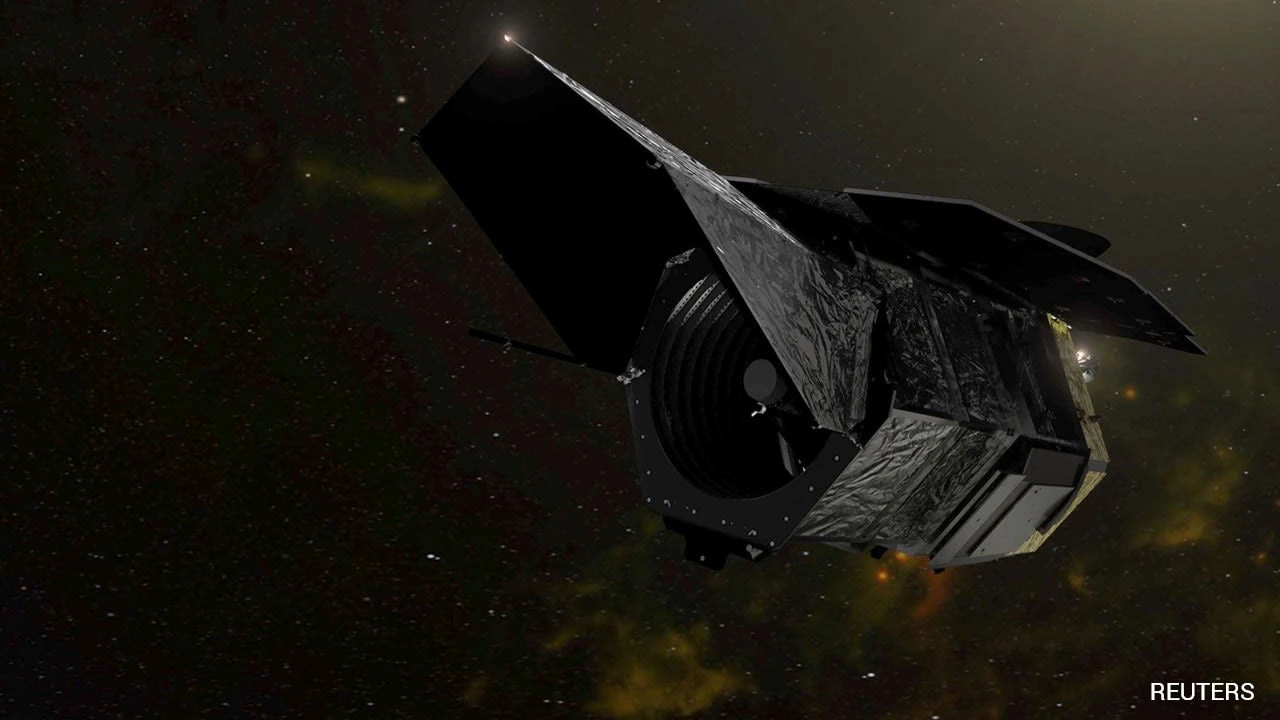
NASA's $4 billion Nancy Grace Roman Space Telescope is set to expand our understanding of the cosmos by studying exoplanets and dark energy. As a successor to the Hubble and James Webb observatories, it promises to revolutionize space exploration.
The Next Frontier in Space Observation
NASA’s Nancy Grace Roman Space Telescope, a monumental $4 billion project, represents the next significant leap in our quest to understand the universe. Positioned as a critical follow-on to the legendary Hubble Space Telescope and the cutting-edge James Webb Space Telescope (JWST), the Roman telescope is engineered to build upon the foundational discoveries made by its predecessors. While Hubble provided our first clear glimpses into deep space and JWST is currently peering into the earliest epochs of time, the Roman telescope is designed to provide a wider, more comprehensive view of the cosmos.
Probing the Mysteries of Dark Energy
One of the primary scientific mandates for the Roman telescope is the investigation of dark energy, the mysterious force that is accelerating the expansion of the universe. By mapping the history of cosmic structure and the growth of galaxies, the telescope will provide data that could potentially rewrite our understanding of fundamental physics. This endeavor is essential for deciphering why the universe behaves the way it does on a grand scale, moving beyond the observations of individual star systems to the underlying mechanisms of spacetime itself.
Advancing Exoplanet Research
Beyond dark energy, the Roman telescope is poised to revolutionize the field of exoplanetary science. By utilizing advanced imaging techniques and gravitational microlensing, the observatory will be capable of detecting planets that orbit distant stars with unprecedented precision. This capability will allow astronomers to move from simply finding exoplanets to characterizing them, providing insights into the demographics of planetary systems throughout the galaxy and helping to identify potentially habitable environments.
A Legacy of Technological Evolution
The technological lineage connecting Hubble, JWST, and Roman demonstrates NASA’s strategic approach to space exploration. Hubble revolutionized our aesthetic and scientific understanding of the visible universe, while JWST utilized infrared capabilities to pierce through cosmic dust. Roman integrates these lessons by offering a field of view that is significantly larger than Hubble’s, allowing for massive surveys of the sky that were previously impossible. This wide-field capability is the 'Roman advantage,' enabling the telescope to conduct long-term, large-scale studies of dark energy and exoplanet populations.
Future Trends in Cosmic Discovery
The launch and operation of the Roman telescope will likely shift the focus of modern astrophysics toward large-scale statistical analysis of the cosmos. As we gather more data on the distribution of matter and the influence of dark energy, the scientific community will be better equipped to model the future evolution of the universe. This $4 billion investment is not merely an instrument for observation; it is a vital tool for verifying theoretical physics in the most extreme laboratory available: outer space. The data generated will undoubtedly fuel research for decades to come, setting the stage for future missions that will continue to push the boundaries of human knowledge.
Verification Required?