Man paid $2.48 for old document; a year later, it sold for $477,650
Source Entity
TOI WORLD DESK
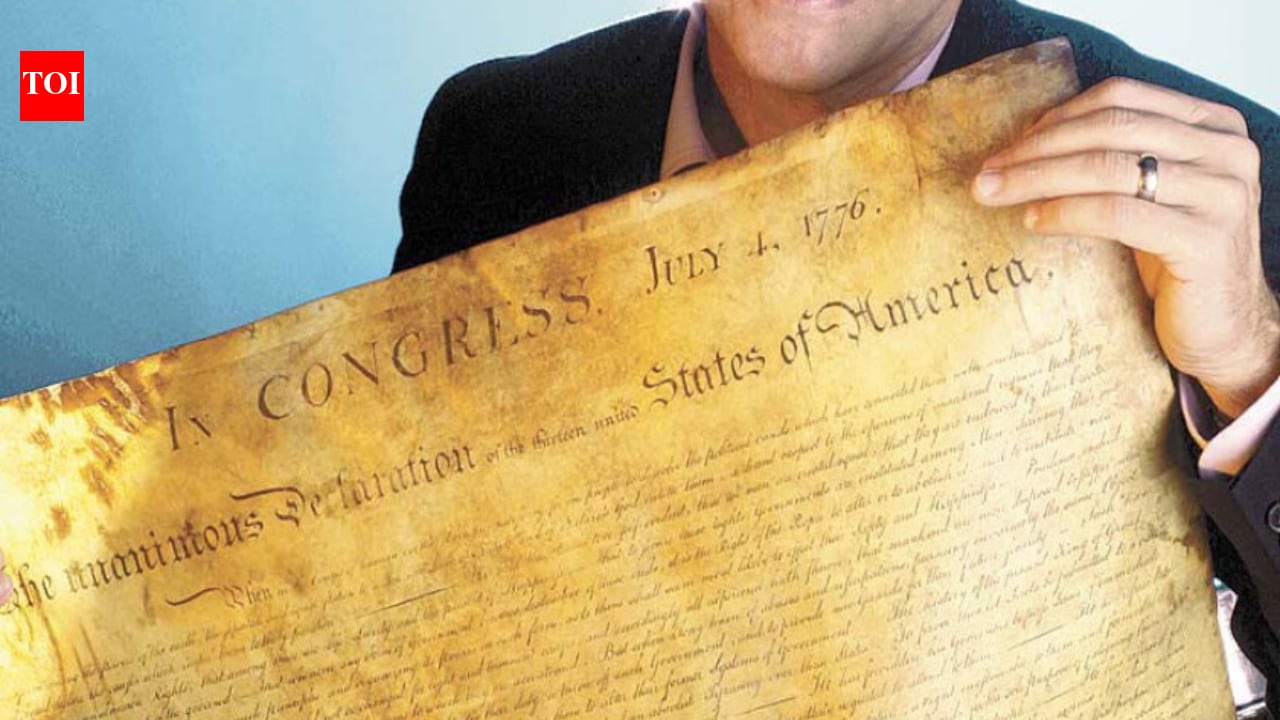
A Nashville man purchased a rare 1823 copy of the Declaration of Independence for $2.48 at a thrift store. The document, commissioned by John Quincy Adams, later sold at auction for $477,650.
The Unlikely Discovery in Nashville
In a remarkable turn of events that underscores the hidden value often tucked away in local thrift stores, Michael Sparks, a music equipment technician, discovered a piece of American history hidden in plain sight. While browsing a Nashville thrift shop in March 2006, Sparks purchased a rolled-up, yellowed document for a mere $2.48. What appeared to be a simple bargain-bin item was later identified as a rare 1823 official copy of the Declaration of Independence, a discovery that would soon bridge the gap between a routine garage cleanout and a significant historical find.
Historical Significance of the 1823 Printing
The document in question is not merely a generic reproduction but one of the limited official copies commissioned by then-Secretary of State John Quincy Adams in the 1820s. At that time, the original 1776 parchment was already beginning to fade, prompting the government to authorize William J. Stone to create an exact copperplate facsimile. These copies were intended to preserve the legacy of the nation's founding document for future generations, making them highly sought after by historians and collectors who value both the provenance and the preservation of American heritage.
The Auction Process and Market Valuation
After recognizing the potential significance of his find, Sparks took the necessary steps to verify the document's authenticity. The transition from a $2.48 purchase to an auction-block centerpiece highlights the volatility and excitement of the rare manuscript market. When the document went to auction in Burlington, North Carolina, it far exceeded initial expectations, ultimately fetching a staggering $477,650. This sale not only provided a life-changing windfall for Sparks but also enriched the known registry of surviving official copies from that era.
Broader Implications for Historical Preservation
The story of Michael Sparks serves as a poignant reminder of the role that chance plays in historical preservation. Often, significant artifacts are lost to time, buried in attics, or discarded during estate cleanouts. The fact that an official government commission from the 1820s survived in a thrift store bin underscores the importance of public awareness regarding historical documents. It highlights how private individuals, often unintentionally, become the temporary custodians of national treasures.
Legacy and Future Trends in Collecting
The sale of this document has cemented Sparks as a local legend in Nashville and continues to inspire collectors to look closer at the items they encounter in everyday settings. As the market for verified historical artifacts remains robust, the discovery of such a rare print reinforces the trend of high-value provenance driving auction prices. For the broader public, it stands as a testament to the enduring value of American history and the surprising ways in which the past can intersect with the present.