From 6 classrooms under terracotta roof to 2-storey school with studio, VR lab: A Gujarat teacher’s journey
Source Entity
Ritu Sharma
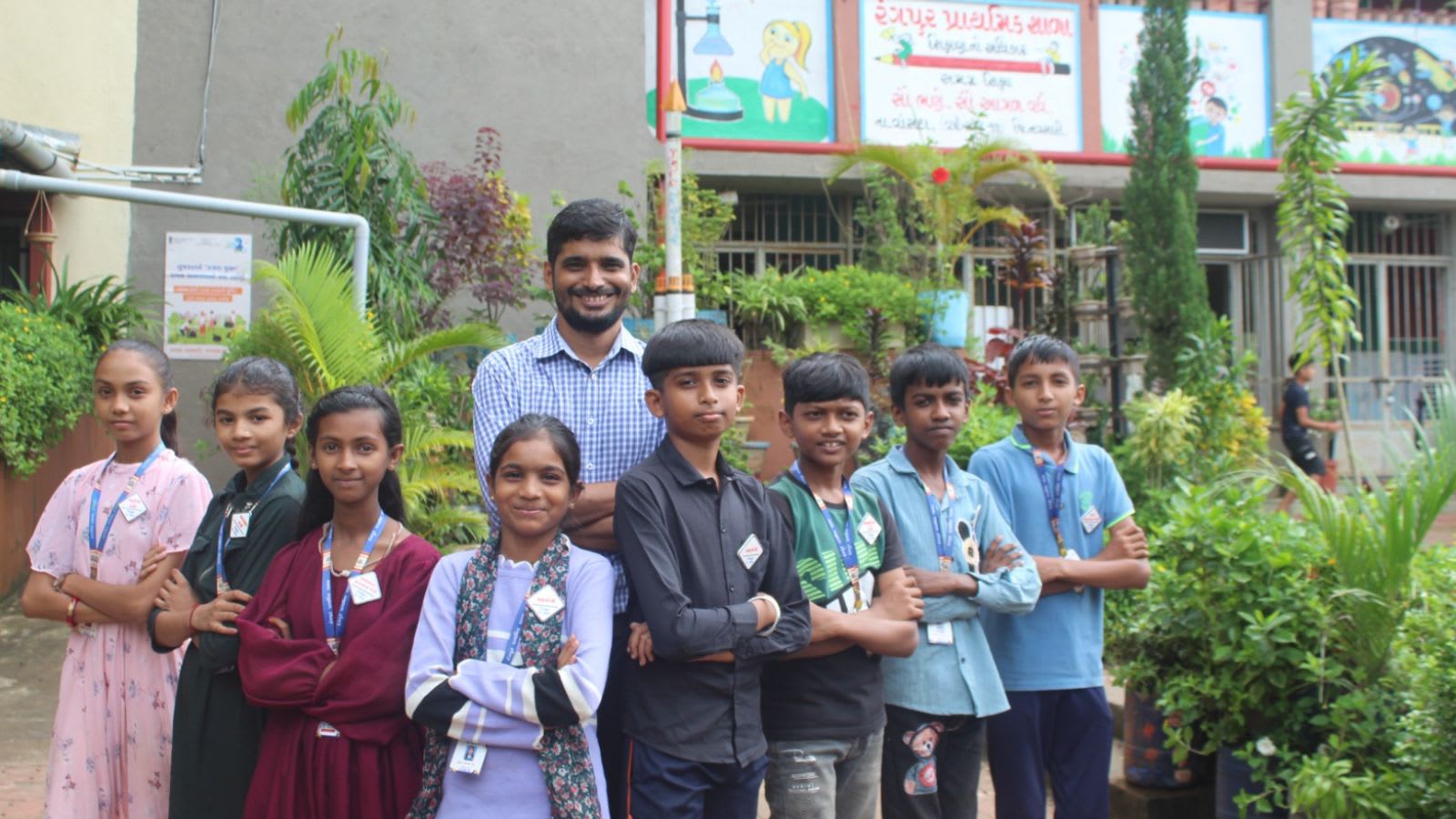
Two dedicated Indian educators, Nitinkumar Pathak from Gujarat and Suman Goel from Delhi, have been honored for their transformative contributions to government primary education. Their journeys highlight the profound impact of grassroots commitment on rural and urban school development.
Transformative Leadership in Indian Primary Education
The recognition of Nitinkumar Mahendrakumar Pathak and Suman Goel with the National Teachers Award underscores a vital shift in the Indian educational landscape. Both educators demonstrate that individual agency, when paired with sustained institutional commitment, can bridge the gap between resource-constrained environments and modern pedagogical requirements.
The Rural Evolution: Nitinkumar Pathak’s Vision
Nitinkumar Pathak’s journey from a traditional setting in Jalalpore to a remote tribal school in Rangpur illustrates the power of grassroots innovation. Inheriting a modest single-storey structure with a terracotta roof, Pathak spent a decade transforming the environment into a technology-integrated campus. By introducing a VR lab and a student-led recording studio, he has effectively democratized access to 21st-century learning tools in a tribal region, proving that geography need not be a barrier to quality education.
Urban Resilience: Suman Goel’s Legacy
Suman Goel’s narrative represents the resilience of the Indian public school system. Starting as a student at GSKV Pooth Kalan and returning as a teacher earning a nominal wage of Rs 60 a day, her career is a testament to the continuity of mentorship. Her transition from a college student struggling with financial hardship to a nationally recognized primary teacher highlights the critical role of institutional loyalty in fostering stable learning communities within Delhi’s urban school network.
Bridging the Digital and Social Divide
Both teachers exemplify the 'teacher-as-agent-of-change' model. While Pathak focuses on physical and technological infrastructure to engage students in remote areas, Goel focuses on the socio-economic stability of her students by leveraging her own history within the school. These efforts are essential to the broader goals of the National Education Policy, which emphasizes experiential learning and the integration of digital tools into classroom discourse.
Broader Implications for Government Schools
These stories serve as a powerful counter-narrative to the perception that government schools lack innovation. By integrating 'news bulletins' and VR technology, educators are equipping students with digital literacy and communication skills. Such initiatives prepare primary school students for the complexities of the modern workforce, long before they enter higher secondary education.
Future Trends in Pedagogy
Looking ahead, the success of Pathak and Goel suggests a future where teacher-led infrastructure development becomes a benchmark for national recognition. As India continues to digitize its rural and urban education sectors, the role of the primary teacher will increasingly shift from a mere knowledge transmitter to a facilitator of creative, tech-enabled learning environments. Their stories provide a roadmap for future educators to maximize impact through local resource optimization and unwavering dedication.