Gone in seconds: Horrific Nepal flood videos show sweeping destruction
Source Entity
PRISHA PATNAIK
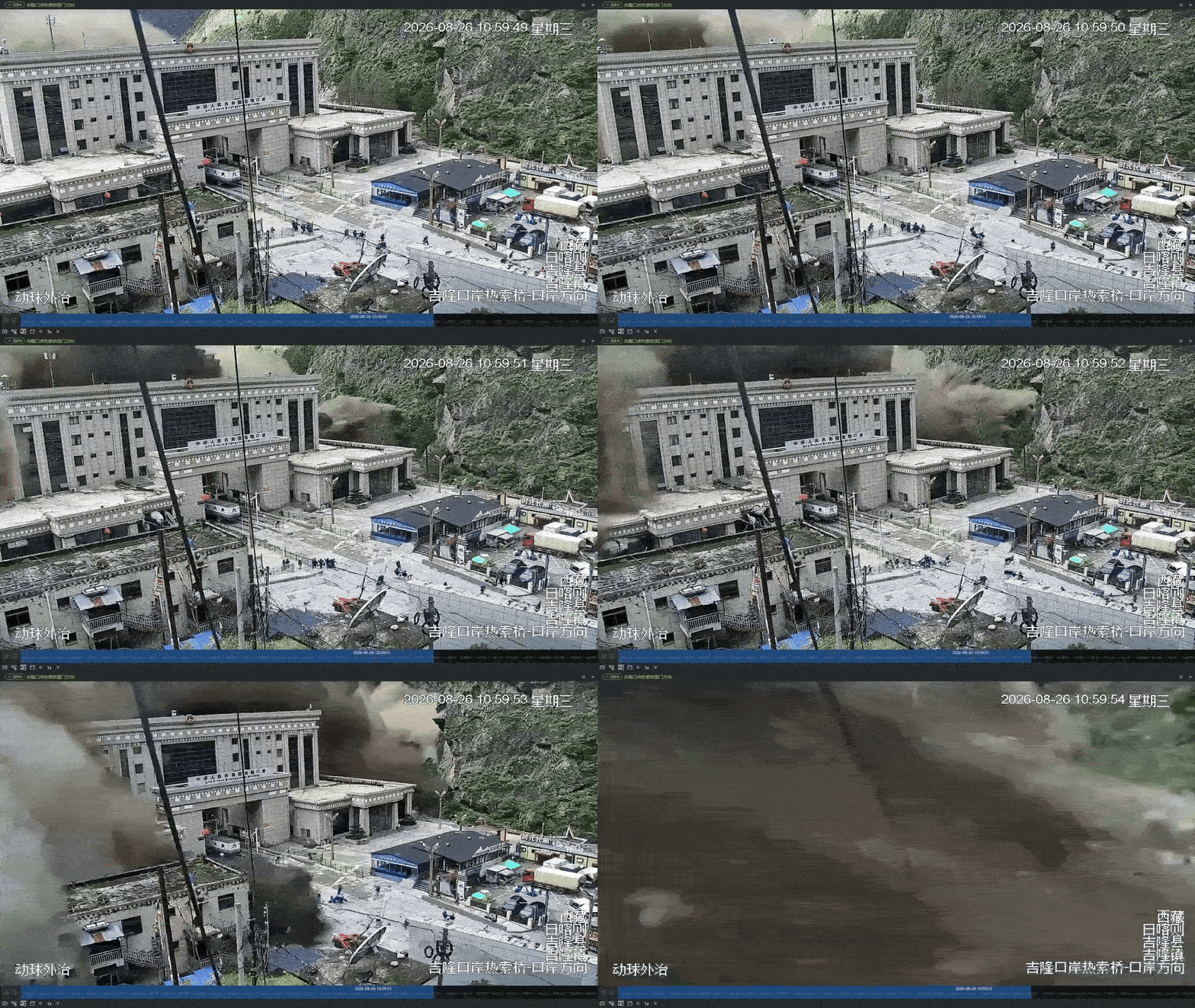
A massive flash flood triggered by a potential ice-rock avalanche has devastated Nepal's Rasuwa district, resulting in at least 160 deaths and hundreds of missing persons. International scientific teams are currently investigating the disaster as rescue operations continue along the Bhote Koshi and Trishuli rivers.
The Nepal Disaster: A Geologic and Humanitarian Crisis
On Wednesday, August 26, 2026, the Himalayan nation of Nepal faced a catastrophic natural disaster. Massive flash floods and mudslides, originating in high-altitude regions near the Nepal-Tibet border, surged through the Rasuwa district. The sheer force of the water, carrying heavy sediment and large boulders, inundated the Bhote Koshi and Trishuli river basins, leading to a tragic loss of life and widespread destruction of property.
The Trigger: Scientific Investigations into Ice-Rock Avalanches
Scientists from the International Centre for Integrated Mountain Development (ICIMOD), working alongside institutional partners in Nepal and China, have identified a potential cause for this sudden deluge. Preliminary investigations suggest the event may have been precipitated by a massive ice-rock avalanche occurring at a high-altitude site. Such events occur when destabilized glaciers or rock masses collapse, causing an instantaneous release of water and debris that travels downstream with devastating kinetic energy.
Vulnerability of the Hindu Kush Himalaya Region
This disaster highlights the acute vulnerability of the Hindu Kush Himalaya (HKH) region, a landscape defined by its constant geological movement and precarious glacial stability. ICIMOD, as the leading intergovernmental body for this region, continuously monitors these threats. However, the geographic complexity of the Himalayas makes predicting the exact timing and scale of such avalanches nearly impossible, leaving downstream communities in a constant state of latent risk.
The Humanitarian Toll
As of the latest reports, the human cost of this disaster is staggering. At least 160 people have been confirmed dead, with hundreds more listed as missing. Rescue efforts are currently underway, with teams utilizing heavy earthmoving equipment to navigate the mud and debris to reach submerged houses in districts like Nuwakot. The priority remains the search and rescue of survivors trapped under sediment, though the environment remains treacherous for emergency responders.
Broader Implications and Future Trends
The tragedy in Nepal serves as a sobering reminder of the intersection between climate instability and high-altitude geography. As glacial regions continue to face environmental pressures, the frequency of glacial lake outbursts and ice-rock avalanches could potentially rise. This event underscores the urgent need for enhanced early-warning systems, cross-border data sharing between Nepal and China, and robust infrastructure development that accounts for the volatile nature of the Himalayan river systems.
Conclusion
While the immediate focus is on the ongoing rescue operations and supporting the families of the victims, the long-term response must involve a deeper commitment to geological research. Understanding the mechanical triggers of these floods is the only pathway toward mitigating future risks. The international community, led by organizations like ICIMOD, must continue to prioritize the monitoring of these high-altitude threats to protect the millions of people who live in the shadow of the world's highest mountains.
Multiple Citing Sources