Relatives hold symbolic funerals for thousands missing as Nepal toll crosses 1,243
Source Entity
MAHIMA SHARMA
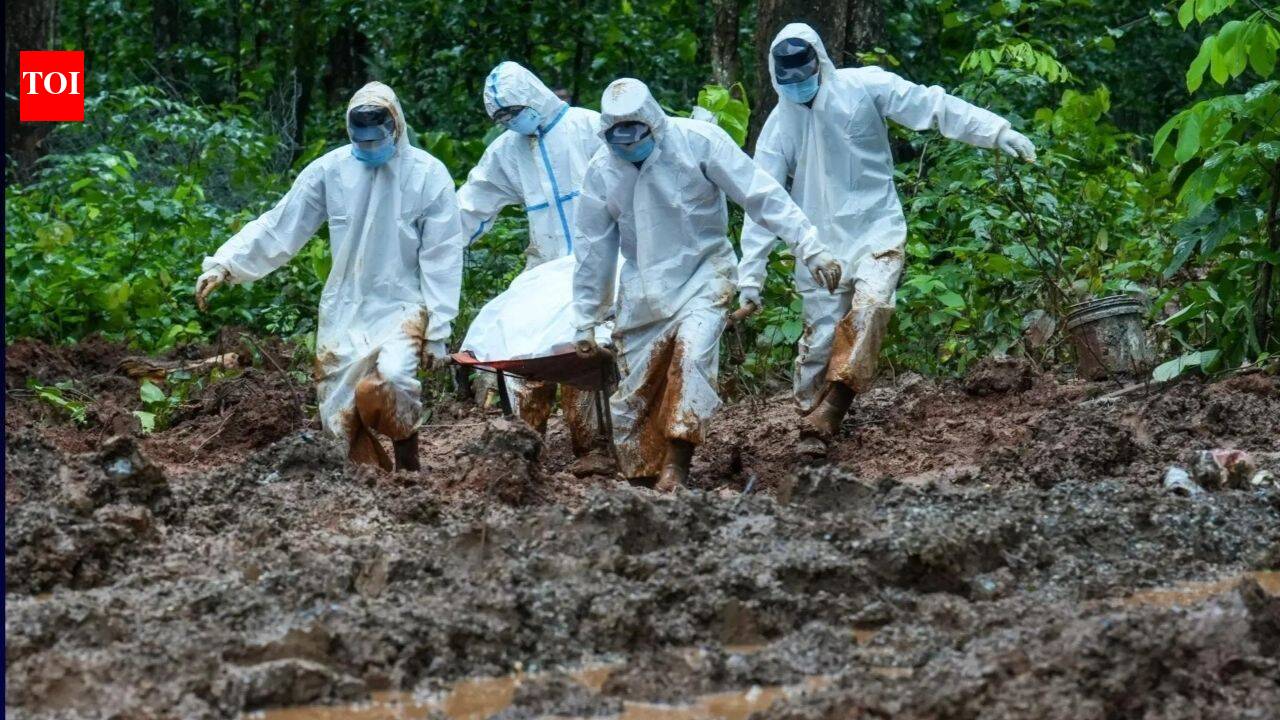
Following a catastrophic glacier collapse and flooding in Nepal that killed over 1,100 people, the government is demanding climate compensation from major nations. Scientists confirm visible pre-event warning signs were present, highlighting a critical need for better cross-border monitoring and early warning systems.
The Himalayan Tragedy: A Preventable Catastrophe?
The recent glacier collapse along the Nepal-China border has resulted in a staggering death toll, with casualties exceeding 1,100 people. This disaster, which manifested as a sudden, violent flash flood, has brought the precarious nature of Himalayan geography into sharp focus. According to the HiRISK scientific consortium, this event was not entirely unpredictable; visible indicators of instability, such as brown meltwater and a propagating crack in the bedrock, were observed days before the collapse, suggesting that the tragedy might have been mitigated with more robust monitoring.
The Failure of Early Warning Systems
The presence of pre-event indications underscores a systemic failure in the current disaster management framework. In remote, high-altitude regions, the absence of operational early warning systems leaves vulnerable communities directly in the path of glacial lake outburst floods (GLOFs) and related landslides. Scientists are now stressing that without comprehensive, real-time monitoring of glaciers and slopes, these regions will remain highly susceptible to repeat disasters as climate change accelerates the destabilization of mountain landscapes.
Geopolitics of Climate Justice
Beyond the immediate physical aftermath, the event has triggered a seismic shift in Nepal’s diplomatic strategy. Foreign Minister Shisir Khanal has explicitly pivoted the national narrative from seeking humanitarian 'aid' to demanding 'climate compensation' from major global emitters, including India, China, and the United States. This framing positions the disaster not as a natural misfortune, but as a result of a global climate crisis for which Nepal, a nation with negligible greenhouse gas emissions, is bearing a disproportionate and lethal burden.
Moral Liability vs. Charity
The declaration by Minister Khanal that financial support should be viewed as a 'moral liability' rather than 'charity' represents a significant development in international climate politics. By linking the destruction of their infrastructure and the loss of over 1,100 lives directly to global warming, Nepal is testing the efficacy of the 'Loss and Damage' framework on the global stage. This move highlights the growing frustration among developing nations that are suffering the most severe consequences of a climate trajectory they did not initiate.
The Path Forward: Cooperation and Resilience
To prevent future 'mountain tsunamis,' the scientific community and policymakers agree that transboundary hazard management is essential. Because glaciers do not respect national borders, the current disaster necessitates enhanced cooperation between Nepal and China. Future trends suggest that if geopolitical tensions prevent the sharing of satellite data and geological monitoring, the risk of similar, high-fatality events will only increase. Establishing a unified, cross-border early warning infrastructure is now a prerequisite for the survival of Himalayan communities in a warming world.
Multiple Citing Sources