"No Nation Should Help Iran": Rubio's 'Sanctions' Warning After PM Modi-Pezeshkian Meet
Source Entity
NDTV News Search Records Found 1000
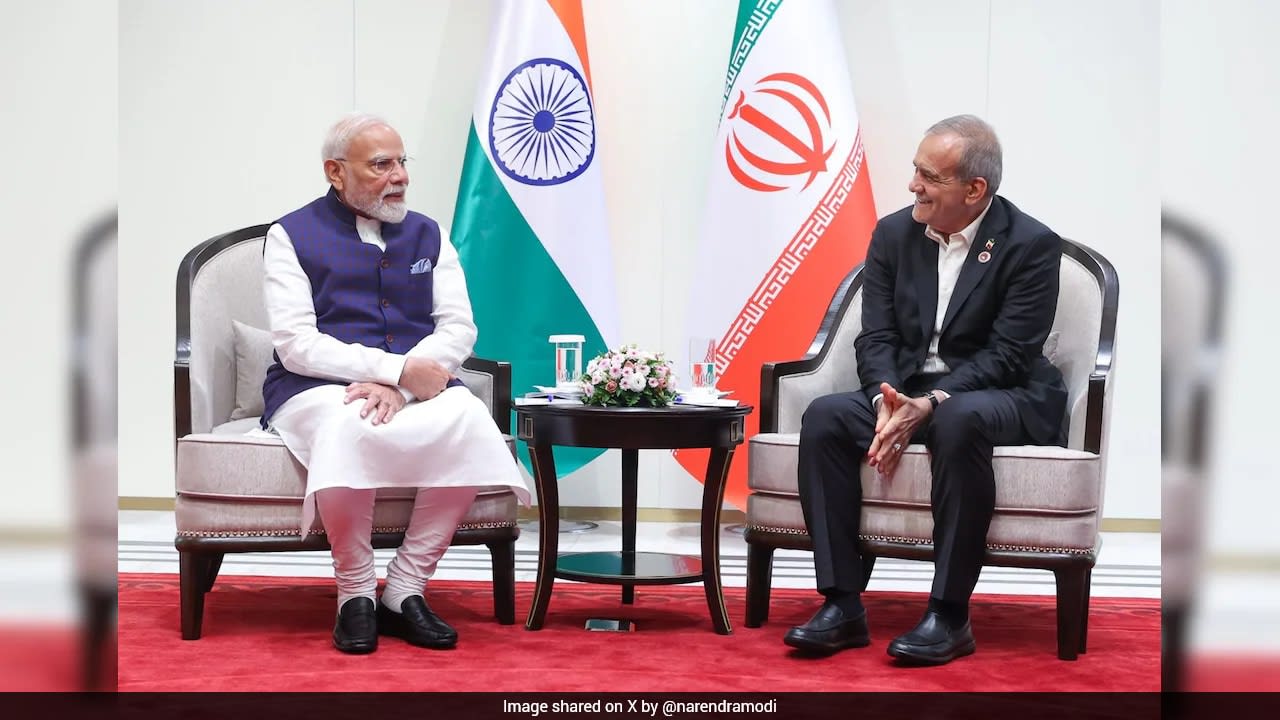
US Secretary of State Marco Rubio has issued a stern warning to nations against facilitating Iranian revenue, following a bilateral meeting between PM Modi and President Pezeshkian at the SCO Summit. The warning underscores US concerns regarding potential India-Iran trade deals amidst existing sanctions.
US Issues Stern Warning Following India-Iran Bilateral Talks
Recent diplomatic engagements at the Shanghai Cooperation Organisation (SCO) summit in Bishkek have drawn significant attention from Washington. Prime Minister Narendra Modi’s meeting with Iranian President Masoud Pezeshkian has prompted US Secretary of State Marco Rubio to reiterate the United States' firm stance on Iranian sanctions. This development highlights the delicate balancing act India faces in navigating its strategic regional partnerships while maintaining its critical relationship with the United States.
The Context of the SCO Summit
The SCO summit in Bishkek served as the backdrop for this high-profile bilateral encounter. While regional summits are traditionally platforms for fostering economic cooperation and security dialogues, the intersection of Indian interests and Iranian leadership has triggered an immediate response from the US State Department. Secretary Rubio’s comments, delivered via Fox News Radio, emphasize that the US is closely monitoring international interactions with the Tehran regime.
The Mechanics of Sanctions Enforcement
Secretary Rubio’s core message is that the United States is prepared to impose secondary sanctions on any nation that assists Iran in generating revenue. This warning is a cornerstone of American foreign policy aimed at isolating the Iranian economy. By explicitly stating that countries helping Tehran evade sanctions may themselves face punitive measures, the US has signaled a shift toward stricter enforcement protocols for its allies and partners who engage in trade or diplomatic outreach with Iran.
Implications for India-Iran Relations
Reports suggest that New Delhi and Tehran may be moving toward a trade agreement, a prospect that has seemingly accelerated the US rhetoric. For India, Iran represents a vital strategic gateway to Central Asia, particularly through the Chabahar Port project. However, the potential for a formal trade deal complicates India's broader diplomatic goals, as it must weigh the economic benefits of Iranian engagement against the risk of violating US-led sanctions regimes.
The Broader Geopolitical Landscape
This incident reflects the broader complexities of modern multipolar diplomacy. As India seeks to maintain its status as a leading voice for the Global South, it frequently engages with diverse nations, including those that are adversarial to Western interests. The US warning serves as a reminder that these diplomatic maneuvers occur under the intense scrutiny of the international community, where economic interconnectedness often dictates political maneuverability.
Future Trends in Regional Diplomacy
Looking ahead, India will likely continue to face pressure to clarify the scope of its engagement with Iran. The US government’s stance suggests a low tolerance for any activities that could be construed as facilitating Iranian revenue streams. Future diplomatic interactions will require careful calibration to ensure that India’s strategic objectives in Central Asia do not inadvertently trigger the very sanctions that Secretary Rubio has cautioned against, setting the stage for a period of intense diplomatic negotiation.
Multiple Citing Sources
Verification Required?