'I chanted Hare Krishna for 9 days': Nepal worker rescued from tunnel on Janmashtami
Source Entity
YASHASVI VASISTHA
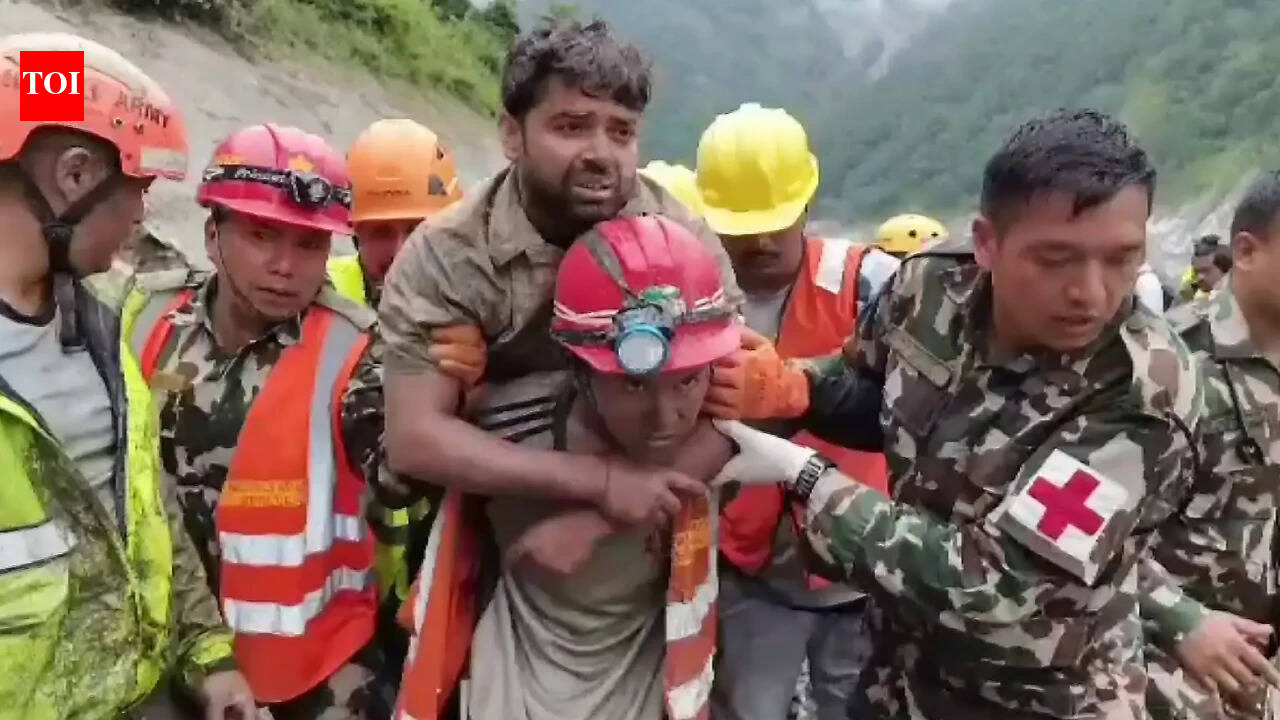
Rescuers are continuing efforts to locate survivors trapped in hydropower tunnels eight days after catastrophic flash floods hit the Nepal-Tibet border. With over 1,200 confirmed dead and thousands missing, the disaster has devastated infrastructure and left hundreds of foreign nationals unaccounted for.
The Nepal-Tibet Flood Crisis: A Race Against Time
Eight days after a catastrophic glacial collapse in the Himalayas triggered devastating flash floods along the Nepal-Tibet border, the situation remains dire. As search and rescue operations persist, the focus has narrowed to the precarious hope of finding survivors trapped within industrial infrastructure along the Trishuli River. The sheer scale of the debris, described by observers as a wall of mud and silt, underscores the immense challenges faced by emergency teams working in treacherous, unstable terrain.
The Human Toll and Missing Populations
The human cost of this disaster is staggering, with official records indicating at least 1,252 fatalities and over 4,200 individuals still missing. The tragedy has transcended borders, impacting not only local residents but also hundreds of foreign nationals. Among those missing are pilgrims traveling toward the Kailash Mansarovar region, as well as Indian nationals, adding an international dimension to the search efforts. In Kathmandu, the somber reality of the situation is reflected in the "wall of the missing," where families gather in search of answers, with some families now beginning the agonizing process of holding symbolic funerals for loved ones whose remains have not been recovered.
Industrial Vulnerability: The Hydropower Crisis
A critical component of this emergency is the status of the region's hydropower infrastructure. Reports indicate that approximately 900 people remain feared trapped inside six separate hydropower plants. The recent successful extraction of two individuals from a tunnel serves as a vital proof-of-life, fueling the persistence of rescue teams. However, the structural integrity of these tunnels, now choked with debris and silt, continues to complicate access and jeopardize the safety of the rescuers themselves.
Environmental Context and Future Implications
The trigger for this catastrophe—a glacial collapse high in the Himalayas—highlights the increasing vulnerability of the Hindu Kush-Himalayan region to climate-related hazards. As glacial retreat accelerates due to rising global temperatures, the risk of glacial lake outburst floods (GLOFs) and sudden, extreme hydro-meteorological events increases. This event serves as a grim case study for the necessity of improved early-warning systems and more resilient infrastructure design in high-altitude, seismically active zones.
Conclusion: Assessing the Path Forward
As the search enters its second week, the window for survival for those trapped in subterranean spaces narrows significantly. While the rescue of two survivors provides a flicker of optimism, the broader outlook remains somber. The international community and Nepali authorities are now tasked with the dual challenge of continuing life-saving operations while eventually transitioning toward a massive recovery and reconstruction phase. The lessons learned from this disaster—specifically regarding the placement of critical infrastructure near unstable glacial zones—will likely inform future development policies in the region to prevent a recurrence of such widespread loss.