Amid Record Turnout In Israel, A Look At Past Performance Of Arab Parties
Source Entity
NDTV News Search Records Found 1000
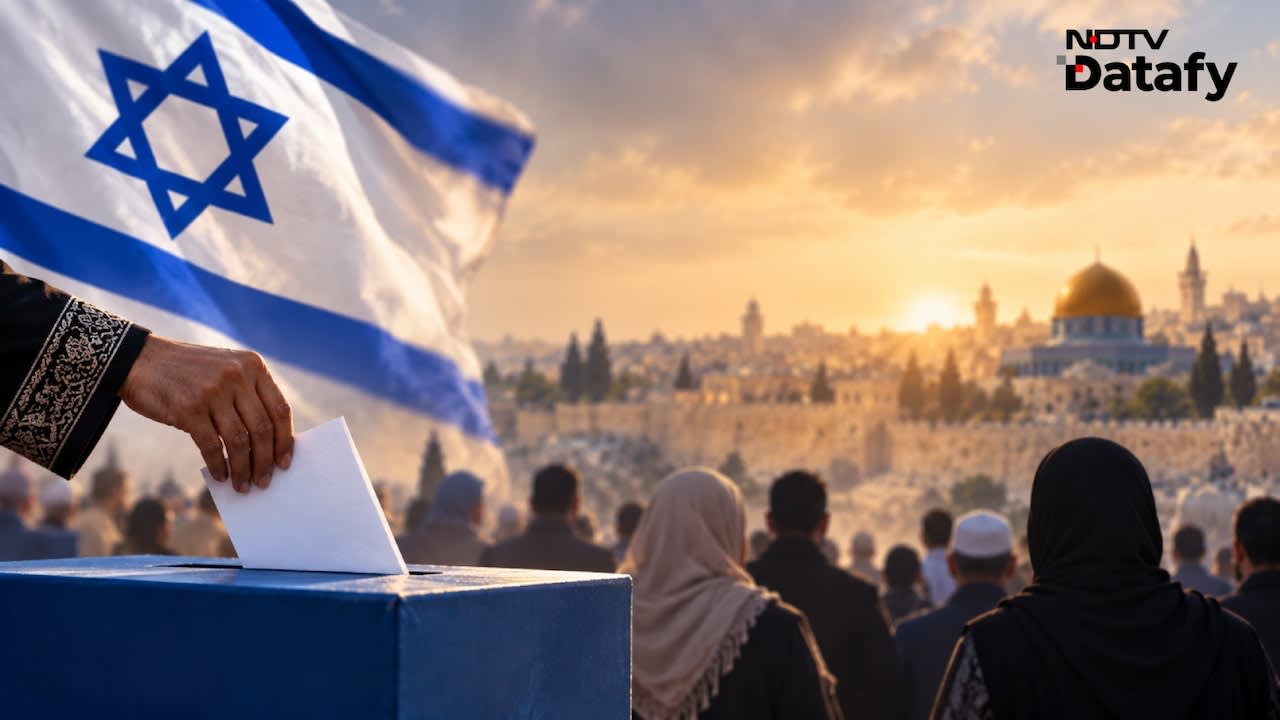
Israel faces a pivotal election on October 27, pitting incumbent Benjamin Netanyahu against former army chief Gadi Eisenkot. The contest reflects deep divides over national security and the government's accountability following the October 7, 2023, attacks.
The Defining Moment for Israeli Leadership
Israel stands at a critical crossroads as the nation approaches the October 27 election, a date that will likely determine the political trajectory of the country for years to come. At the heart of this contest is the battle between incumbent Prime Minister Benjamin Netanyahu, who has long dominated the Israeli political landscape, and his primary challenger, former army chief Gadi Eisenkot. This election is not merely a routine change of government but a referendum on the national security doctrine that has defined Netanyahu’s tenure.
The Erosion of the 'Mr. Security' Brand
For decades, Benjamin Netanyahu has successfully campaigned under the moniker of 'Mr. Security,' positioning himself as the indispensable guardian of the state. However, the unprecedented Hamas attack on October 7, 2023, fundamentally shattered this perception. The subsequent security failures and the ongoing conflicts, including military engagements with Hezbollah in Lebanon, have forced voters to re-examine their reliance on Netanyahu’s leadership. The public’s confidence has been severely tested, creating a vacuum that his political opposition is now aggressively filling.
The Rise of Gadi Eisenkot
In this climate of uncertainty, Gadi Eisenkot, the 66-year-old leader of the Yashar party, has emerged as a formidable opponent. A veteran of the Golani Brigade and former chief of staff under Netanyahu from 2015 to 2019, Eisenkot brings a military pedigree that challenges Netanyahu’s own background. His ascent has been meteoric; having polled in single digits just a year ago, he now leads a movement that commands significant support. If successful, Eisenkot would make history as Israel's first Mizrahi prime minister, marking a significant shift in the nation's political demographics and leadership style.
Parliamentary Arithmetic and Coalition Challenges
Despite the polling surge for Eisenkot’s Yashar party, which is currently projected to secure between 20 and 23 seats in the 120-seat Knesset, the path to governance remains fraught with difficulty. The Israeli electoral system relies on coalition building, and current data suggests that neither the pro-Netanyahu bloc nor the anti-Netanyahu opposition is poised to reach the 61-seat threshold required for a majority. This reality points toward a potential period of political gridlock or complex post-election negotiations that could test the stability of the state.
Broader Implications and Future Outlook
This election represents a collision between the old guard of Israeli politics and a new wave of leadership seeking to address the post-October 7 reality. The outcome will dictate how Israel navigates its regional security challenges and how it addresses internal demands for government accountability. As the nation prepares to vote, the focus remains on whether the public will choose to stay the course with a familiar, albeit embattled, leader or opt for a transition toward the military-rooted vision proposed by Eisenkot. The results on October 27 will undoubtedly redefine the future of the Israeli state.
Multiple Citing Sources
Verification Required?